The Gift that Everyone Needs

Tis the season for gift giving, whether you celebrate Hannukah, Las Posadas, Christmas, Kwanzaa, or a Hallmark “every day is a holiday” creation. People are buying gift cards, and trinkets to make someone they care about feel the joy of the season. Yet, it is said, “The best things in life are free.” (Interestingly this saying is credited to Coco Chanel who also famously added, “the second-best things are very, very expensive.”) I believe this is true, “the best things in life are free” as it relates to dollars and cents, and one of those best things is the gift of presence.
Presence is showing up, the state of being in place, being in attendance – it is a physical and spiritual thing. (Check out the etymology of the word in a dictionary.) In other words, you are singularly focused on being in a place with another person or people – mind, body, and soul. This is important because too often we consider ourselves present when our minds are elsewhere; like when you see a couple at dinner and they are both on their cell phones. Their bodies are in the right place, but their focus is not. They are really not present with one another. Being present requires us to fully give of ourselves – to be engaged. Our senses, our attention, and our focus is for the person or people we are with. We intentionally show up mentally and emotionally as well as physically. Each of us are seen and heard and appreciated. This is the gift that everyone needs, and I would like to think that everyone wants.
Presence is the gift that keeps on giving. When all the holiday decoration is gone and the parties are over, presence lingers on and creates a chain for future connections. It’s a gift that both the recipient and the giver can enjoy simultaneously, and it’s a gift that can be renewed over and over again. In today’s society, we need to make meaningful connections with the people in our lives and community. We need to know one another more intimately rather than make unwarranted assumptions about one another. We need to identify our commonalities, and form cherish-able memories. We need to let one another know how valuable our relationships are before we have regrets and before it’s too late. Every relationship requires a certain amount of presence to thrive.
If there are special people in your life (children, parents, spouses, siblings, friends, neighbors, co-workers, merchants, mentors, ministers, club members, charitable servants, etc.) it’s not too late to give the gift of presence to someone in your life. Perhaps there is that friend you have been meaning to call and catch up with. Perhaps there is a relative you saw at the last family funeral, and you said: “Let’s not meet this way again, let’s get together soon.” Perhaps there’s an elderly neighbor who could use a little company every now and then. Or maybe there is someone in your life who has given you the gift of their presence and you’ve not taken the time to tell them what they mean to you. The gift of presence is intangible. It doesn’t wear out or go out of style. The value of presence is an indescribably investment – one that you can carry with you and distribute for the rest of your life.
Someone you know needs the gift of presence not because it’s the season of giving and getting, but because there is nothing like being known and seen, honored and appreciated, received and treasured. When you give the gift of presence you leave an indelible mark of true companionship and comradery that is priceless and continues to give for a lifetime. As long as you have breath, it’s never too late to give the gift that everyone needs.
May the New Year bring you many gifts of presence and in this case, it really is better to give than to receive. Happy Hanukkah, Feliz Los Posadas, Merry Christmas, Kwanzaa Peace. Blessings in the New Year.
We Need More Storytellers
Isn’t it funny how things from your childhood pop up from time to time. I can remember friends and adults telling me, “You better quit your storytelling.” I grew up in a generation where you didn’t use the word “lie,” you were either fibbing or telling stories. Today, I consider myself a necessary storyteller. My medium is narrative poetry and prose. My stories are mostly fiction with real life as a backdrop (aka: representational literature). I tell my own stories and the stories of my ancestors. I tell stories with morals and stories just for shear entertainment, but mostly I tell stories to connect generations. Trials, triumphs, struggle, hard work, hopes, dreams, love, family – these are just a few timeless themes that can reach out and touch members of every generation. In this case, I’m not just talking about the written word, I’m talking about oral storytelling – stories in the midst of conversation. We need more of these kinds of storytellers in our world today.
You don’t have to be an author of books to be a storyteller. Your life is full of experiences and relationships that create a storytelling opportunity. The time you had your first kiss, when you found out you were going to have a brother or sister, what it was like when you moved from your parents’ home or went off to college – these milestones and more are stories waiting for you to tell them. Things we can identify with and learn from can be found in the lives of other people. That’s why so many people love to read memoirs, biographies, autobiographies, historical fiction and to watch documentaries. We are interested in how people made their dreams come true or how they survived a crisis or how they overcame the obstacles of systematic societal phenomenon. We are fascinated by love stories and the work ethic and processes of a visionary. We even live vicariously through the adventures and travels of others. Whether you think of your life as mundane or extraordinary, you have a story to tell that no one else can tell quite like you.
As I talk to teenagers and young adults it always surprises me that they feel like they have to go life alone. As older adults we tend to blame their feelings of despair and detachment on cell phones and social media, but that’s not really the problem. The problem is all of us. We don’t engage in conversations the way generations did before the technology boon. I remember when there was only two ways to find answers: ask somebody or read a book or both. You couldn’t get an answer without a story. Young people are facing some of the same experiences and fears that we all have had. They could benefit from hearing how we conquered our fears. They could be encouraged by the stories of how we had to start again and again before we got it right or how we had to reinvent ourselves to stay current in the industrial age. They could find hope in the fact that we had so little but still accomplish so much with that little. I’m not talking about preaching or even teaching, I’m taking about sharing, investing, and leaving an indelible mark. Youngsters, teens, and young adults are a ready audience for your stories.
While we have an open audience for our stories, we can also be an audience for the stories of others. I spend a lot of time with people older than me. In fact, that’s part of the story of my life, I have always been around people much older than myself. Years ago, and today I learn so much from the older generation. Innumerable stories about the Great Depression, the First Pandemic, moving from the South to the North, domestic jobs, civil rights activism, faith, answered prayers, living among the famous, surviving wars, and so much more have been shared with me. Fascinating tales of trials and victories, love and family, death and hatred that I have not experienced except for someone being willing to share their story with me. Older adults love to talk about the “good ole or bad ole days.” Many of them are from the generation when conversation was the normal way of life. Conversation was the medium for obtaining news because everyone didn’t have radio or TV. Some of them could catch up on the party line (old fashion telephone network when several people shared the same line), or in the church yard, or the quilting bee, or the fields during harvest, or at the civic meetings held in the schoolhouse. They shared everything from obituaries to new births by talking to each other. Almost everything in the community traveled by word of mouth, and they haven’t forgotten a single word. Trust me, there are stories you need to hear from the senior adults in and around your life. Listening can bring joy to the teller and the listener.
Long ago, I ignored those persons who told me to stop telling stories. I don’t want to stop. I want to continue telling stories and listening stories. Stories make you laugh, cry, reflect, dream, remember and imagine. Stories help you empathize and sympathize with the life journey of others. Stories can bring healing and understanding as well as open up new avenues of knowledge for the listener. Stories form a union between the teller and hearer, an intimate bond over a shared experience. Stories are our legacy – the part of us that will live on after our transition to the world beyond. The world needs more storytellers. Are you willing to share your stories? Do you have an audience just waiting for you to begin the small tales and the large volumes of your life’s journey? Have you been privy to stories you can retell so that the legacy of the original storyteller live on? I’d love to hear from you. Tell me your story.
“Storytelling is important. Part of human continuity.” – Robert Redford

An Indelible Mark
During a recent author talk, I found myself talking about the investment that my ancestors made in my life. Because they allowed me to be curious and took the time to answer my incessant questions, they each contributed to the person I am and am becoming. The husky laugh of my great grandfather, the supernatural patience of my great grandmother, the academic prodding of my grandmother, the fervent prayers of my mother, the proud recitations of my great uncle – all these things and much more have left an indelible mark on my life and my worldview. This seems like the way it should be – each generation leaving their mark on the next. So, I ask myself, what kind of mark am I leaving. Am I truly investing my life wisely, practically, and usefully in the generations around me?
At that same author talk, one of the parents of a student I taught in preschool and prekindergarten many years ago was present. Her daughter is now in college and has become quite the young lady. Her mom thanked me for laying the foundation for her daughter’s academic success. I couldn’t help but wonder if her daughter felt the same. Would she remember me the way I remember her. She was a bright and curious child, eager to please and filled with love and laughter. Beyond the academics, we laughed and danced, sang and read, and used the scientific method to investigate everything. She was one of many groups of children that have crossed my path as an educator and caregiver. I can only hope my methods left a positive impact on their young lives.
Not too long ago, I went into a bank to make a deposit for my mom. She and I stood in the line for several minutes before being called to a window. The young man at the window greeted us both by name before we presented any documentation. He said, “You don’t remember me, do you?” I had to admit I did not, nor did my mom. He introduced himself and told us he remembered us from a summer camp experience when he was in elementary school. He and his sister attended the program two years in a row. I ran the summer camp, and my mother ran the cafeteria program. He said, “Those were the best summers of our lives. I will never forget the field trips, the science experiments, and the kick ball games as long as I live. I wish y’all were still around for my kids.” Wow! I stood there proud and amazed. The summer camp and all its employees had left an indelible mark on this young man’s life.
I had a similar experience at Wal-Mart. This time there were two young men. One was a customer and the other a cashier. The customer said, “Aren’t you Ms. Wilson?” I hesitantly said yes. Then he said to the cashier, I told you so. I said, “You have me at a disadvantage who are you?” The customer started singing, O Holy Night. I laughed. During the years, when I worked for Will-Mariah Christian School he had sang O Holy Night for several of our Christmas programs. He was the older brother of one of our students. The cashier said you probably don’t know me, but you taught my little brother, and he told me his name. Little B (I’m withholding names because I didn’t get permission to use them. B was not his real name.) was hyperactive and very bright. He ran the teachers ragged and was sent to my office on a regular basis, but I never gave up on him. “OMG,” I said, “How is he, how’s your mom?” “He’s doing well, better than me. He joined the military and is stationed in N. Carolina. Mom is good. I can’t wait to tell her I saw you.” I not sure what kind of impact our school and staff had on these two siblings of our students, but apparently something touched them and stuck out in their minds; something that they had not forgotten over the years.
Each of us have an opportunity to leave an indelible mark. It doesn’t have to be academic in nature. It can be an act of kindness or sharing a story, a bit of food, or finances. It can be conversations or visits to a nursing home or children’s ward at a hospital. Encouraging words and expressions of faith in someone’s ability may be just the thing to make a marked and positive impact in someone’s life. Being a source of comfort or inquiry – a safe place for questions to be asked or secrets to be shared can leave an indelible mark which can be passed on to others by your example. It’s all about taking the time to invest your life in the lives of others – your time, talent, and treasure. (https://bene-log.com/2020/01/16/personal-investments/) It’s all about letting people know they are worth it. It’s about giving the gift of presence and wanting the best for others. (https://bene-log.com/2023/12/28/its-not-too-late-to-give-the-gift-of-presence/) Like all good things this can start at home and spread abroad.
What kind of mark are you leaving on your children, your grandchildren, your nieces and nephews? What if the only marks being left are negative and ugly – the marks of the world around them, rather than the marks of those who love them? Do we really want the marks that cannot be removed, erased, or forgotten to be all negative? I certainly don’t. I may not be able to stop those who choose to be the devil’s advocate, but I can certainly do my part to leave a legacy of positive impact. That’s what Bene-Log is all about – leaving a good word wherever I can.
Here’s a quote to live by: “Do all the good you can, by all the means you can, in all the ways you can, in all the places you can, at all the times you can, to all the people you can, as long as ever you can.” – John Wesley
Now that’s a good word! PEACE!

The Joy of Reading
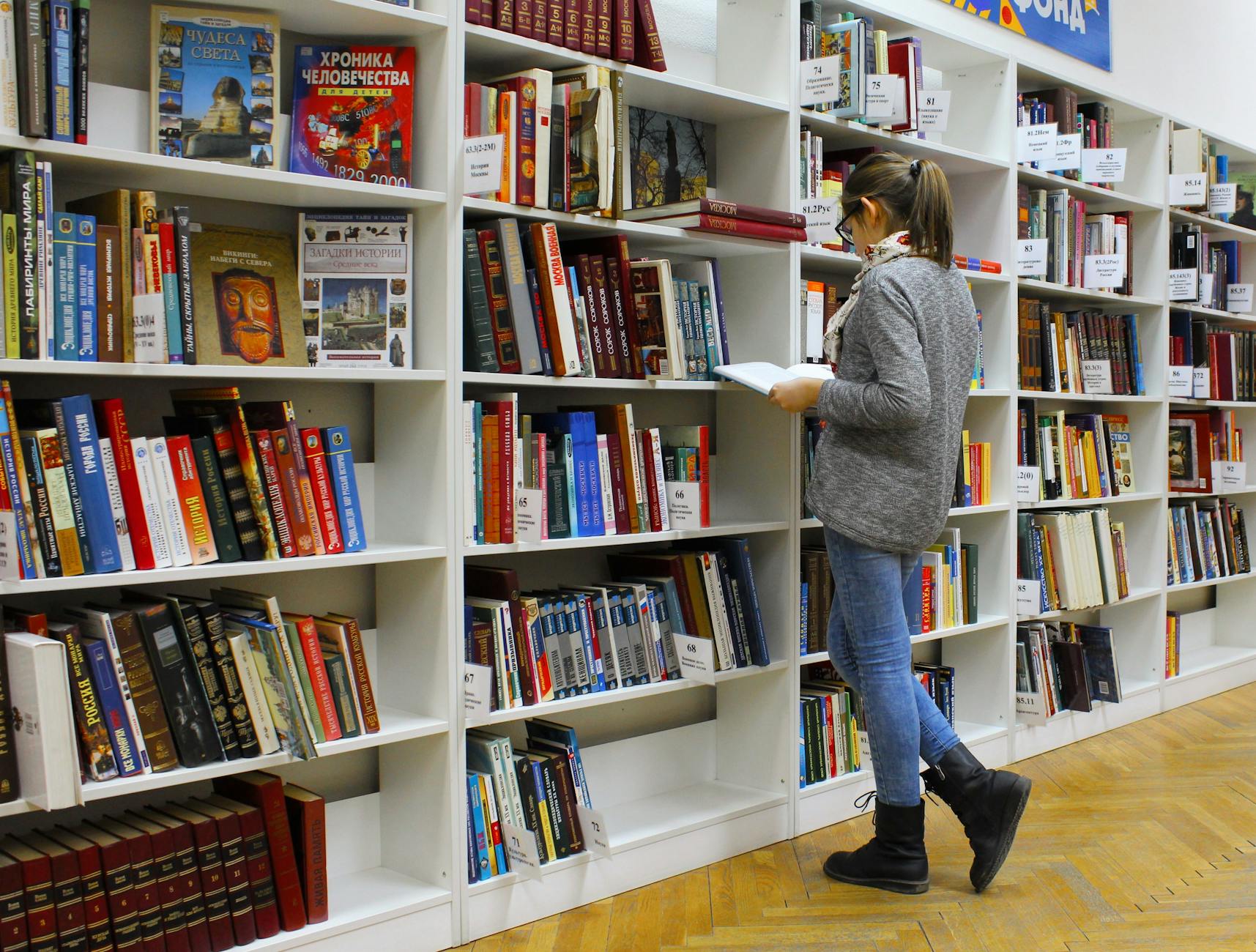
As I was sitting in the library, it suddenly occurred to me that I’m a writer who has never written about reading, one of my favorite pastimes. Every day I encourage my parents and students to read. Parents because they are role models of good habits, as well as reading allows them to share precious moments with their children. Students because reading is such a critical element to their education and their future lives. There is something to read everywhere you look: signs, directions, ingredients, instructions, and media content. Reading is needed to do math, art, music, and acting. Reading is a dynamic life-long skill. It not only opens up new worlds of knowledge and depths of meaning, but it also engages several regions of the brain to strengthen our cognitive processes. This may not seem important to you now, but it will be when you grow older and become more aware of forgetfulness and dementia. We’ll save this science discussion for another day. (Click this article if you want to learn more: Why is Reading important? by the 95Percent Group) Today I just want to talk about the joy of reading.
My husband and I took a short relaxation trip this past week. I brought along two novels, and he had his audio books on his phone. I still enjoy holding an actual book in my hands and doing the reading myself, while my husband enjoys being read to by a good storyteller. I’ve never discussed this with him, but it occurs to me that many people can benefit from audio book services, especially if reading has been a hard chore for them. In fact, I have a cousin who complains that reading is hard for him and during his childhood reading was a source of punishment and ridicule because of his he struggles with it. That breaks my heart on so many levels. (Never, never use reading as a punishment or make fun of people who have a hard time reading fluently.) As a teacher, I want my students to enjoy reading so I let them know we all learn to read at different times and on different levels. I am also an avid supporter of phonics in the early stages of literacy.
Unlike my cousin, I grew up loving to read. Mom taught me to read before I started school. The primer Dick and Jane and Little Golden Books were all over our house. Mom read to me and allowed me to read to her. We read the same stories over and over because I loved them so much. We took many trips to the public library, and I loved the fact that I could choose my own books. After I started school, I read more and more. Eventually children’s books were not enough for me, I started reading my mom’s True Confession magazines and sneaking into the Teen Section of the library. To this day, I still remember reading Sue Barton Student Nurse and all the books that followed in that series. I even decided I wanted to be a nurse based on those reading adventures. (I hate needles and blood so that didn’t work out. lol)
The joy of reading for me is adventure. I get to see and know about places, people and things that I may never have the opportunity to experience in my life. Vicariously, I can live in the mountains, paddle down a river, play with magic, and use my paranormal gifts to heal my community. Books elicit the experience of emotions across the gambit of sadness, grief, fear, excitement, disgust, surprise, happiness, love, amusement, empathy, and anger. Books allow me to explore theories and experiment with disciplines through the work and knowledge of experts in every field. Sometimes I feel like I’m right there in the setting with the characters regardless of genre. I love to read memoirs and literary novels. I love historical fiction and criminal suspense. I also love books on spiritual growth and theology along with books about birds and creative recipes. Adventure, knowledge and access to experiences beyond the borders of my life is why I love to read.
Books can expand your world. All you have to do is find your niche. Even if reading is a struggle for you, you can enjoy the experiences of reading through audio books like my husband. Your brain will be just as engaged as reading the words form the page. Your imagination will activate all of your senses to see, smell, taste, and touch all the experiences the authors convey. Your memory will conjure up similar circumstances or conversations that have been tuck away in the recesses of you mind for a long time. Your heart and soul will consider plans for an adventure of your own by taking classes, or a trip, or a special outing with your significant someone. You may look at strangers differently. You may try new recipes or exercises. You may collect new collectibles or sing new songs. You may actively engage in transactions of friendship or business even if it’s just in a daydream. You may escape the rat race for a few hours of peace and tranquility found in a good book. It’s really up to you, but I truly believe you can find enjoyment in reading or listening to a book.
If you have children, help them to experience the joy of reading as early as you can. Start with the things you love to do together and branch off into the things that interest them the most. Let them catch you enjoying a book and use it as a springboard to start discussions about subjects that are important to you and to them. Point out words in the environment such as tags, signs, labels, and brand names. Tell them the hard words don’t make them struggle unnecessarily. If there are no children in your life, challenge yourself to begin reading more widely. Try a genre you’ve never read before. Try a fully dramatized audio book. Return to a childhood favorite or try a book that has been turned into a movie, see if Hollywood stuck to the script. Read some autobiographies or some memoirs about people lives that fascinate you. Try some “How-to” books; create a new hobby or skill in your life. You are never too old to learn something new.
No matter where you live, no matter who you are, you can discover the joy of reading, and you can pique the interest of others to read. So let me end by thanking you for taking the time to read my books and my blogs. Every author needs a reader, and I’m blessed and thankful to have each of you in my literary world.
I enjoyed reading the following books (None of these are mine, click here if you’re interested in my books.) Maybe you’ll find your next book on the list.: (1) The Coming: A Novel by Daniel Black; (2) The Seeing Eye Girl: A Memoir of Madness, Resilience, and Hope by Beverly J. Armento; (3) Reclaiming Rest: The Promise of Sabbat, Solitude, and Stillness in a Restless World by Kate H. Rademacher; (4) The Cicada Tree by Robert Gwaltney; (5) American Daughters by Piper Huguley; (6) Blackberries, Blackberries by Crystal E. Wilkinson; and (7) Prayer: Experiencing Awe and Intimacy with God by Timothy Keller.
I love for you to share some books from your list with me. I’m always in the market for a good read.
Good Reading and Peace.
Cherish Your Relationships
Not too long ago I wrote a piece on Fighting Loneliness (click the title if you missed it) . It was about missing the special relationships I had with my grandparents and great grandparents as well as their brothers and sisters. I really miss the times we spent together sharing stories and our hopes and dreams. Each one of those relationships hold a special place in my heart and always will, but that doesn’t mean I don’t treasure the relationships I have today. These relationships are equally as important and tremendously valuable to me. Sometimes we forget how valuable our relationships are. Every encounter and interaction is significant to our sense of belonging and our growth as a person. Relationships on various levels contribute to our self-esteem and our self worth in both positive and negative ways, but for this piece I want to concentrate on the positive ones.
Recently, my oldest granddaughter got married. Her wedding reunited family and friends from all over the country and from various walks of life. It felt like a family or class reunion. It was wonderful to catch up on all the events and achievements of each person. It made me realize how much I missed them. By not staying in contact for such long periods of time, I was totally out of touch. Somehow we had allowed life, work, technology, and general busyness to interfere with our ongoing relationships. Sure we hit each other up on social media from time to time and sent an occasional text message, but that is not the same as actively nurturing and growing a relationship. In the short time of the wedding and reception, we tried to share everything we missed. We laughed, we cried, we hugged, we tried to explain and share every trial and triumph. We could not have done that electronically and it was nearly impossible in the time we had on the day.
We experience words differently in person than we do in text. A person’s words are connected to their body language, inflection, and tone. In person these things add a dynamic to what is being said that we can only imagine in text. Whether it’s a coworker, your best friend, or a family member these interpersonal conversations are shared experiences when done in person. Discussions take on new meaning when you can see the person’s emotions or feel the tension in their body. We react to the total expression rather than trying to interpret meaning on the written page. That’s why actual friends mean more to you than social media friends. After all, you may not be at all aquatinted with the person on the other side of the screen even though you may have some common interest.
At the wedding, we all vowed to stay in contact and connect several times within the next couple of months. We said we would call, do lunch, or catch a movie – promises to cherish and nurture our relationships. I plan to keep those promises. Yet, it can only happen if I keep how much I value these relationships at the forefront of my mind. There are many important as well as trivial things that occupy my time and my thoughts, but I am willing to prioritize the relationships that are important to me starting with my immediate family, extended family and friends. Memories of our connections – how we met, the things we’ve done and said – these are the things I cherish in every relationship that I been blessed to have. I have been molded and shaped by precious connections both past and present so I am intent on cherishes my relationships.
How about you? Do you have relationships that you value? Are they in the past or in the present? How do you nurture the relationships you care about? I would love to hear from you.
“Cherish your human connections – your relationships with friends and family.” – Barbara Bush

Rejuvenate Your Dreams

Subscribe to continue reading
Subscribe to get access to the rest of this post and other subscriber-only content.
New Poems
Grateful to have two poem accepted and published in the DeKalb Voices Review. Check them out. You will enjoy the others contributing authors as well.
https://dekalbvoicesreview.weebly.com/
I would love your feedback.
Peace
Hurry Up and Stop
I live in a rush-rush world. Everything feels like hurry up and do this or go there, but sometimes I have to make myself stop. While outside sources place demands on my life, I have to place demands on my own life as well for self-care, and nurturing relationships, and maintaining sanity. Because of my need for inner peace and wholeness I have to give up hurrying and simply stop the rush-rush life.
It is no wonder people call life a “rat race.” Like the rat running through a maze to get the cheese we have become accomplishment addicts. Some of us are chasing power and prestige while others are chasing prosperity and possessions. None of these pursuits are wrong until they become all consuming, so much so that our health and well-being is failing and our relationships are inconsequential. I saw some very shocking statistics the other day. It said only 2.7% of American adults have healthy lifestyles (Mayo Clinic Proceedings) meaning many of us struggle with chronic illnesses that could be prevented. Wow! Just 2.7%, the rest of us are too busy for self-care and healthy choices. (Check out the reports of the USDA, CDC, and the Bloomberg Healthiest Country Index.) Likewise, the number of divorces has increased annually (Modern Family Law, Purdue University) and our teens and young adults are dying by suicide at an alarming rate. (Jed Foundation, CDC, Yale School of Medicine). In other words, families are in crisis and people are self-destructing. Is this really the benefit of the Pursuit of Happiness? Are the “rat race” outcomes worth dying for?
Even if you don’t believe the statistics try taking a survey of your friends and family, your coworkers and neighbors, your classmates and associates. How many of them are dealing with chronic diseases like diabetes, high blood pressure, obesity, and cardiopulmonary issues? How many of them have ulcers and migraines? How many of them have problems in their marriage or have been married more than two times? How many of them have “wayward” children, troubled teenagers or babies in daycare eight to eleven hours a day? What are the mental health issues among your inner circle? Don’t forget to count yourself in the survey. Chasing the dream without balance is costly in a variety of ways. The rats want to live long enough to enjoy the cheese, right? That’s why it’s past time to hurry up and stop.
I have been struggling with insomnia for about a month. Everyone keeps asking me what am I worried or anxious about. My doctor suggest upgrading my antidepressants. My nutritionist suggested giving up caffeine and chocolate. Other well meaning friends suggested chamomile, melatonin, warm milk, a cruise, and a spiritual retreat. All these helpful ideas required some soul searching on my part. Was I stressing or worrying over something consciously or unconsciously? Was I depressed beyond my usual levels and struggles with depression? Was this the source of my inability to sleep? Had I increased my intake of caffeine or chocolate over the past couple of months, if so was that related to anxiety? I finally came to the conclusion that it was none of those things. What I needed was time for myself and to myself. This is not a new concept for me, I just have to remind myself from time to time. I needed quality time away from all the outside sources that were plaguing me to do, to go, and to be on call and in action 24/7. I needed to stop trying to be all things to all people and become my own self-advocate to rest, relax, and recreate. I love the Merriam-Webster Dictionary definition of recreate. It says, “to give new life or freshness, to refresh.” That’s exactly what I needed – to refresh my soul.
For those of you who follow me on social media you’ve seen my bird drawings. Drawing brings me inner joy and peace, mostly because I’m not thinking about anything else. I can’t multitask and draw. I can’t concentrate on anything except the shading, the lines, the colors, and bringing the bird to life. For me, self-care is not just getting a manicures or pedicures or a message. Don’t get me wrong, I love all of those but they are not enough. That’s just outside care like paint on a broke down car. Self-care starts on the inside. It is nurturing my mind with the sacred word or a good book, It’s using my creative skills to crochet a gift for a friend or family member. It’s spending time with my husband listening to a nice jazz combo. It’s going out to dinner with my mom and discovering new restaurants outside of our community. It’s sitting or walking on the bank of a river or lake feeling the elements on my skin and enjoying the Creator’s tapestry. It’s snapping pictures of wildlife and flowers. (View my gallery.) It’s bird watching, playing with children, spending time with my grand children and the people I love. It’s praying while I gaze into the morning sky or while listening to the night sounds. These things nurture my soul and fuel my ability to do the things I do in the marketplace and in the community. These things help me to work from a place of fullness rather than laboring from a place of emptiness. These things enrich my life so that my contentment and joy does not rest solely on what I am able to accomplish in a day or a week or a year. These things stabilize my health, my relationships, and my spiritual wellbeing. These things give me a refresh after the outside sources have tried to suck the life out of me. All I have to do is hurry up and stop the striving, and the multitasking, and the plethora of communication through technology, and the non-stop priorities of outside sources until I can achieve balance with my own priorities.
We have the ability to change our expectations of ourselves and at the same time change the expectation of others. So much of what we do is because we have allowed ourselves and others to think overworked, overstimulated,, and over committed is the norm. Just as we learned to believe these things about ourselves, we (and they) can learn to believe something different, They can learn that we are talented but our time for work is limited. They can learn that we have fortitude and tenacity but we also have personal priorities. They can learn that our start time also has a stop time when we minister the word “no” with firmness and care. They can even learn to hurry up and stop themselves.
Tell me what you think about all this? I’d love to hear from you.
PEACE AND RESTORATION
“We’re not just designed just to work all day and run a rat race. We’re designed to be in community, to volunteer, to vote, to raise our kids. And I think the more inputs and investments we can give in people to do those things, the better off we are as a community.” – Michael Tubbs

What Do You See?
It’s weird to me that you don’t realize how much your vision has changed until you get a new pair of glasses. It’s like the room lights up or gets brighter with your new lens. It’s really amazing the difference it can make. Yet, we may put off getting an eye exam until we have to admit we aren’t seeing things as clearly as we should. That was me; I put off eye surgery until it was evident that I couldn’t see clearly enough to drive or read among other things. I had no choice I had to do something about my vision.
Have you ever asked yourself, what am I not seeing? Even when we have 20/20 vision, we may not be seeing things as clearly as we should or understand what we do see. In the early years of my marriage, I remember my husband, who is a fine artist, trying to get me to see the many colors of green in nature. At first, I couldn’t see it. Green was green, but finally I began to notice the distinctions between dark green, light green, yellow green, and so forth. For the first time all the colors in a box of crayons made sense to me. I’m serious, I always asked myself why anyone needed more than eight crayons; a box of twenty-four or more was crazy to me. There were all these varied colors around me, but I was not seeing them. Whenever someone would point out something that I hadn’t seen or noticed I would simply say, “I’m not a visual person, I’m more of an auditory person.” The truth was probably I didn’t want to see it or didn’t care enough to look.
I wonder how many other people are like that. They either don’t see or can’t see the world around them. Perhaps they have never been challenged to really look for the subtle nuisances like my husband challenged me to see the color green. Perhaps they need a corrective lens to truly see the things around them. Or maybe they believe it is crazy to care about such things – that involvement and participation is like a box of sixty-four crayons, too excessive. However, if a positive difference is going to be made in our Beloved Community we must refocus our eyes and understand what’s really happening around us, around our children, and around our world not just globally but communally.
Certain life events have a way of opening our eyes. The Pandemic was one of those events. It not only helped us to see how quickly disease could spread, but it also helped us to see the education of our children in a different light. It showed us the vulnerability of the senior citizens in our community, and it exposed the necessity and sacrifice of what we now call “first responders” and “critical workers.” It also showed us how rural areas were cut off from necessary resources including technology. Our eyes were opened to mental health issues in every age group as well. For sure, the Pandemic made us see some things for the first time. However, many of those things were right before our eyes before the Pandemic and are still quite visible after the Pandemic so we have to ask ourselves “What am I not seeing and why am I not seeing it?”
Grief is raging in the lives of families who have suffered lost whether by natural disasters, accidents, or unexpected violence. Fear has a grip on our children and our senior adults because the definition of safety is ever changing. Scarcity is challenging the security of families whose jobs no longer offer longevity or elevation in pay or position. Every community is experiencing a shortage of peace offices, firefighters, nurses, and teachers. Politics on all sides has become a competition of rhetoric and citizens are becoming disillusioned with the whole process. So, what are we looking at and what will it take for us to see what is really going on? More importantly, how are we going to respond to what we see? And if you are an auditory person like me, how will we respond to what we hear?
I’ve learned from my husband and my art instructor that lighting makes a big difference in how a work is perceived. When the light is right it can highlight the details, but when it’s not right it can cause the observer to miss the details and other components of the art. Perhaps we are waiting for others to shine the light on the needs of our community but waiting has a price that we cannot afford. If we treasure our families and our communities, we must be willing to take a good look around us and activate our citizenry through volunteerism, through civic involvement, through educating others, and through challenging everyone in our sphere of influence to do the same.
What do I see? I see opportunities to do better. I see legacy in our elders. I see possibilities in posterity. I see work for my hands to do. What about you? What do you see? I would love to hear from you.
The color green is associate with nature, growth, and vitality. Figuratively, I hope we will all see more of the color green in our world. Peace and Restoration.
 The Good Word