Reclaiming Our Time

Two days ago I was talking to my grandson and he asked me why I don’t crochet anymore. (I used to make him and his sisters hats and scarves every winter when they were young. He’s sixteen now.) I finally had to answer him with the words, ” I don’t know.” Truly, I can’t remember making a conscious decision to stop crocheting. Over the last several days, I’ve discovered I’ve stopped doing several things that I once enjoyed. As I investigated this idea of giving up things you enjoy without realizing it, I found that many of my friends and loved ones have done likewise. The running theme seemed to be, ” I don’t have time to do it anymore. With the job, the kids, the running around, something had to go.”

Those things that had to go were too often the things that helped us to relax, feel useful, feel a sense of fulfillment, and self-satisfaction. Everything from woodworking, sewing, gardening, arts and crafts, painting, needlepoint, collectibles, cook-outs, bowling, and myriad of leisure activities went away because of our busy schedules. Instead of being well rounded, we’ve suffered from schedule stress. (Love that alliteration.)

Who would have thought stress was related to our loss of leisure time activities. Psychologists tell us that children and adults suffer stress from overloaded schedules. Our to-do list have taken over our lives because we don’t schedule breaks or time-off; we don’t see leisure enjoyment as a critical need. Boy, have I been there! Before the pandemic, my schedule consisted of work and providing transportation for the kids.

Many days I left work on my way to the dance studio to drop off or pick up my granddaughter or to pick up my mom from the house to transport her to the store or church. I practically lived in my car. I ate meals in my car, I wrote poetry in my car, I made return phone calls in my call, I did lesson planning in my car, and I took naps in my car. Needless to say when I got home the only thing I was in for was going to bed. This cycle continued day after day, week after week, month after month. It became the norm.

For many of us the pandemic changed all that, but for some heart attack, stroke, exhaustion, depression, and emotional strain was the change agent. I’ve actually heard some people grateful for the break that the Pandemic gave them from the “rat race.” Now that’s sad, yet it does offer all of us an opportunity to reevaluate our schedules. Our time and our priorities should correlate with our needs and our necessities as social beings. Needs meaning the material and physical requirements for living, and necessities meaning our relationships, spiritual, and personal growth.

Establishing routines and reclaiming our time and talents is possible now. As we head back to work, we can begin setting our schedules to include every part of our being. As I have written in the past, I make an effort to “fill my bucket” with things that bring me joy. I may not crochet in the near future, but it won’t be because I don’t have time for it. It will be because I’m doing something else that relaxes me, fulfills me, or brings me satisfaction. The rat race can not longer be my norm. Life is too short. (Another lesson from the pandemic.) No more living in my car. No more over-scheduling myself and my family members, No more saying “yes” to everyone except myself. No more saying “no” to the things that matter. I won’t miss living a well-rounded life because I’m over worked and over taxed.

Let’s use these days of social distancing and quarantine to reclaim and redefine our time. Let’s begin prioritizing our lives so that we enjoy living rather than dread it. If I’ve learned nothing else during this time of pandemic, I have learned that the things I thought I couldn’t live without didn’t matter as much as I thought they did. Nothing matters as much as my family, and friends, and our well-being, and our being together safe and healthy. (Yes, that’s a run-on sentence 🙂

It’s your choice. What do you want out of the time you have? You can reclaim or redefine it in a way that makes you whole and joyful.
Time Smart: How to Reclaim Your Time and Live a Happier Life
Four out of five adults report feeling they are time-poor: They have too much to do and not enough time to do it. And the consequences are severe. The time-poor experience less joy each day. They laugh less. They are less healthy, less productive, and more likely to divorce. In one study of 2.5 million Americans, time stress produced a stronger negative effect on happiness than unemployment. Amazon.com

How Did I Get So Busy?: The 28-Day Plan to Free Your Time and Reconnect with What Matters Most
There’s no doubt about it: these days we are just too busy. With the conveniences of technology, we’re compelled to get more done in less time and end up constantly striving for the next thing – rarely stopping to consider if it’s something we even want. As a result, we end up missing out on the things that truly matter: our relationships, the activities we love, quiet time to reflect and replenish our energy. Amazon.com
In the Village

I don’t have any idea who coined the phrase, “It Takes a Village” in the raising of children, but I agree we need our village. It’s the village that helps me keep my sanity. It’s the village that comforts me in my sorrows. It’s the village that celebrates my victories and cheers me on even when I’m losing. So, yes, “it takes a village” in all of our lives to help us thrive and become the entity of purpose that we are suppose to be.

In the village there are all types of people with all types of professions. There are the professed friends – the ones who profess their love and camaraderie. My oldest son calls these the “Ride or Die” friends. They will stick with you come what may. These are the types of friendship that develop over time and become more like family in the long run, or maybe better than family in some cases. (Don’t get me wrong some people have the greatest friendships within their family. I’m not discounting family relationships by any means). Then there’s the friend that profess to be friends. Although they talk a good game, in a pinch they leave you hanging. (Is that too many colloquialisms?) While their relationship may be a negative in one sense, they can also be a positive. Their inability to be loyal and steadfast teaches you to examine your relationships, as well as to be mindful of what you share and who you share it with.

In the village there are motivators and critics. The motivators may be parents, teachers, preachers, counselors, coaches, or bosses to name a few. These people see the potential in you; they push you to do your best, to take a chance. They encourage you to pursue your dreams, and to look forward to the outcome rather than focus on the struggle. Many of us owe our successes to these motivators, but we also owe them to our critics as well. Critics also motivate albeit in a negative way. Critics give you determination. They make you persevere if for no other reason than to prove them wrong. Critics help you decide the worth or value of a thing. They cause internal arguments; win or lose, you are motivated to act. I owe so much of my victories to critics who told me my dreams were impossible. In proving myself to them, I proved myself to myself also.

In the village there are heroes and heroines, as well as villains. (Can I pause here just long enough to say, the First Responders, nurses, doctors, and teachers have always been heroes even before the virus.) The heroes/heroines are the people who keep things going when everyone else gives up. They are dedicated to the better good of the village. They strive to leave no one behind. They find ways to overcome the odds, to jump hurdles, and to bring along the disenfranchised. Heroes/heroines give us principles to esteem and personal attributes to attain to. They are selfless in their time, talent, and treasures; while villains are selfish. Villains steal time. They see it as their job to destroy the treasures of others. They only value the things that benefit them. Villains never consider the outcome; they prefer instant gratification over well thought out plans. They see members of the village as obstacles in their way. Villains make us protective and appreciative of what we have and who we are.

I could probably go on with other analogies (after all I am a writer), but suffice it to say we all have a village and there are both good and bad in it. Yet, if we try, we can see the positive contribution in our lives. We can be thankful for our village. All we have to do is take the emphasis off of the word “the” and place it on the word “my.” My village – my husband, my mother, my children, my best friends, my pastor and church, my mentor, my writer’s group, my co-workers, my counselor, my instructors, my relatives, and my neighbors – all keep me moving forward even when I want to quit. My village holds me together and helps me achieve hope in the midst of precarious times because we really are “in this together” (unlike the media who coined that phrase).

Who is in your village? Perhaps its time to take notice and reassert your position and their’s. Perhaps its time to re-evaluate the importance of the people in your life and how they contribute to your well-being, your goals, your dreams, and your accomplishments as a generally good human being. It really does “Take a Village.”

Be well, stay safe, and do your part in the village.

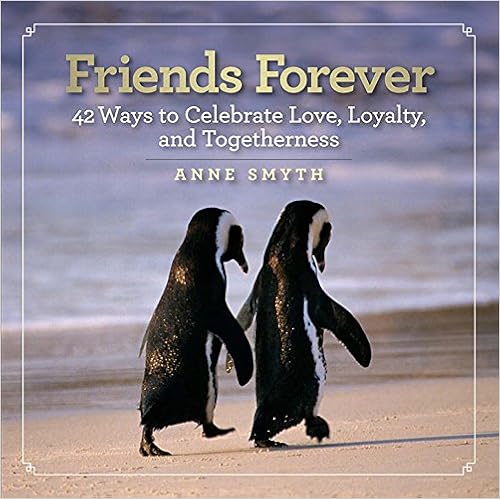
Learn more about who you are, how you see your loved ones, and how you can thrive together by creating 52 lists.
Amazon.com
In this heartwarming–and heartening–little book, colorful photos from the animal kingdom are paired with inspiring sayings that express how important friendship is.
Available at Amazon.com

Throw Out the Lifeline

I write many things to inspire and encourage self-care and moving forward with your life in a positive manner. However, it is very important to me that no one reads these things as a motive or reason to criticize persons who haven’t arrived at that point. All of us need encouragement at some time in our lives. All of us need someone to lean on when we are not strong, or when life happens in a way that sets us back. So we shouldn’t dare belittle or shame someone when they are down. We should throw out a lifeline. A good rule to follow is: “If you can’t help, do not hurt!”

There is great anxiety during these times of the Corona-virus. There is great sadness and grief. There is confusion, anger, disappointment, and disparity. We can’t deny these things, even if we happen to be surviving better than others. If we have found our rhythm (or our niche) that keeps us hopeful and positive, that doesn’t mean we should close our hearts and minds to those who haven’t. This position should give us an opportunity to reach out a helping hand, to pull someone up with us.

One of my friends made a homemade pound cake. She called me on the phone, and said look out on your porch. That was an uplifting experience. My co-workers and I (I haven’t seen them for almost eight weeks) had a long chat on Microsoft Teams two weeks ago. This gave us a chance to find out how each one of us was really doing. Now we meet once each week. Those same co-workers sent me a lovely gift via snail mail. It was such a lovely surprise; it put a smile on my face and in my heart. A friend from California called me. We talked for nearly two hours. She did most of the talking, but my listening filled some lonely hours since she is sheltering-in alone. All of these things are small lifelines that made a big difference.

There are so many ways to throw out a lifeline. Remembering birthdays, daily text messages, a quick phone call, a drive-by drop off of flowers or food, pictures or collages by snail mail, or even a virtual cocktail hour or luncheon. (You could even have the special meal delivered to your lunch date.)

Knowing someone’s hobbies can also be an avenue to letting them know they are not alone or forgotten. My granddaughter in California used to love working in the garden with my mom. So I sent her a flower garden kit through Amazon. She called to tell me the flowers are beginning to spout. I’m going to send her some more seeds in a few days just to fill her days of boredom. Perhaps someone you know needs some flower or vegetable seeds, some yarn, or some paint. Getting them to focus on their hobbies can be a lifeline.

If we are honest, there are days that we all feel like we are going a little stir-crazy. Our routines have been upended; nothing seems normal anymore. Even our “new normal” is changing on a regular basis. Now there’s a meat shortage, and some businesses are gone forever. States are opening up while the numbers of people getting the virus is still prevalent. Watching the news is a detriment to your emotional health. (I recommend you don’t have a steady diet of it.) Certainly, no one is experiencing great joy everyday. I attended my second virtual funeral today.

What a difference we can make in someone’s life if we share our time, talents and treasures with them. A kind word, a listening ear, a thoughtful touch (virtual or not), or a referral to your counselor, spiritual leader, or life coach can be just the lifeline that someone needs to make it through another day.

Here’s a dictionary definition for lifeline: “a thing on which someone or something depends or which provides a means of escape from a difficult situation.” Can someone depend on you to be there when they need to escape their difficult situation for just a little while? I want to be that person – a dependable friend, a dependable neighbor, a dependable relative, a dependable contact who is willing to share whatever I can to help us all get through these difficult days.

I hope Bene-Log is a lifeline too. Stay safe, stay healthy, stay connected, and throw out a lifeline to someone you know.

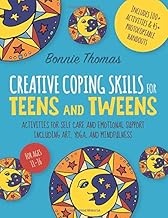
Creative Coping Skills for Teens and Tweens: Activities for Self Care and Emotional Support including Art, Yoga, and Mindfulness
Creative Coping Skills for Children: Emotional Support Through Arts and Crafts Activities
Available at: Amazon.com

Pursuing Happiness

Wouldn’t it be nice if there was a complete guide to surviving and maintaining happiness during times of crisis? After all, somebody should have the answers to all of our questions, right? Maybe that’s the danger of fairy tales, we always expect the story to end with happily ever after. It doesn’t take much adult living to figure out that that is a crock. Happily ever after comes in spurts throughout our lives. It’s hardly ever a constant, but that doesn’t mean that we can’t see our lives as happy in overview.

The question is does the good out weigh the bad? Have we made corrections, adjustments, or a conscious effort to establish the basis for our happiness. Admittedly, happiness is an elusive and ethereal term that can be defined in a thousand different ways. So, allow me to define my terms. I’m talking about a contentment that brings peace and joy to your life.

Several years ago my grandmother died. She was close to ninety. She was blind due to glaucoma and she had severe Alzheimer’s. She had lived a good life prior to the onset of Alzheimer’s. She enjoyed traveling between the states of her children and grandchildren. She loved to try new things, and she had an abundance of hobbies. She used to say she was doing everything she could to enjoy her life while she was able because the day would come when she couldn’t. She did not dread what the future held, she simply accepted the fact that change would come as she grew older. (She based this way of thinking on scripture, particularly Ecclesiastes chapter 12) That doesn’t mean she didn’t have some hard and rough days. She did – the failure of her marriage, the loss of a home, the death of her sisters and her parents, the loss of sight in her left eye before losing the sight of the right – many major and minor life events. Yet, she found a way to laugh, to count her blessings, to appreciate the love of family and friends around her, and practice her faith every day. She is my example. She is what I strive to emulate in my worldview and outlook on life.

“The greater part of our happiness or misery depends upon our disposition, and not upon our circumstances.” I don’t know where this quote comes from, but I believe it’s true. My grandmother was born in 1911. She grew up impoverish. She worked hard as a sharecropper in the South and as a domestic worker in the North. When I was twelve she got a job as a factory worker which earned her a Social Security check of a little over $600 a month. Yet, she was rich in her attitude toward people and life. Everyone loved her. So many people all over the country (due to her travels between family members) adopted her as their mother or grandmother. She was respected for her humanity and her spirituality. She was a confidant, a friend, a nurturer, a giver. She was my inspiration.

So here we are in the midst of a pandemic. What’s our disposition? What kind of attitude do we have toward our circumstances? How has it changed our outlook, our perspective on life? Are we miserable or happy? I’m finding a lot of that depends on me, not on others. When I wake up in the morning before the sun rise and hear the birds sing, I am so grateful. I’m reminded that there are persons who can’t hear what I hear. I’m aware that I’m alive. I have the activity of my limbs, a sound mind, my five senses (maybe six or seven), shelter, food, family, and so much more. I start my day counting my blessings and praying for those whose experiences are so different from mine. Being grateful enhances my empathy and reminds me that things can change drastically at any given moment. Like my grandmother, I purpose in my heart to enjoy my blessings and to be a blessing while I can, so that when the day comes that I can’t I won’t have any regrets.

It’s hard to be sheltered-in. It’s uncomfortable to wear masks and gloves every time you step out of the house. Long lines at the grocery store and drive through restaurants are so inconvenient. But, if you compare that to not knowing the destiny of your hospitalized love one; or being homeless not only during the pandemic, but before and after it; or having COVID19 while pregnant; or losing a love one who died alone; what do we have to complain about? My heart breaks as I hold the heart of my friends and family, as well as hear about countless others who are suffering at a far greater level than anything I have known or experienced. Yet, I can also find peace and joy in doing whatever I can to help them. (There are countless charity opportunities and ways to express your desire to help.)

If you can’t find you happiness – your peace and joy – or your contentment, may I suggest a couple of things. 1) Do a self-check. If you are depressed seek help: a counselor, your doctor, or clergy. Don’t accept depression as a norm. 2) Stay connected. Stay in touch with family and friends by any means necessary. Use electronics, stand outside windows, or call them on the phone. Take some classes on the internet, sign up for seminars. (Some local libraries are offering virtual classes.) Participate in virtual church or club meetings. Don’t be an island unto yourself. (ref: John Donne) 3) Find a way to give back. Donate food, clothing, or dollars to an organization that is helping those in distress. (You can do this at any age. My mom has been making masks.) Volunteer at a food bank or to drive Meals on Wheels, if you are not at that vulnerable age or have preexisting health issues. 4) Journal. Write your experiences for posterity. Write your feelings to examine them. Write your goals and dreams and how you can creatively accomplish them during the pandemic and after. Write fiction, poetry, song lyrics, or recipes. Writing can be very cathartic. 5) Count your blessing. Try to count 30 things that you are thankful for each week (or day). Do this while taking a walk or a warm bubble bath or sitting on your porch (deck) at sunset or sunrise. (You could also use your journal for this.) Lastly, 6) Do something you enjoy everyday. Read a book, cook, garden, sew, build bird house, whatever you enjoy doing find a way to include it in your schedule. It will give you something to look forward to as well as bring some joy to your heart.

We can pursue happiness by adjusting our attitude and watching our disposition. It starts by changing what we can change, and that is usually ourselves and how we choose deal with our circumstances. To that end I share one last thing with you – the Serenity Prayer.

Printable Typography.Serenity Prayer. 8x10. DIY. PDF. | Etsy

Stay healthy, safe, and happy.

When things get back to “normal” . . .

I have have heard this sentiment expressed so many times in the last couple of days. It always leaves me wondering “whose normal”; “what part of normal,” and “what do you mean by normal?” In my mind “normal” can be relative. After all, very few people have the same lifestyle or the same worldview as others. Right???

I’m not sure returning to “normal” is a great idea. When I ask myself whether I want everything to return to the way it was, my answer is no. There are life lessons I’ve learned during this time of sheltering-in that I don’t want to lose. There are also things I learned about myself that I don’t want to do or be anymore. I see this as a positive not a negative. Here’s some examples:

I want to keep having relationships with the seniors (elderly adults) in my life. I want to listen to their wisdom, their humorous comments, and their recipes for longevity. I want to remind them how important they are and what a blessing it is to be in their company. I want to interview them and record their experiences and their worldview for posterity. When this sheltering time is over, I want to spend time in their presence, not just letters, video chats, and texts or emails. I want to be truly present.

I want to spend quality time with my family. I don’t want it to be so unusual that we are all together in the same place actually communicating and participating in activities together. I don’t want to be so busy that it becomes an excuse for being unavailable. Life is too precious for that kind of regret. There’s a time and place for everything, and my family time is not the time to be preoccupied.

I want to continue journaling, my self care regiment, reaching out to friends and family, and taking the time to appreciate the beauty of every day. There are so many inspiring things in nature, so many uplifting experiences, so many valuable relationships, and so many wonderful words to read and to write; I don’t want to lose any of these things. Living through the pandemic has changed my perspective, I believe for the better.

Certainly, I want to continue working with children as an occupation. I love what I do. I also want to continue to produce poetry and stories and writing my blog; that’s part of who I am. I suppose it can be argued that these things are part of my normal, but I’m not sure I will look at these things in the same way. Working with children is an important investment, not just a job. Writing is a valuable means of expression, I can’t afford to frivolous with it. Bene-log (Good Word) is my intention in everything I write – to encourage, to inspire, to entertain.

When things go back to “normal,” I hope people will remember how to appreciate others. I hope people will continue to help others and consider the less fortunate. I hope we will keep the so-called least (the elderly, the children, the homeless, the impoverished) in our communities lifted. When things go back to normal perhaps we can be more thrifty and conservative in our spending and never be hoarders again. Perhaps we can continue sanitary habits in public and private. Perhaps we will never take our blessings for granted again, especially life and health.

When things go back to normal maybe it could be a “better normal.” What do you think? Is the old normal really what you want, or has your normal been changed forever and for the best? I’d love to hear from you.

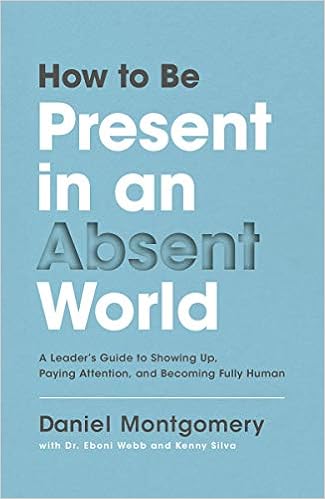
Many people today feel overworked, overbooked, and burned out. They long for purposeful and meaningful lives. The remedy lies in rediscovering what it means to be truly present…
amazon.com

Separated but Not Divided

Social distancing has separated many of us from our loved ones, especially friends and family we are used to seeing several times each week. Our new normal includes language like, “who’s sheltering in with you?” While the number of people we are sheltering with may be few, we don’t have to isolated from those we love.

One of the Gen Z members of my husbands family helped me to see this. (iGen, Gen Z, Centennials, I hate all these designations so why didn’t I just say teenager.) She took it upon herself to plan a virtual family reunion. She started by contacting as many family members as she could through her grandfather’s siblings and cousins on Facebook. Using these family members and a number of other social media platforms, she was able to get the word out that we would all meet together on Zoom (a webinar, video conferencing platform) on Palm Sunday at a certain time eastern standard time.

Although we were all separated by time and space, we were united together as a family of many generations. One of the oldest members of the family shared a song with us. Another member shared a prayer. Several members shared updates on their households, and we all took turns greeting members of the family that we had not seen in a long time (even before the Corona-virus pandemic). There was laughter and tears, scriptures and jokes, singing and banter. We were from all over the country: California, Tennessee, Ohio, Georgia, New York, Texas; there was also some family members on the video chat from England. Separated but not divided.

Last week my grandson let me know he was going to Face-time me on Wednesday at a certain time. I knew he had wanted to talk to his father, my son, but had been missing him because of his work schedule among other things. I was able to surprise my grandson by having his father on the line when he called. (That was a living in joy moment! See last week’s blog for more about living in joy.) My grandson was so surprised and happy, as was my son. Again, separated but not divided.

One of my dearest friends in North Carolina contacted me with an Easter greeting by text. I didn’t know she had my number. It has been four or five years since we visited one another. Needless to say, it was a pleasant surprise to hear form her and her family, and to know they were all doing well in the midst of the pandemic.

My oldest son sent me some beauty lake side pictures by text this morning. I got a chance to see what he was seeing while he is traveling for his job. He knows how much I love being near the water so it made him think of me. (I love oceans, lakes, and rivers; I can’t wait to travel again!) I haven’t seen him for several weeks now which is very unusual, but we remain close through phone calls, texts, and pictures. The love we share on a spiritual plain will never let us be truly separated.

Try something new if you are not techno savvy. Call one of those young people in your family and have them walk you through it. They are probably bored anyway and will be glad to help. If you are old school like my mom who still has a land line, use call forwarding or call waiting to hook up with your people. (My granddaughter informs me that hook up means something different these days, but you can’t do that through the phone, so you know what I mean.)

Don’t allow sheltering in to cause division between you and the people you care about. Use whatever means necessary to maintain contact and connection. Use this time of social distancing to reconnect with someone who has been on your mind, especially if you know they are by themselves. Don’t let them be alone.

We may be separated, but we don’t have to be divided. Stay safe. Stay connected.

Living in Joy

Okay, I’ll admit the title is a play on words, but I didn’t want to say “enjoy living” because I want to talk about more than just enjoying living. I want to talk about finding joy in living. One of my favorite songs is: “Golden” sang by Jill Scott. The hook says, “I’m livin’ my life like it’s golden, golden, golden . . .” That’s what I’m talking about. Living life like it is a precious gift; creating memorable moments and treasuring valuable relationships -living in joy.

Perhaps you are thinking that’s a crazy idea considering our “new normal” during this pandemic, but that makes it more important than ever as far as I’m concerned. If the Corona-virus has taught me anything, it’s that life is way to fragile. Since that’s true, why live with regrets. Why miss opportunities to live in joy. I’m surprised at the little things that can bring joy into our lives and the lives of the people we love even in the midst of crisis.

The other day, my granddaughter had a really bad day at work. I could tell she had been crying even before she shared the events of her day with me. The next day she came into my room an hour before it was time for her to leave for work. She said, “I want to quit! I don’t want to go!” I encouraged her to go and to keep her own goals in mind in spite of how other people behave. As soon as she walked out of the door, I sent her a meme of Squidward (a Sponge Bob character, I spend a lot of time with kids) taking a shower in money followed by a Waynan Brothers meme that said, “Mo’ Money.” I could picture her laughing. She was probably surprised I knew how to send a meme in the first place. When she came home I asked her if she needed a few more memes. She laughed and said, “Nana, you’re so extra!” (I think that’s slang for being great lol.) Today, I sent her a Wonder Women meme and told her how proud of her I am. This was a little thing that brought us both joy.

While you are sheltering in, you can still live in joy. My husband brought me breakfast one morning. It was one slice of bacon and one teaspoon of scrambled eggs. He presented it to me like it was a gourmet meal. His giggles turned into us both laughing, so I returned the favor the next day with one mini sausage and one very small piece of omelet.

Today, I sent several friends songs from my YouTube playlist with a message of love and encouragement. I wrote a poem (the beginning of a new collection) even though it’s really hard for me to write at home. Yet, it was very satisfying. My mom and I prayed together and watched a video bible study together. Today she called all her church friends just to see how they were doing. She was on the phone for hours and I could hear her laughing which also made me smile. What are the things you can do to find and share joy?

Here’s a few old-fashioned things you can do even if you live alone. Give yourself a spa night – a warm bath, a glass of wine, a scented candle. Follow that with painting your nails or just doing a manicure/pedicure. Draw a hop scotch on the sidewalk or in the street for the neighborhood kids. Plant a flower or some vegetables. (You can order seeds, soil, and pots on-line at very low cost.) Cook your favorite meal and serve it on your best china. Call a family member and share a story that’s old and hilarious. Play basketball with your dirty clothes by throwing them in the washer from five or six feet away. (Social distancing my laundry, now that’s a plan.) Get the popcorn, turn the lights out and watch your favorite movie. Add whatever makes you smile to this list. Be creative!

I choose to live in joy rather than fear. I can’t do anything about the Corona-virus and all its mandates. I can choose my attitude, my disposition, and my outlook. I can be grateful that I’m still alive. I can use my gifts, my talents, and my time to bring joy to myself and others by any means necessary – and it is necessary because life is valuable. Try living your life like it’s golden for two weeks, then send me a comment about your experiences. Together, we may come up with more ways to live in joy.

Golden
amazon.com

I Choose Joy: The Daily Gratitude Practice That Will Transform Your Life
The Daily Gratitude Practice: Record your gratitude for ten things in your life. Write down three goals. Commit to personal and professional growth. amazon.com

Our Need to Connect

Why is it you never miss things or people until they are gone or unavailable? When I think of all the times I complained about my students, my co-workers, or even my family, it seems ridiculous now. No doubt, I took their presence for granted. No doubt, I discounted the value of their connection to my life. Funny how we lie to ourselves. In honesty, after small breaks I was always ready to go back to work. After several days of vacation or time at home, I was always ready to return to my routine, my kids, and my people. That’s the thing! We all have our people.

All of our daily routines are connected to people whether they are co-workers, children, clients, siblings, competitors, bosses, or spouses. People connect us to our purpose. People enhance our identity and inform our desires. Okay, maybe that’s a little too poetic, after all that’s my niche. The fact is we have a innate need to connect and that need is suffering from “social distancing” and “sheltering in.” That’s why we need to find creative ways to connect even during these Conronavirus days.

We need to make connections beyond texting and emails; we need to connect with human voices and faces. Don’t get me wrong, I love Facetime, Zoom, Microsoft Teams, Google Duo, and all the other techno-means of contacting people. However, I’m talking about more than that. For example, neighbors can schedule times to meet in their front yards or over the back fence. Or you can stand 6 feet from grandma’s open window or six parking spaces from your best friend in the school parking lot. Perhaps you could have a four corners’ community meeting at the four-way stop in your neighborhood. Each family takes a corner so the children get to talk and see each other as well. Today, I met a dear friend in the parking lot of the grocery store, we both stayed in our cars and caught up on our families’ well-being.

Even though we are nervous about contact with others, most of us are still in contact with others in some form such as: doctor’s appointments, essential shopping, and contact with repair people. Asking and listening to the answer of the question, “how are you?” is important. While taking the time to talk to cashiers, or restaurant workers isn’t a deep heartfelt connection; it is still an important human connection. Sharing sincere appreciation for someone’s service is a much needed connection in times like these. All it takes is a little empathy and compassion.

Before COVID 19, we all had a network of friends, family, and even commercial partners in the marketplace (like my hairstylist, nail tech, and mechanic). These are essential connections. Some psychologists believe they are necessary for our mental health as well. Through these connections we become inspired and motivated to fulfill our purpose (dreams, goals, callings, niches). They reinforce our sense of self and increase our acceptance of others. We feel fulfilled emotionally and socially when we have these connections. We also feel safe and whole when we are connected to our people, our community of significant others. (Wow, that’s a little preachy.) Our need for connection is real is all I’m really trying to say.

Our need for connection with others is a real need, and we shouldn’t give up on it easily. We can use our creativity to communicate with others. If you have elders in your life, as I do, here’s one last way to connect. My mom is 89 and she loves letters and cards. She is from that generation where handwritten letters demonstrated the genuineness of the relationship. In fact, she has a little keepsake box of letters she has received over the years. So you can connect through handwritten letters, to protect the most vulnerable in our lives. Don’t forget to add some pictures.

One time there was someone very close to me in jail. They felt isolated and I felt helplessly locked out of their lives. I was shocked to see how much it meant to both us to talk through the glass and press our palms together on it. Just those few minutes each week gave us both hope and kept our relationship in tact. Our need for connection was somehow fulfilled just by laying eyes on one another and hearing each other’s voice. COVID 19 has us behind the glass, but it doesn’t mean we can’t find a way to connect.

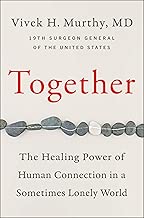
Together: The Healing Power of Human Connection in a Sometimes Lonely World
The good news is that social connection is innate and a cure for loneliness. In Together, the former Surgeon General will address the importance of community and connection and offer viable and actionable solutions to this overlooked epidemic. amazon.com
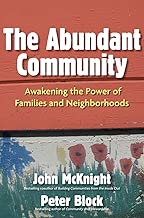
The Abundant Community: Awakening the Power of Families and Neighborhoods
We need our neighbors and community to stay healthy, produce jobs, raise our children, and care for those on the margin. Institutions and professional services have reached their limit of their ability to help us. amazon.com

Routines in a “New Normal”

As a teacher, routines are everything. Students, especially young students, perform better when routines are well established. They help the children establish good habits ( and in some case healthy habits like brushing their teeth) and feel comfortable with transitions. Children feel and work better when they know what comes next. Routines help them establish trust in their relationships with the teacher and their peers. They also help children trust the environment.

Routines also help with time management. After all there is a schedule of activities that must be adhered to at school and for that matter in most work places in their future. I have found that routines are important to me not only as a teacher, but as a person. Routines help me cope with change and control my stress levels. They become critical in maintaining my mental and emotional health.

I have struggled with depression for many years of my life. One of the ways, I control this is well-established routines. My daily routines reduce my anxieties while giving me things to look forward to. This is how I learned to use things to “fill my bucket” (see Jan. 9th conversation), and establish self-care (see Feb 8th conversation). Routines inform my daily schedule. So, I was thrown for a loop when the Corona-virus changed everything.

The first week of being home wasn’t bad. It was like a vacation break. The second week became more strained when businesses began to close and going out was curtailed. By week three, I was starting to feel the stress. Depression was waiting at the door of my sub-conscious as I began to process our “new normal.” My morning routines gave way to staying in bed. My walks gave way to watching too much daytime TV, my writing time gave way to trying to work from home with virtual learning, my reading time gave way to playing card games on my tablet. My morale was in a slow motion fall; not only mine, but most of my family.

During this time, my husband kept working. His job has not shut down. One day I noticed his mood and attitude seemed upbeat compared to the rest of us. (I won’t lie, that ticked me off.) I asked myself, ‘what does he have to be so happy about?’ I fumed over it for several days, especially when he would come in and ask me how my day was or what I had done all day. Then one day when I was forcing myself to work on rewriting a poem, it hit me. His routine hadn’t changed. His life hadn’t been interrupted in the same way that ours had. (Can you see the light bulb?)

The wheels in this creative head began to turn. The next day I got up, dressed like I was going to work, went to the kitchen table for my devotional time, ate my yogurt, and pulled out my laptop for a day’s work. I felt better. The next day I got up, made my bed, did my hair, put on my favorite earrings, and followed the routine from the day before. The third day, I added a drive to the schedule. My mom and I went for a drive just to see the spring flowers and trees. We didn’t get out of the vehicle; we just enjoyed the view and the conversation. Now we have a new routine. I felt grounded. I felt better.

Our new routines give us things to look forward to, as well as purpose. There are transitions in the schedule which helps the day to move along. There are activities in the day that keep my mind stimulated and my emotions in check. (I even have an answer to my husband’s inquiries when he gets home, instead of resentment.) Yesterday, I made spinach wraps for dinner. (Trying new recipes is one of my favorite pastimes, we call it “Chopped Wannabe)

Routines are important to the entire family. I’m helping my mom and my granddaughter establish “new normal” routines, and we’re all smiling more. Our life has a new schedule. Thank goodness, I don’t have to get up at five in the morning, but I do a have to get up, and I do have to “Cease the Day!” How about you? Is your spirit lagging? Do you feel the blues going on, or see it in your children? Perhaps it time to set some very important “new normal” routines in your family.

A guide to the early morning habits that boost your productivity and relax you—featuring interviews with leaders like Arianna Huffington, General Stanley McChrystal, Marie Kondo, and more. Amazon.com

Finding and Noticing Beauty

Tulips on the median divide

Yesterday, as I drove my granddaughter to work I saw a beautiful burst of flowers on the median divide. For a minute, I thought they were artificial. They were so beautiful I had to stop to take a picture on my way back home. (The picture doesn’t do it justice.) I began to wonder how long had those flowers been there. After all, we take the same route several times per week.

Have you ever been a passenger riding your usual route and seen something you never noticed before? That happens in my family all the time. My mom will point out a house, or a tree, or a construction project, and ask, “when did they put that there,” or “was that always there?” You seem to notice more when you are not driving. For some reason, your mind is not reoccupied with where you are going and what time you have to be there. Sometimes that can be pretty scary. I’ve had moments when I have no memory of how I got to my destination. I call that automatic pilot.

How may times do we pass beautiful, wondrous, things and never see them at all? How often does “automatic pilot” cause us to miss the world around us? Needless to say, I don’t have the answer to those questions, but I do have a few suggestions. My suggestions start with intentionality. I have a friend who is very big on intentionality. She says that your intentions direct your outcomes, even in how you feel at a given time. If you make joy your intention as you attack a project, you are more likely to experience joy. (I’m sure I didn’t do a good job of explaining that; forgive Carla.) So why not be intentional about noticing beauty?

Take a leisure walk around your neighborhood. Look at the houses. What color scheme do you like best? What’s your favorite architectural structure? Depending on the time of day, you may see birds, rabbits, or people walking their pets. Take a moment to observe these things. Perhaps, you can’t walk around; try sitting by a window. Observe the sky, the trees in your yard, and your neighbors. Look at the lawns, the bushes, their flowers, or the slope of the property. Try standing in your driveway. Look for bugs, ants, or flying insects. You may luck up and see a butterfly or a humming bird.

Here’s a favorite of mine. Watch children at play. I’m always amazed at the expressions on my young children’s faces. They laugh with their whole bodies. They are fully engaged with their toys, their pets, and each other. Concentration ripples across their foreheads, and their eyes twinkle with excitement. They find such joy in the simplest things – things I take for granted. You can see things so differently just by asking a child, “what’s that?” (One thing I love about working with children everyday is experiencing things anew when I see them through their eyes.)

Another way to notice beauty is to look directly at people when you’re talking to them. (That used to be a given, but I’ve noticed it’s not anymore.) I’m not talking about making eye contact, although that’s important. I’m talking about really looking at people. I’ve noticed nice haircuts, professional makeup, crooked smiles, distinguished lines and wrinkles, beautiful male eyelashes, elegant fingers (what my mom calls “piano fingers”), flashes of humor in smirks, and the changing color of hazel eyes. I also notice colors – colors of clothes, shoes, skin tones, jewelry, and teeth; not to mention body language that speaks volumes. There are some truly beautiful people in the world.

Beauty doesn’t have to be something extraordinary. The standard for beauty is personal. The things that make you smile, or feel awe, has nothing to do with what others think or feel. My favorite color is royal blue; every shade of blue is nice I suppose, but royal blue is my magic. (By the way, it’s not a color I look good in, but I still love it.) Unless you take the time to notice beauty you may never know what opens your personal pleasure.

Years ago when I was dating my husband we were traveling down the interstate on our way to God knows where. I distinctly remember him pointing out the trees on the hillside to me. He said something to the effect of wishing he could capture all the shades of green in his paintings. (My husband is a fine artist.) I looked at those same trees and saw green – no shades, no variations – just green. I told him this. He told me to look carefully, more closely. I remember staring out the window for what seemed liked forever trying to see what he saw. It didn’t happen for me that day. Many months later (maybe years), I saw it. Now I’m always looking for the colors of nature including the various colors of green.

Noticing natural beauty helps us to personalize the things that we enjoy, as well as the things we want to share with others. Noticing beauty adds to our lives; it nurtures our minds and hearts. Beauty dispels the ugliness and dirtiness of the world. (Just looking at those flowers on the median took me away from the virus for awhile.) We don’t have to buy into the manufactured ideas of what beauty is; we can intentionally establish our own standards.

Beauty is all around us. Remember to look around and observe the good things even in critical times like these. You may be surprised at what you see.

The challenge is to look for Beauty in the most ordinary places. Available from Amazon.com