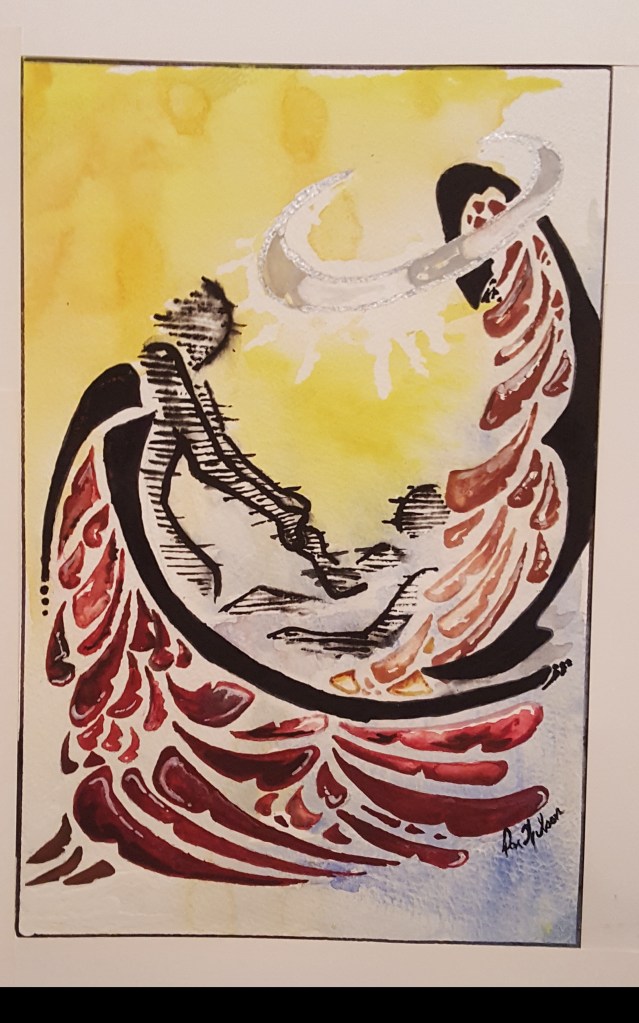
Holiday Sensitivity

This is the time of year when everyone is bombarded by holiday sales and decorations weeks before the holidays begin. Everywhere you look there is red, green, gold, blue, and silver garland. Toys and small appliances sit on the end caps of every store shelf. Even the piped-in music invades the atmosphere with subliminal messages of whimsical dreams, glee, and laughter. Before we get off to a bad start, I want you to know I am not intrinsically opposed to any of this (well maybe the sales campaigns and ads); I am just calling for some sensitivity during these seasons of holiday cheer. 

During the week of the national Thanksgiving holiday, we lost one of the matriarchs of our family. Her death was very disheartening not only because it was unexpected, but because of what she represented in our family legacy. She was the last of my maternal great grandfather children. As we grieved and prepared for her memorial and the celebration of her life, I was struck by the incongruent sentiments of condolences and “Happy Thanksgiving.” People asked, how was our Thanksgiving, did we cook a lot, eat a lot, or host a large gathering. At times I felt trapped between my own grief and trying not to dampen the spirits of people who were enjoying the holiday season. They meant well and were simply pursuing polite conversation, but I was not in the mood for it. I wondered if they even noticed my countenance or my monosyllabic responses. Few were sensitive to my hesitations; even co-workers didn’t seem to notice the strain. 

There I was trying to be sensitive to the needs of others by keeping my bereavement to myself. There I was trying to make sure I didn’t spoil their holiday cheer. I reasoned with myself; they didn’t know my great aunt. They wouldn’t understand what she meant to our family legacy. They certainly weren’t in the mood for a long explanation concerning the impact of her death. So, the sensitive thing for me to do was grin and bear it. Right? The aftermath of this was a reminder that everyone is not experiencing a season of cheer just because it is listed on the calendar. 

Upon reflection, it occurred to me that sensitivity is needed more than ever. First and foremost, we don’t all celebrate the same holidays. There are at least twenty-nine (29) holidays between November 1st and January 15th for seven major religions. These include national, cultural, local, and international days of celebration. Secondly, many people are limited in how they participate in holiday events. Socio-economic circumstances, health issues, as well as displacement from home and family can affect one’s participation.  When you are struggling to survive financially, holidays are not a top priority. When you are struggling with chronic disease or dis-ease, cheer may evade you. Yet, we often overlook these things when we are focused on ourselves and our own expression of the seasons in our lives. 

Holiday sensitivity doesn’t mean we have to stop celebrating our own special days, weeks, or months, but it does mean we should allow space for those who do not share our enthusiasm. We can pay attention to the needs of others. We can watch how they respond when we greet them. We can ask questions about their lives and their celebrations. We can practice attentiveness. Does the person we are talking to seem sad or confused? Does the person seem preoccupied or different in any way from their “normal” selves? Perhaps they are less talkative. Perhaps they have something to share with you. Perhaps they are trying to be sensitive toward you while you are not being sensitive toward them. 

I was brought up in the generation where we were taught to look a person in the eye when you speak with them or when they speak to you. You can learn a lot by making eye contact with people and observing their body language. (Things you’ll never get from a test message, but that’s a subject for another day.) Holiday sensitivity reminds us to be careful not to offend others and at the same time not to be easily offended. ”Happy Holidays,” are not words of challenge. It simply acknowledges the possibility that we may or may not celebrate the same calendar days. If a person greets you with a specific holiday expression, accept the fact that this is their time of celebration. Their oversight usually isn’t personal. Most of all understand that many people are struggling with day-to-day stresses and pressure. Depression, inflation, grief, heartache, or other issues of anxiety may be a hinderance to their attention to celebratory situations around them. They may require a little empathy on our part. They may require a hand-up or a handout on our part. They may require genuine concern and friendship from us. They may sincerely require and desire to be included in our community and in our celebrations. Let’s be more sensitive to the needs of other whether it’s a regular day, a holy day, or a holiday. It will make for a better community. 

Be kind. Be neighborly. Be sensitive to those around you. Peace and Good Cheer to all. 

Real Effort

One thing you notice as a teacher is the students who are making a real effort. That doesn’t mean all their answers are perfect or that they are the best students in the room. It means they are doing their best to meet the goal; they are determined to give it their best shot. I am always proud of these students. I also try to encourage them to continue their hard work because it will pay off in the end. There may be delayed gratification, but real effort leads to real achievement.

It takes real effort to improve our status. Unfortunately, too many of us give lip service to real effort while doing as little as possible. Our contribution to the finished product is minuscule. We do just enough work to get by or to keep others from saying we didn’t do anything. We don’t seem to realize we are shortchanging ourselves. Every accomplishment leads to new heights of understanding and confidence. Hard work and success enriches our lives and informs our character.

Collaborative learning came on the scene several years ago in all the high schools and colleges (also used in elementary education today). Courses were designed for students to work in small groups and to finish projects as a team. One student came to me totally frustrated. Her complaint was about the slackers in her group. Apparently, they had had an initial meeting where it was decided what each member of the group was responsible to do. They also scheduled several follow-up meetings to check their progress and prepare responses for the discussion board. At the first scheduled meeting only three of the eight students showed up, one being my student. At the second meeting five people showed up, but only the original three had anything done. The professor was checking the discussion board, but no one from this group had submitted any responses. They received a written reminder and reprimand from the professor. Discussion board participation was part of the overall grade. My student said she and her other two classmates were going to try to do the whole project by themselves in order to get a passing grade. I advised her to take all of their finished work and their assignment lists to the professor rather than three people trying to do the work of eight people. The professor listened to the three students and assigned them to another group where some of the work they had done could be used. The new group of ten people did quite well on their oral presentation and received a “B” on their written presentation. The remaining five students from the first group ended up arguing in front of the whole class during their oral presentation. I don’t know what grades they received but I do know they were called to a meeting with their professor. I do know that all this drama could have been avoided if everyone in the group had put forth some real effort.

We need real effort in our society today. We can’t just give lip service to humanity, equality, and civility. We must put forth some real effort in non-violent communication. We must put real effort into active listening, empathy, and cultural awareness. Harmony and respect take effort. Understanding and advancement requires teamwork where everyone is doing their part. Civic duty, volunteerism, and neighborly conduct is just the beginning.

When I am writing a story or a poem, I am always aware of the universal themes that underlie the specifics of the project. Love, family, community, dreams, hopes, legacy, inheritance, work and struggle are experiences and desires that transcend time and class. We all want our children to thrive. We all want our communities to be safe. We want our families to prosper. We want our leaders to lead with integrity. We want to reap the benefits of our labor. All these things require real community effort. We all have the opportunity to contribute to our societal whole. We have an assignment to fulfill as members of the human team. When I was younger, we called this good citizenship. My school district calls it community shareholders. The consequence of no effort is severe and affects every area of our society.

When I was in junior high (it’s called middle school today), our choir director taught us a beautiful song that I still remember to this day. The first lines of the song say: “Let there be peace on earth and let it begin with me. Let there be peace on earth the peace that was meant to be . . .” (Listen to the whole song here: Let There be Peace on Earth) Real effort begins with me, but it ends with all of us doing our part to bring harmony to our Beloved Community. “It takes a village” can no longer be a slogan, it must be a reality. It needs to be a work in progress each and every day if we are going to create a better society.

Promote kindness. Live peacefully. Cultivate charity. Learn to “love your neighbor as yourself.” Give it some real effort. Peace!

Be a lighthouse. Light the way for the next generation.

Running to Win

The July 4th is the day for the annual AJC Peachtree Road Race in Atlanta. People come from near and far to participate in this event. There are professional (elite) racers as well as amateurs. There’s a wheelchair event and an event for children. There are also walkers. Some people belong to groups while others are totally on their own, but everyone participates with enthusiasm and commitment. The challenge and the goal is to finish your race whether it’s the 50m Dash, the 5K, the 8K, Half Marathon, Marathon, or 1 mile. It’s a race where everyone wins because everyone has a different reason for participating.

The Peachtree Road Race is known as one of the largest 10K events. Over 50,000 people registered and participated in this edition (the 54th) of the race, but the racers aren’t the only people out there. Family and friends stand on the side lines and at the finish line. There are volunteers who pass out water and offer first aid. Others are simply cheering the runners on, encouraging the runners to accomplish their goals. There is also a police presence offering safety and protection to all the participants, vendors, and audience. News teams are there from every network to report the significance of the event and to record the historical moments. They interview and report individual and group stories of runners and walkers who have never missed a race, or who may be running for the first time; these are human interest stories.

The elite runners are running to win a monetary reward as well as to break records of speed and endurance. Others are competing with themselves for better time or just the ability to make it to the finish line. Some are running in memory of a dearly departed loved one. Some are continuing a tradition as their way to celebrate Independence Day every year. Others are celebrating the significant milestone of surviving cancer, a heart attack, or some form of trauma. Many are simply enjoying the comradery of being among diverse people from ages 10 to 92. Everyone is racing to achieve their personal goals and accomplish their personal dreams.

Wouldn’t it be marvelous if each of us could enter our everyday responsibilities and routines with this same attitude? What if there was comradery alongside competition in the workplace? What if there was celebration over everyone’s accomplishments in school and at work, even if they are different from the elite standard? How wonderful would it be to have cheerleaders, and helpers on the sideline cheering us on to accomplish our personal goals? Is it possible to make room for multigenerational persons with diverse abilities in the marketplace and domestic life? Could we adopt the ethic, mood, and spirit of this one-day celebration as the norm in society or am I hoping for too much?

We all have a race to run. The timing of our race and the distance of our race may be different, but the finish line is the same. We want to accomplish our goal of a good and peaceful life. We want to provide safety and opportunity for our children. We want to make it to a healthy ripe old age and leave an inheritance for our loved ones. We want to enjoy our relationships and celebrate every milestone of accomplishment with them. We want to be free to run our race, and we want to win by doing our personal best. The commitment is personal, yet it requires comradery and community – everyone doing their part. This is not just idealism; this is a prayer for change.

Keep moving forward. Understand you are not alone. Cheer for someone along the way. Celebrate the effort and the accomplishments of those around you. Offer a helping hand to the young and the old. Congratulate yourself and others. Be willing to try again. That’s running to win.

How Many Hats Do You Wear?

Years ago, I went to a seminar where we had an interesting ice breaker. The object of the ice breaker was to introduce yourself without stating your occupation or job title. At first, everyone thought this was an easy task, but it proved to be quite difficult. Titles and job descriptions were very much a part of our identities. Although we wore many hats, it was almost impossible to identify ourselves without the association of our daily tasks and routines.

Men and women wear many hats throughout their lives. Descriptions such as quarterback, cheerleader, president, CEO, mentor, mother, brother, homeless, aunt, coach, professor, doctor, nerd, freeloader, drifter, coward, cheater, entrepreneur, fighter, pilot, and tradesmen are just a few ways to be identified. It’s almost impossible to think of ourselves without labels. I’m a mom, a wife, a teacher, a writer/creative, a grandmother, a daughter, only child, a public speaker, a volunteer, an advocate, etc. I am me. I am simultaneously all of these – “One for all, and all for one.” – wearing different hats in different spaces. It becomes more and more difficult to separate myself from any one of these identifiers, because all of them are simply me.

From my small platform this seems true for almost everyone. Very few people are singular in their identity. Yet, we seemed surprised to know that XYZ rapper (my favorite, 50 Cent – Curtis James Jackson) is a successful businessman outside the realm of hip hop. We stereotype large-bodied football players before we know they are owners of gourmet restaurants (Check out Elways, or Favre’s Steakhouse). Pink-haired students can’t escape our judgement until we learn she’s a high school honor roll graduate headed to the University of Montevallo in the fall (Google: Tamira Prince). We assume we understand the predicament of the person with holes in their pants and a shopping cart full of cardboard. We think we know the blight of the person talking to himself as we watch his orchestrated hand movements. Hats can be difficult to discern if we fail to ask questions or observe other facets of a person’s life.

Many of us have had to fight off labels given to us by other people who assumed they recognized the hats we were wearing. How many times have I been told only children are brats and spoiled even when my mom worked two jobs to make ends meet and made most of our clothes by cutting out newspaper patterns? How often did professionals call me antisocial because my face was always in a book, never mind the fact that I learned to read when I was three and chose to read the classics at age ten. My neighbors were drunks, pimps, prostitutes, preachers, blue collar workers, teachers, widows, and unwed mothers who all watched out for me and promised me that I would be somebody one day. Members of street gangs protected me because my grandmother, the praying lady, was always nice to them and ready to help them and their families any way she could. Little old ladies in our church and community gladly gave me coins and dollar bills to help me with the expenses of school and college. They all seemed to believe I would succeed. They all seemed to believe I could wear any hat available in the world. All of these characters in my beloved community said I had spunk, wisdom beyond my years, and a gift for gab, and I believed them. They called me a good girl that was going places. When I said, “I wanted to be a nurse” (until I saw blood up close and personal for the first time); they said, “You can do it!” When I said, “I wanted to be a teacher”: they said, “We see that in you!” When I said, ‘I wanted to write books and own my own business’; they said, “You can do anything you put your mind to.” As often as I traded the hats I wanted to wear, my extended community and family swore they could see them all. I try to do that for the children in my sphere of influence today.

How many hats do you wear? Are you wearing the negative hats or the positive hats? Have you acquired your own identity? Do you use your preferred titles or are you stuck with someone else’s labels? You have the right to change hats all along the way of your life because there is no one position or title that can cover all that you are. You are a human being, the highest species on planet earth. You are a member of society, good or bad as it may be. You are a citizen of the world, as well as the place where you were born. That makes you connected to people and places you may have never seen. You can choose to force identities on others, or you can choose to allow them to define themselves. Better still, you can spend your time defining yourself. Play the ice breaker game with yourself. Identify yourself, write it on a piece of paper. Don’t use job titles or job descriptions. Avoid family positions and rankings. Who were you when you woke up this morning? Who were you when you started writing? Who will you be at the end of the day? How many times did you change hats?

Of course, I don’t have a pat closing for this blog post (pun intended), so I guess I’ll go for the obvious sentimental scenario. Let’s all try to wear more hats of honor, integrity, and compassion. If we remember these hats, our professional hats and our community hats will display the best identities possible. Okay, I tried. Pick your own ending.

Wear your hats. Wear your authentic self. Live in peace.

https://cascade.madmimi.com/promotion_
images/0823/6072/original/20141127_hats.jpg?1417251762

The Mysteries of Grief

Grief is a complicated emotion. It is a mixture of sorrow, sadness, misery, pain, and heartache. Yet no two people seem to experience grief in the same way. Some people become angry while others become despondent. Some people isolate themselves while others seek the company of friends and family. Grief seems to affect everyone differently. No matter how we describe grief, loss is its center piece.

Grief is a mystery to me. Even when you have experienced grief in the past, it doesn’t make the next time any easier. No amount of experience prepares you for the next time. Grief’s power does not seem to dwindle. It seems to come in waves. Just when you think you’ve overcome its effects, it washes over you again. Logic does not affect it. No matter how much reason and truth you throw at it, grief tends to linger until it wears itself out. Bits of comfort may have a temporary effect in the face of this strong emotion.

So why am I tackling this subject? Because grief is all around us. It has almost become a national phenomenon with gun violence, natural disasters, the residue of the Pandemic, and societal ills economically and politically. People of all ages are hurting. They are grieving the losses of normalcy, safety, ownership, health, good will, and loved ones. Many are losing hope that things will ever be right again. We’ve lost the “good old days,” and we can’t seem to phantom what the “good new days” will be like. How do you console people who have lost hope, people who have so many losses?

One of my granddaughters turned twenty-one on the 18th of this month. It should have been a happy day of celebration, and to some extent it was. Unfortunately, a dear friend and classmate died on that day. On the last day of his military training, he passed out on the field and died shortly thereafter. His family was looking forward to celebrating his accomplishment in a achieving his dream to be a United States marine. His death doesn’t just affect his immediate family, it affects whole communities: his fellow soldiers on the base, his neighborhood and local community, his high school where he was in the band and played sports, his church family, out of town relatives, and more. If you knew him, then you are experiencing some level of grief because he was generous, loving, dedicated, committed, helpful, kind, and full of life. Noah Evans will be greatly missed.

I have been trying to comfort my granddaughter by telling her the truth. Here is some of the things I toid her. “Waves of grief will come and go. Bouts of crying is normal and helps relieve some of the pressure that builds up. Try to go for a walk or do other exercise, it will help you get to sleep when your body is tired. Communicate with others who share your feelings, those who are also grieving. Cherish the memories. Remember he was right where he wanted to be pursuing his dream. Journal your thoughts and feelings. Pray and immerse yourself in scripture. Speak with a counselor. Do not isolate yourself from the people who love you. Make a memory book. Don’t be embarrassed about how you feel. I can’t change anything, but I can listen, and I can give you a hug any time you need one.” Is this enough? Does it really help? I can only hope. One thing is for certain, this will not be our last experience with grief.

If my premise is true grief is prevalent in our society, so what can we do? We can be more compassionate and realize that many people are quietly hurting. We can show kindness just for the sake of being nice to other human beings. Kindness is a welcoming healing balm in most any situation. We can be patient. Many people are doing the best they can under the circumstances. We can be charitable. It’s not always possible to replace the loss of others, but we can contribute to their recovery. We can be active listeners. We don’t have to have the same experiences to listen to someone’s heart. Sometimes the suffering just wants to be seen and heard. Lastly, we can offer common courtesy to everyone whether an acquaintance or a stranger. The golden rule still applies; treat others the way you want to be treated. Lastly, examine your own heart. Are you grieving the loss of someone or something? Have you been bombarded with losses over the last couple of years? Give yourself permission to grieve and share your grief with someone who loves you.

Although grief is a mysterious emotion it is a definite part of life. It can be brought on by the smallest thing or by a huge disaster. It can be a tangible loss or a perceived loss. It can be all-consuming or only for moment. It can produce a gamut of emotions such as anger, despair, hopelessness, numbness, shock, and confusion. It can also cause multiple physical symptoms such as sleeplessness, loss of appetite, anxiety attacks, and muscle aches and pains. We can do our part to demystify grief when we share the human experience with empathy and compassion. Don’t forget grief will someday come your way if it hasn’t already.

Queen Elizabeth once said, “Grief is the price we pay for love.” Love your family, love your friends, love your neighbors, love yourself. “Better to have loved and lost than never to have loved at all.” – Lord Alfred Tennyson

Divine Encounters by Don Wilson

All in The Family

By now you know that family is one of my highest priorities, and when I say family, I am not only speaking of blood relations. My identity, my values, and my worldview are steeped in the love of a multi-generational heritage. I don’t know any other way. From my childhood I have always had three to four generations uniquely tied to my life – my grandparents, great grandparents, the elderly lady down the street, the old gentleman from the church, the children in my daycare center, my high school students, my children’s friends. People of all ages have been and are a part of my proverbial village. I find this to be a great advantage and a blessing because every generation has made my life richer with their unique perspective.

I’ll have to admit my family is a lot like a fruit cocktail tree. (That’s a specialty tree grafted to bear a variety of different fruits such as plums, nectarines, apricots, and peaches at the same time.) You will find a wide variety of opinions, beliefs, moods, outlooks, and attitudes among us. You might even question whether one of us truly belongs to the family, but in time you will see the inseparably connections. The foundations of our fore parents keep us well-grounded and attached to each other. Faith and love keep us thriving and growing.

While it may be true that people are living longer today than in times past, it’s also true that quality of life and human connection contributes to long life. We can’t give medicines all the credit. Our lives are richer and fuller when we invest time (work and pleasure) into the lives of others. That goes for the very young as well as the very old. You haven’t enjoyed the wonders of nature and the world until you’ve seen it through the eyes of a child. You can’t learn to appreciate you stand next to a master gardening in whose hands have tilled and sown the soil. Our souls are enriched when we receive the expressions of all ages.

Sadly, we are losing these interpersonal intergenerational connections. In our mobile and transient society many of us may not live near our relatives or childhood neighbors. Some of us multi-taskers may have difficulty finding the time to socialize with our extended family and community. I won’t even mention those of us who think a text, tag, or tweet is sufficient. I guess the real question is about value. How much to we value people? How much do we value relationships? Are our interpersonal connections worth the time and travel?

The other day I had a conversation with my sixteen-year-old granddaughter. She is such a joy to talk to. She’s a deep thinker, very creative, and kind of an old soul. My grandmother would say she’s been here before. At any rate, she paid me such a wonderful complement by saying she liked talking to me because I “got her” and she always knew what she would get when she shared something with me, meaning honesty. I worked hard to establish this bond with her when she was very young. I had no idea that she would one day live so far away. I was used to seeing her every day. Yet the distance between California and Georgia has not broken our bond. We Facetime often and I plan to visit her this summer. Our relationship is genuine. I am interested in the things that concern and interest her. Sometimes we respectfully agree to disagree. I’d like to think I’m helping to shape her worldview just as my ancestors helped to shape mine. I am certain she’s reshaping my view of the world by sharing the perspective of a progressive young woman of this era.

The last time my mom (soon to be 91), my oldest son (44), my other granddaughter (soon to be 21), and myself (no I’m not telling you my age😀) sat in the family room talking we had so much fun laughing at and with each other. We ran through a variety of subjects: high fashion in our various school days, dating (or courting depending on one’s age group), cooking successes and failures, and ghost stories. It was so reminiscent of a conversation I had years ago with my grandmother, my aunt, and my cousins. We were sharing the human experience from one generation to another. We were sharing our love, adventures, dreams and goals, but more importantly this fellowship was all in the family.

I believe family connections and multi-generational relationships are needed to give us balance and a sense of belonging. We all need stories of perseverance and persistence to encourage us. We need stories of success and survival in the face of failure to inspire us. We can benefit from stories of witty invention and following dreams to motivate us. Stories of defeat and disappointment have value as well. These interpersonal connections can build strong foundations for the young and give value and purpose to our elders. All of this is in the family, the family of our birth and the family of our beloved community. All we have to do is seek out these relationships.

Be intentional. Reach out to that great aunt or uncle. Invite your elderly neighbor to brunch. Ask the eldest member of your family to share something from their childhood. Give a young child an opportunity to talk about their favorite things. Have a multi-generational talent show. Use photos albums (even the ones on your phone) as springboards to conversations. Plan a family reunion. Take a multi-generational vacation. Make an effort to be in the physical presence of someone outside of your age range. Seek to understand persons outside of your range of experiences. You may be surprised at the vicarious wealth and resources available to you. You may even be surprised that you really enjoy the contact.

“A good life depends on the strength of our relationships with family, friends, neighbors, colleagues and strangers.” David Lammy

Connect, relate, enjoy, and appreciate every generation! Afterall, it’s all in the family.

The Ark Experience in Kentucky
Spring Break 2023
A Multi-generational vacation.