How Many Hats Do You Wear?

Years ago, I went to a seminar where we had an interesting ice breaker. The object of the ice breaker was to introduce yourself without stating your occupation or job title. At first, everyone thought this was an easy task, but it proved to be quite difficult. Titles and job descriptions were very much a part of our identities. Although we wore many hats, it was almost impossible to identify ourselves without the association of our daily tasks and routines.

Men and women wear many hats throughout their lives. Descriptions such as quarterback, cheerleader, president, CEO, mentor, mother, brother, homeless, aunt, coach, professor, doctor, nerd, freeloader, drifter, coward, cheater, entrepreneur, fighter, pilot, and tradesmen are just a few ways to be identified. It’s almost impossible to think of ourselves without labels. I’m a mom, a wife, a teacher, a writer/creative, a grandmother, a daughter, only child, a public speaker, a volunteer, an advocate, etc. I am me. I am simultaneously all of these – “One for all, and all for one.” – wearing different hats in different spaces. It becomes more and more difficult to separate myself from any one of these identifiers, because all of them are simply me.

From my small platform this seems true for almost everyone. Very few people are singular in their identity. Yet, we seemed surprised to know that XYZ rapper (my favorite, 50 Cent – Curtis James Jackson) is a successful businessman outside the realm of hip hop. We stereotype large-bodied football players before we know they are owners of gourmet restaurants (Check out Elways, or Favre’s Steakhouse). Pink-haired students can’t escape our judgement until we learn she’s a high school honor roll graduate headed to the University of Montevallo in the fall (Google: Tamira Prince). We assume we understand the predicament of the person with holes in their pants and a shopping cart full of cardboard. We think we know the blight of the person talking to himself as we watch his orchestrated hand movements. Hats can be difficult to discern if we fail to ask questions or observe other facets of a person’s life.

Many of us have had to fight off labels given to us by other people who assumed they recognized the hats we were wearing. How many times have I been told only children are brats and spoiled even when my mom worked two jobs to make ends meet and made most of our clothes by cutting out newspaper patterns? How often did professionals call me antisocial because my face was always in a book, never mind the fact that I learned to read when I was three and chose to read the classics at age ten. My neighbors were drunks, pimps, prostitutes, preachers, blue collar workers, teachers, widows, and unwed mothers who all watched out for me and promised me that I would be somebody one day. Members of street gangs protected me because my grandmother, the praying lady, was always nice to them and ready to help them and their families any way she could. Little old ladies in our church and community gladly gave me coins and dollar bills to help me with the expenses of school and college. They all seemed to believe I would succeed. They all seemed to believe I could wear any hat available in the world. All of these characters in my beloved community said I had spunk, wisdom beyond my years, and a gift for gab, and I believed them. They called me a good girl that was going places. When I said, “I wanted to be a nurse” (until I saw blood up close and personal for the first time); they said, “You can do it!” When I said, “I wanted to be a teacher”: they said, “We see that in you!” When I said, ‘I wanted to write books and own my own business’; they said, “You can do anything you put your mind to.” As often as I traded the hats I wanted to wear, my extended community and family swore they could see them all. I try to do that for the children in my sphere of influence today.

How many hats do you wear? Are you wearing the negative hats or the positive hats? Have you acquired your own identity? Do you use your preferred titles or are you stuck with someone else’s labels? You have the right to change hats all along the way of your life because there is no one position or title that can cover all that you are. You are a human being, the highest species on planet earth. You are a member of society, good or bad as it may be. You are a citizen of the world, as well as the place where you were born. That makes you connected to people and places you may have never seen. You can choose to force identities on others, or you can choose to allow them to define themselves. Better still, you can spend your time defining yourself. Play the ice breaker game with yourself. Identify yourself, write it on a piece of paper. Don’t use job titles or job descriptions. Avoid family positions and rankings. Who were you when you woke up this morning? Who were you when you started writing? Who will you be at the end of the day? How many times did you change hats?

Of course, I don’t have a pat closing for this blog post (pun intended), so I guess I’ll go for the obvious sentimental scenario. Let’s all try to wear more hats of honor, integrity, and compassion. If we remember these hats, our professional hats and our community hats will display the best identities possible. Okay, I tried. Pick your own ending.

Wear your hats. Wear your authentic self. Live in peace.

https://cascade.madmimi.com/promotion_
images/0823/6072/original/20141127_hats.jpg?1417251762

Let’s Hear the Good News

One of the things I love about this time of year is all the posts and pictures of graduates, prom attendees, and weddings. Spring seems to be the time of new beginnings when people share their family’s good news. I’m certain there is good news during other times of the year, but spring seems to be the season for sharing it the most. Under all the layers of trauma and bad news that seems to monopolize the media streams, I just want to hear more good news.

A consensus of marketing agencies says good news doesn’t sell. I pray that is not really true, but even if it is can’t we change that? Everyone loves a feel-good story. I am not convinced we need to hear the same bad news three of four times per day or per week. It feels like the daily news’s rendition of what’s happening in the world is to keep repeating the bad news until some more bad news happens. Well to be fair, some news networks will end the daily report with at least one good news story. It would be wonderful to have more of those.

Uplifting stories not only make us smile; they give us hope. We take pleasure in knowing people are doing good in the world. When someone is rewarded for their work over and above the call of duty, we feel proud. When the underdog wins and overcomes hard times, we all feel like cheering. Good news is encouraging to everyone in the beloved community. Good news motivates us to do good works as well.

Here are some uplifting stories that made the news in May: “A teenage umpire saves a little leaguer from a dust devil; a WWI soldier’s letter to his mom in 1919 is returned to his granddaughter; a teen broke the scholarship record of ten million dollars and has his choice of 149 colleges; a woman once homeless wins $5M in the California lottery; and a 7th grader stops the school bus from veering into traffic after the driver passes out.” These stories will not be broadcasted over and over again like the last violent act of a shooter. They will not receive additional sound bites like the current politicians whose jargon is more backbiting and falsehood than promises and reform. These inspirational stories will fade into the channels of history never to be mentioned again. We should change this.

As I work with children and teens, I see fear and hopelessness. They are bombarded with bad news. They are preparing for bad news. Stranger danger drills, practices for intruder alerts, cyber bullies, climate change, and the end of the world forecasts are ever present in their environment. How are they to believe they have a bright future ahead? More than that how are they to believe they can make a difference in their world? There are mission-based companies in the fields of technology and science doing good that our youth need to hear about. There are also young people who are exemplifying great leadership abilities by make contributions to their communities right now. Our youth need to know these stories. I enjoy seeing their faces light up when they see or hear stories of incredible young people living their dreams.

Have you heard of Campbell Remess, who created Project 365 when he was 9 years old to give gifts to the kids in a local hospital; or Sidney Keys III, who at age 11 started book clubs under the title: “Books n Bros” to encouraged boys from 8 to 12 to embrace literacy? You can learn about these youths and others by googling “children making a positive difference in 2023.” You can also find them on TED Talks and CNN Young Wonders. There are children who have written books, started non-profits, and become advocates for gun safety. There are adults, especially first responders, who have dedicated their lives to helping others beyond their normal jobs. There are brand new college graduates entering the job market for the first time and they need to know that their efforts can add goodness to our world.

Just today I heard a story of a school janitor who is leading the school chess club to national championship. He actually thanked the job that laid him off and caused him to take this janitorial position. Everyday people in our world are making a positive difference with no fanfare or recognition. Their stories deserve to be told. We can be the town crier. We don’t have to wait for the media moguls to decide what needs to be broadcasted, we can use our platforms to spread the good news. What good thing is going on in your family? Who is making a difference in your community? Have you heard or seen someone going beyond the call of duty to create safety, art, literacy, or awareness in your city? Spread the good news. Tell someone all about it, and ask them to share it with the people in their sphere of influence. At the same time limit the amount of bad news you repeat or listen to. Turn off repetitious broadcasts of heinous acts of violence or nonsensical political rhetoric. Tune into positive change agents and advocates who want to make positive change in our world, personally and geographically.

I’d like to believe every one of this year’s graduates, whether high school or college, will be contributors to the good that we so desperately need to hear and see in our nation. I prefer to imagine every new wedding becoming an outstanding family in communities all over the land, and the proms are just the beginning of many celebrations of overcomers and high achievers. I am determined to be a harbinger of good news, inspirational news, and motivational news even in the midst of trauma and mind-blowing disasters, because these negative things are not the only things that are happening around us. Don’t get me wrong, I’m not talking about pretending terrible things don’t happen, I’m talking about not letting them consume everything good.

In the midst of trauma and terrible things happening communities come together to help and support the injured. Individuals turn into charitable manpower contributing time and money to resource material losses. Organizations exist and are being formed to meet the needs of persons whose means have been depleted by nature or by humans. Strangers have leapt to action to rescue endangered children, adults, and animals. I’m not sure who coined the phrase, “Difficult times often bring out the best in people,” but I agree. Sometimes the worst situations and circumstances finds a way to bring out the best in the community; suddenly we become true neighbors. This is good news.

What’s the good news in your neighborhood? family? city? state? Let’s hear it. Come on, share it! Start with your family and friends, then spread it on your media feed. Consider sending an email to your local news commentator. Share it with teachers at the middle or high school. Schedule them for career day at your local elementary school. Perhaps you could invite the person or persons to be guest speakers at your next club meeting or church social. Perhaps you are the source of good news. Don’t be afraid to toot your own horn just a little. You may be just the inspiration someone needs to make a good news move of their own. We can do this.

Let’s become Good News Influencers in our society. Let’s do it for our youth. Let’s do it to spread hope. Let’s do it because it’s the right thing to do. Don’t let spring be the only season to spread the good news.

Congratulations
Morehouse School Medicine Graduates 2023

What are you working for?

It seems like we spend most of our adult lives working – eight hours plus per day on the job and another two or three hours in household chores. In times past, we could multiply these hours by thirty or forty years on the same job. Today, those years may be applied to a diverse number of jobs. Nevertheless, work occupies much of our time and energy. Why? What are we working for? Are our standard answers to these questions really true? Are we achieving the goals we want to accomplish?

I can remember my first job at the age of fifteen. All I wanted was to have my own money to spend on whatever I wanted. No longer would my mother be able to dictate my spending. It turns out, she didn’t have to; life took care of that. There was bus fare, uniforms, the cost of lunch, toiletries, and I had to support my own habits. Taxes! No one told me that the government was allowed to take a portion of my money for taxes. My first big purchase was a folk guitar which cost $75. I had to save up for it over several paydays on the layaway plan. It wasn’t long before I realized I had to work for necessities before I could afford pleasures. As I grew older living expenses became larger along with taxes, and I continued to learn I wasn’t in complete control of my money.

My mom’s generation had a better understanding of delayed gratification (of course this is a broad generality assuming that everyone was like my mom). They knew how to save and wait for the ability to finance their dreams. Their goals were to see their children achieve and accomplish more than they had. Many of them left the Deep South and the life of agriculture for better opportunities (least wise they thought it was for better opportunities). Working in factories and on assembly lines replaced the seasonal work of sowing and harvesting crops. However, many of them still worked from sunup to sundown, and the cost of living was harsh as the winter weather. Yet the sacrifice seemed worth it if their children were able to get a quality education that would lead to upward mobility. Some of us became teachers, doctors, lawyers, and preachers as a result of their hard labor. Others simply followed their parents into the workforce of steel mills, factories, and domestic work. My mom and her generation would say they were working for posterity.

I certainly can’t speak for my entire generation, but I venture to say we want similar things for our children. However, we also want upward mobility for ourselves. Delayed gratification is not celebrated. We want it faster. We want more and we are willing to make changes to get it. We are not the generation who will remain in one job for thirty years. We are not the people who will live in the same neighborhood for a lifetime. Our educational choices include both public and private institutions. Our occupations include entrepreneurship and multiple streams of income. There is extended family disconnect because we will move across the country or across the world for perceived opportunities, financial or otherwise. It seems like we are working for a better house, a better car, better benefits, better vacations, more prestige and power. We have more debt than the previous generations, but we know what we’re working for. Do we?

Late in life I had an epiphany that I tried to teach my children and grandchildren. It was a plan to enjoy life more whether in work or in leisure. Here is how the plan works. Choose a career path that you believe you would enjoy doing. In other words, you love it so much you would consider doing it for free. If you are going to spend a great deal of your time and energy working, why not enjoy the work? Pursue the necessary education for it. It may not include a four-year college degree; it may be a trade school or an apprenticeship. Whatever the educational requirements are, pay as you go so that you don’t carry debt into your future. Curtail your spending desires. Determine your real needs. Do you need a new car? Do you need to buy a house now? Do you need to take luxury vacations every year. Whatever you determine your real needs to be map out a budget of time and money to achieve those needs/wants efficiently and frugally. Your dreams/goals don’t have to look like anyone else’s vision. Don’t compete with your peers or your neighbors. Don’t be swayed by media or advertisements. Choose your path, but don’t be afraid to start over or to reinvent yourself. I’m pleased to say one of my sons and one of my grands seem to be pursuing this plan and are happy for it.

I discovered early on that I love being a teacher, so it became easy to implement this gift/talent/calling into multiple areas of my life. Although I’m not a morning person, when I arrive in front of my students, I come alive. If you know anything about teaching, you know this is not the profession for mega-bucks. However, there are major benefits to being a mother like the same off days as your children. Being a teacher has met my goals and dreams in so many ways. I worked to spend time with my family and to travel. My children and grandchildren were afforded summer vacations (and sometimes spring break vacations) since they were very young. My sons and I set out to see every amusement park in America. We didn’t make it to all of them, but we certainly had fun trying. My grandchildren and I made a point of going to museums and beaches, as well as visiting our family members across the states. They got to meet great aunts and uncles, and cousins across the nation. Being a teacher also means life-long learning, so every vacation had an educational component. My goals were simple, but I knew what I was working for, and it hasn’t changed much since I retired.

While I’d love to downsize my home (we are empty nesters now), trading higher cost for a smaller property would interrupt our goals. My husband came out of a three-year retirement to pursue his artistic vocation (www.donwilsonartist900.com) and play golf. I retired but I still find time to be a substitute teacher during the school year. I also volunteer as a GED teacher. The extra money is for traveling and writing conferences. We work to fulfill our personal dreams and goals. We also work to spend more time with the family and our friends; to help others (charities and volunteerism); and to produce our craft (fine art for my husband and books for me). We have reinvented ourselves several times over the years. Teaching and writing are always at the center of my desires. I drive a pretty old car. I’ve held on to clothes until they came back in style. I’ve driven to more vacation spots than I have ever flown to because I’m cost conscious. However, I am not deprived of the things I enjoy the most – the things that I work for – the things that are important to me.

The cost of living and taxes are not going away. We all work to pay these, but what else are we working for? I would love to hear your perspective whether you are very happy or somewhat disillusioned. What can you do to make your labor truly worth it? What are your true priorities? There are no right or wrong answers. This is not a competition. This is about what’s right for you and what brings you the most satisfaction in life.

Focus on your wants and needs. Become proactive in your choices. Forget about competing in the rat race. Help others along the way. Work to live and enjoy life.

Don and I enjoying life with our dog, Lady Love

The Mysteries of Grief

Grief is a complicated emotion. It is a mixture of sorrow, sadness, misery, pain, and heartache. Yet no two people seem to experience grief in the same way. Some people become angry while others become despondent. Some people isolate themselves while others seek the company of friends and family. Grief seems to affect everyone differently. No matter how we describe grief, loss is its center piece.

Grief is a mystery to me. Even when you have experienced grief in the past, it doesn’t make the next time any easier. No amount of experience prepares you for the next time. Grief’s power does not seem to dwindle. It seems to come in waves. Just when you think you’ve overcome its effects, it washes over you again. Logic does not affect it. No matter how much reason and truth you throw at it, grief tends to linger until it wears itself out. Bits of comfort may have a temporary effect in the face of this strong emotion.

So why am I tackling this subject? Because grief is all around us. It has almost become a national phenomenon with gun violence, natural disasters, the residue of the Pandemic, and societal ills economically and politically. People of all ages are hurting. They are grieving the losses of normalcy, safety, ownership, health, good will, and loved ones. Many are losing hope that things will ever be right again. We’ve lost the “good old days,” and we can’t seem to phantom what the “good new days” will be like. How do you console people who have lost hope, people who have so many losses?

One of my granddaughters turned twenty-one on the 18th of this month. It should have been a happy day of celebration, and to some extent it was. Unfortunately, a dear friend and classmate died on that day. On the last day of his military training, he passed out on the field and died shortly thereafter. His family was looking forward to celebrating his accomplishment in a achieving his dream to be a United States marine. His death doesn’t just affect his immediate family, it affects whole communities: his fellow soldiers on the base, his neighborhood and local community, his high school where he was in the band and played sports, his church family, out of town relatives, and more. If you knew him, then you are experiencing some level of grief because he was generous, loving, dedicated, committed, helpful, kind, and full of life. Noah Evans will be greatly missed.

I have been trying to comfort my granddaughter by telling her the truth. Here is some of the things I toid her. “Waves of grief will come and go. Bouts of crying is normal and helps relieve some of the pressure that builds up. Try to go for a walk or do other exercise, it will help you get to sleep when your body is tired. Communicate with others who share your feelings, those who are also grieving. Cherish the memories. Remember he was right where he wanted to be pursuing his dream. Journal your thoughts and feelings. Pray and immerse yourself in scripture. Speak with a counselor. Do not isolate yourself from the people who love you. Make a memory book. Don’t be embarrassed about how you feel. I can’t change anything, but I can listen, and I can give you a hug any time you need one.” Is this enough? Does it really help? I can only hope. One thing is for certain, this will not be our last experience with grief.

If my premise is true grief is prevalent in our society, so what can we do? We can be more compassionate and realize that many people are quietly hurting. We can show kindness just for the sake of being nice to other human beings. Kindness is a welcoming healing balm in most any situation. We can be patient. Many people are doing the best they can under the circumstances. We can be charitable. It’s not always possible to replace the loss of others, but we can contribute to their recovery. We can be active listeners. We don’t have to have the same experiences to listen to someone’s heart. Sometimes the suffering just wants to be seen and heard. Lastly, we can offer common courtesy to everyone whether an acquaintance or a stranger. The golden rule still applies; treat others the way you want to be treated. Lastly, examine your own heart. Are you grieving the loss of someone or something? Have you been bombarded with losses over the last couple of years? Give yourself permission to grieve and share your grief with someone who loves you.

Although grief is a mysterious emotion it is a definite part of life. It can be brought on by the smallest thing or by a huge disaster. It can be a tangible loss or a perceived loss. It can be all-consuming or only for moment. It can produce a gamut of emotions such as anger, despair, hopelessness, numbness, shock, and confusion. It can also cause multiple physical symptoms such as sleeplessness, loss of appetite, anxiety attacks, and muscle aches and pains. We can do our part to demystify grief when we share the human experience with empathy and compassion. Don’t forget grief will someday come your way if it hasn’t already.

Queen Elizabeth once said, “Grief is the price we pay for love.” Love your family, love your friends, love your neighbors, love yourself. “Better to have loved and lost than never to have loved at all.” – Lord Alfred Tennyson

Divine Encounters by Don Wilson

All in The Family

By now you know that family is one of my highest priorities, and when I say family, I am not only speaking of blood relations. My identity, my values, and my worldview are steeped in the love of a multi-generational heritage. I don’t know any other way. From my childhood I have always had three to four generations uniquely tied to my life – my grandparents, great grandparents, the elderly lady down the street, the old gentleman from the church, the children in my daycare center, my high school students, my children’s friends. People of all ages have been and are a part of my proverbial village. I find this to be a great advantage and a blessing because every generation has made my life richer with their unique perspective.

I’ll have to admit my family is a lot like a fruit cocktail tree. (That’s a specialty tree grafted to bear a variety of different fruits such as plums, nectarines, apricots, and peaches at the same time.) You will find a wide variety of opinions, beliefs, moods, outlooks, and attitudes among us. You might even question whether one of us truly belongs to the family, but in time you will see the inseparably connections. The foundations of our fore parents keep us well-grounded and attached to each other. Faith and love keep us thriving and growing.

While it may be true that people are living longer today than in times past, it’s also true that quality of life and human connection contributes to long life. We can’t give medicines all the credit. Our lives are richer and fuller when we invest time (work and pleasure) into the lives of others. That goes for the very young as well as the very old. You haven’t enjoyed the wonders of nature and the world until you’ve seen it through the eyes of a child. You can’t learn to appreciate you stand next to a master gardening in whose hands have tilled and sown the soil. Our souls are enriched when we receive the expressions of all ages.

Sadly, we are losing these interpersonal intergenerational connections. In our mobile and transient society many of us may not live near our relatives or childhood neighbors. Some of us multi-taskers may have difficulty finding the time to socialize with our extended family and community. I won’t even mention those of us who think a text, tag, or tweet is sufficient. I guess the real question is about value. How much to we value people? How much do we value relationships? Are our interpersonal connections worth the time and travel?

The other day I had a conversation with my sixteen-year-old granddaughter. She is such a joy to talk to. She’s a deep thinker, very creative, and kind of an old soul. My grandmother would say she’s been here before. At any rate, she paid me such a wonderful complement by saying she liked talking to me because I “got her” and she always knew what she would get when she shared something with me, meaning honesty. I worked hard to establish this bond with her when she was very young. I had no idea that she would one day live so far away. I was used to seeing her every day. Yet the distance between California and Georgia has not broken our bond. We Facetime often and I plan to visit her this summer. Our relationship is genuine. I am interested in the things that concern and interest her. Sometimes we respectfully agree to disagree. I’d like to think I’m helping to shape her worldview just as my ancestors helped to shape mine. I am certain she’s reshaping my view of the world by sharing the perspective of a progressive young woman of this era.

The last time my mom (soon to be 91), my oldest son (44), my other granddaughter (soon to be 21), and myself (no I’m not telling you my age😀) sat in the family room talking we had so much fun laughing at and with each other. We ran through a variety of subjects: high fashion in our various school days, dating (or courting depending on one’s age group), cooking successes and failures, and ghost stories. It was so reminiscent of a conversation I had years ago with my grandmother, my aunt, and my cousins. We were sharing the human experience from one generation to another. We were sharing our love, adventures, dreams and goals, but more importantly this fellowship was all in the family.

I believe family connections and multi-generational relationships are needed to give us balance and a sense of belonging. We all need stories of perseverance and persistence to encourage us. We need stories of success and survival in the face of failure to inspire us. We can benefit from stories of witty invention and following dreams to motivate us. Stories of defeat and disappointment have value as well. These interpersonal connections can build strong foundations for the young and give value and purpose to our elders. All of this is in the family, the family of our birth and the family of our beloved community. All we have to do is seek out these relationships.

Be intentional. Reach out to that great aunt or uncle. Invite your elderly neighbor to brunch. Ask the eldest member of your family to share something from their childhood. Give a young child an opportunity to talk about their favorite things. Have a multi-generational talent show. Use photos albums (even the ones on your phone) as springboards to conversations. Plan a family reunion. Take a multi-generational vacation. Make an effort to be in the physical presence of someone outside of your age range. Seek to understand persons outside of your range of experiences. You may be surprised at the vicarious wealth and resources available to you. You may even be surprised that you really enjoy the contact.

“A good life depends on the strength of our relationships with family, friends, neighbors, colleagues and strangers.” David Lammy

Connect, relate, enjoy, and appreciate every generation! Afterall, it’s all in the family.

The Ark Experience in Kentucky
Spring Break 2023
A Multi-generational vacation.

Finding Balance

Image result for Free Clip Art Balance Scale

In my mind’s eye I picture a scale where the heavy side is about to tip the entire apparatus over. On one side there is so little, and on the other side it is loaded with clutter. Sometimes, this scale represents the worrisome thoughts that overload and throw off any peace I may have had. This usually ends in a night of insomnia. Other times, it’s a heavy load of creative ideas that just won’t stop coming. This is my writer’s flaw – thinking and re-thinking story lines. At any rate trying to find balance can be quite difficult. My mental scale is always swinging and seldom fully balanced.

I would love to say I have found the key to finding balance, but that is so far from the truth, that I can’t even attempt a fictitious version of that story. The best I can do is talk about recognizing when it’s time to take something off the scale. For me that looks like full conversations with myself better known as introspection. “What’s going on with you, Pat? Are you stressed? Do you have too many projects going on at once? Are you working on fumes due to lack of sleep? Are you carrying someone else’s burdens? Have you taken the time to prioritize things – first things first? Do you need some help? Have you asked for help? What’s the real deal?” These questions usually slow me down enough to consider why my world is out of balance.

One of the most common things that weighs me down is saying yes to too many things. Too many good things are just as harmful as too many bad things. Before you know it, you have agreed to do more than you have the time to do or more than you want to make the time to do. Whether work or volunteerism, the tendency to overcommit can definitely throw your mental and emotional scales out of balance. Getting to the root reason of why we can’t say no is a critical one. Relationships that can’t handle an occasional no may be relationships that need to be reconsidered. Yet, it is up to us to prioritize our activities and our relationships. Date books are very old school, but I find I do a much better job of balancing my life and my time by keeping a calendar in front of me. Before I give answers about my availability, I literally check my availability. Whether it’s your smart phone calendar, a day planner, or sticky notes on the window, it’s important to plan and schedule your commitments realistically.

Have you ever overscheduled yourself? I have, too many times. Recently, I agreed to pick up my granddaughter from college for her spring break, signed up to attend a writer’s conference, and committed to fill in for a teacher friend all on the same dates. All of these things are important to me. They all need to be done. Yet, it is impossible for me to be in Tennessee, Georgia, and North Carolina at the same time. As I was saying yes to my teacher friend, I had this nagging feeling that the dates were an issue, but instead of looking at my calendar I agreed to do it. Now I have a dilemma. The writer’s conference is definitely out. Perhaps I can get someone else in the family to pick up my granddaughter, but asking someone to drive to Tennessee is not a small thing. Perhaps I can find someone to work in my place for my teacher friend. I haven’t worked any of this out yet. On top of being over committed, I feel bad because I’ve got to let someone down. The scales are leaning.

Yesterday, I had the thought: I don’t want to be needed anymore. That is evidence that I need to find that balance that keeps me mentally and emotionally stable. Balance includes work, leisure, rest, relationships, personal discipline (This will link you to my blog entitled: A Disciplined Life), quiet time, and personal getaways. I love those signs that say: “Live, Laugh, and Love.” True balance has to have those elements as well. Finding balance isn’t a one-time event. It is a practice in daily living. So don’t beat yourself up, just find a strategy that works for you. Whether you use a day planner or introspection, therapy or a life coach, you can change the weight of your scales.

Say yes when it’s right for you. Say no when it’s best for you. Make the rest of your life, the best of your life. Manage your scales in a way that brings you peace, joy, and fulfillment.

What if you could choose how you want to feel as opposed to simply reacting to the reality that surrounds you? Amazon

Where I Belong

Being a part of a support group for care providers, I have heard people of all ages talk about feelings of not belonging. They would say things like: “I don’t know where I fit in” or “I’m really not a part of the group, I just help out where I can.” That feeling of not belonging becomes a stumbling block for building strong relationships. It makes you shy away from sharing and being a part of a harmonious group. We all like to know where we belong and where we fit in because everyone hates the feeling of being left out.

As an only child, I can remember making myself feel quite sad because of classmates and friends who had great relationships with their siblings (as least from my perspective). Those kids seem to have a special place in life; they were part of a whole that I had never known. I would imagine what it would be like to have a big brother or little sister. I imagined never being alone, and always having someone to talk to after school and on the weekends. I would imagine how they would always take up for me and include me in all their fun. These kinds of feelings make some people resentful, but I think these thoughts depressed me. I became unhappy with everything. I believed I was an outsider; I believed that my friends and classmates didn’t really want me around because they had siblings so why would they need me. Little by little, I began isolating myself from others including social groups that I was a member of.

One day, my best friend’s mother explained self-fulfilling prophecy to me. She said, “You think you’re alone, so you make yourself alone, then you say see no one wants to be with me. You said it, so you made it happen.” I was stunned. “You mean I’m doing it to myself?” I was. I allowed the thoughts in my head to override the reality of my life. Truth was my best friend’s mom made me feel like one of her kids. My best friend’s siblings treated me like an additional sibling. They never treated me like an outsider. My best friend and I are still friends after all these years, but more importantly that family taught me to understand and enjoy where I belonged.

I belonged to a glee club; I sang first soprano I belonged to that section of singers. I belonged to a karate dojo; I earned a brown belt and I belonged to that school of martial arts. I belonged to a church and served as a junior usher. I belonged to Angel Flight as a member in good standing. From those early middle school and high school days I learned to belong to many groups, circles, and communities. I learned where I belonged was where I truly wanted to be – my sorority, my prayer group, my support groups, my church, the PTA, the writer’s club, on the mission field, serving the homeless, married with children, grandparents raising grandchildren. I belong in my family and family has expanded exponentially because I want others to belong with me. I know where I belong each and every day whether alone or with others,

Perhaps this season of holidays has you questioning where you belong? Perhaps you are suffering from SAD (Season Affective Disorder – a mood disorder that happens at the same time every year). If so, maybe you should ask yourself if you are creating a space of self-fulfilling prophecy. Are you isolating yourself from the places and people where you already belong – your church, your synagogue, your temple, your community center, your bowling league, your neighborhood gym, your sewing circle, your golf buddies, your walking club, your virtual cooking class, your book club, your blood family, lunch with your siblings, daddy’s day out, your tailgate friends, your 12-step program. Where you belonged before, you can belong again. You can even create new places and groups where you want to belong in the future. You are only limited by the thoughts in your head, and please don’t be afraid to discuss those thoughts with someone. That may be the very thing you need to set you free to enjoy where you belong.

Over the years, I have developed deep friendships with people who are only children like me. Each of us have reached the age of old refined wine, and each of us have fulfilling and joyful lives. We belong to each other like sisters and brothers from another mother. We belong to organizations, programs and groups that satisfies our creativity and interests. We belong to the culture around us expressed through the arts and academia. We belong to our community as contributors to a better society. We are not alone. We are not left out. We are not isolated. We are right where we belong today and prepared to be right where we belong tomorrow as we grow and mature.

My wish for each of you is to understand and know where you belong in this season of your life (not just this season of the year). I hope you will find and maintain your place in your neighborhood, in the “Beloved” community, in the global community, and in your immediate world.

Peace, Love, Joy, Hope. Happy Holy Days!

A Disciplined Life

What do you think of when you hear the word discipline? Do you think of parents spanking their children or a course of study at the university, or perhaps martial arts? Has the word become obsolete for you? There is a lot more to this word than corporeal punishment and academics. The word discipline means “training that corrects, molds, or perfects the mental faculties or moral character; a rule or system of rules governing conduct or activity.” (Merriam-Webster). While I’d love to chase the etymology of the word down the proverbial rabbit hole, I won’t. (You welcome!😊) Let’s just say discipline is a necessary part of life. We can usually all agree on this point.

We admire people who demonstrate discipline. We honor them with medals, awards, scholarships, and other means of recognition. Excellence in sportsmanship, musicianship, academic achievement, military prowess, and other life pursuits happen because of personal disciplines. These types of discipline may include practice, exercise, time management, and lifestyle changes. Disciplined individuals focus on the end goal; they will do whatever is necessary to achieve their goals. People like Serena Williams, Yo Yo Ma, Michael Jordon, and the U.S. Olympians are just a few individuals whose skills and high-performance levels depend on how they live and handle themselves, we call that self-discipline. These persons have demonstrated world-class achievements because of their willingness to lead a disciplined life, but what about the rest of us? Do we need personal disciples as well? How much more could we accomplish if we led a disciplined life, personally and professionally? I have no doubt that I could produce more as a writer if I were more disciplined about writing, such as scheduling time to write everyday.

Sometimes discipline is a matter of priority, and believe or not writing isn’t my highest priority. This accounts for my missed deadlines. Different priorities/goals may require different strategies and disciplinary habits. We may have to start off with small changes to build up the necessary disciplines for achieving our prioritized goals. (I certainly did.) I am not saying we all need to go out and hire a life coach or a trainer (although it may help to have an accountability partner), but I am saying we need to become more intentional about who we want to be and what we want to achieve. Then we can set the perimeters for what we must do to achieve our goals and dreams.

I recently read an article by Jennifer Cohen, a former contributor of Forbes. According to her “self-discipline is the number one trait needed to accomplish goals, lead a healthy lifestyle, and ultimately, be happy.” (Google: Five Proven Methods for Gaming Self Discipline, Forbes.com, June 18, 2014.) Like Jennifer, many believe (and so do I) that people who practice personal disciplines are not easily swayed by peer pressure, emotional impulses, conflict, or failure because disciplined people are focused on the end game. They make decisions and adjustments based on factual information and personal objectives, rather than peer influence or the latest trends. On a daily basis they chart their progress and revisit their targeted short and long term goals.

Your goals may not be, nor do they have to be compatible with anyone else’s goals. Personal disciplines are self-imposed changes to your lifestyle and personal habits. According to the article mentioned above, there are five proven methods for gaining better control of your habits. (If you get a chance read the entire article.) “1. Remove Temptation. 2. Eat Regularly and Healthily. 3. Don’t Wait for it to “Feel Right.” 4. Schedule Breaks, Treats, and Rewards for Yourself. 5. Forgive Yourself and Move Forward.” I would like to add just one more to this list: Don’t expect others to understand or agree with all of your choices.

Here is an example from my own life. I have to stock sugar free products for my consumption and avoid the temptation to overindulge in carbohydrates. I can’t remove the temptation by forcing others in my home to eat like me, but I can remove myself by having high protein choices easily available. I also have to resist eating out of boredom or depression. I can’t award myself with food. Substituting fresh fruits and raw vegetables is a healthy choice for me rather than my favorites: chocolate cake and ice cream. When I fall off the wagon, I try not to dwell on it. I admonish myself and start again. I revisit my short term and long term lifestyle goals (to lower my A1C and eliminate the need for certain medications). Living a healthier life is my true motivation. Others tell me that I should give myself a break. After all, they say “sugar free products aren’t very good,” but my decisions aren’t based on the opinions of others, nor do I expect them to understand.

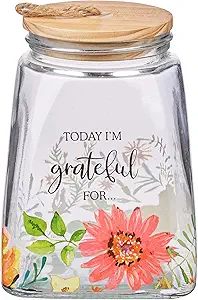
Monitoring carbs is just one of my personal disciplines for living a healthier life. Some of my other disciplines are journaling (for personal and spiritual reasons), meditation and prayer, spending time in nature, solitude (my husband calls this being anti-social) and practicing gratitude. (You may remember my gratitude jar from a former blogpost.) Why do I need these disciplines? They help me control my emotions, my actions, and my thought life. They help me stay motivated and grounded. They help me examine my motives and my desires. They help me focus on the person I’m want to be. They stimulate my creativity and establish a sense of contentment and peace. Career and professional achievements are only a small part of the whole picture. My objectives encompass my entire life because I try to see myself holistically rather than compartmentalize each factor of my life. (Check out What is Your Net Worth from 8/22) Lastly, these personal disciplines are checkpoints, they help me to have a realistic view of my progress or regress as I seek to be the best me I can be.

Years ago, I read a book about spiritual disciplines. (Celebration of Discipline by Richard J. Foster) It included forming intentional habits such as: retreat, fasting, simplicity, celebration, silence, academic pursuit (studying), and service (in the community or abroad). I can’t imagine how many disciplines there may be, and I’m not suggesting that we try all of them. I am suggesting that all of us have an opportunity to improve ourselves if we consistently practice self-discipline. Much of the media world around us appeals to our base instincts of self-indulgence and compulsion. Just watch three consecutive commercials on your favorite TV station or live streaming platform, commercials appeal to our appetites for temporary pleasure. They want us to act or react without thinking. They offer us temporary happiness. But don’t we want more than temporary happiness? (Actually, I prefer the word contentment to happiness because of its lasting value. Happiness seems to depend on something happening.)

What if we were motivated “to achieve our goals, live a healthy lifestyle, and ultimately, be happy” as Jennifer stated? Would that change the world? Would it change the marketplace? Who knows? The real question is would it change us, and how would it change our immediate world? It starts with introspection. Where am I and where do I want to be? Who am I and who do I want to be? What steps can I take to reach my goals? What habits do I need to get there? What habits do I have that hinder me? What kind of habits do I need to develop? What personal disciplines are the best personal disciplines for my dreams and goals?

I’m grateful that I was introduced to personal and spiritual disciplines early in my life. They guide my life decisions. They make me more self-aware. Achieving my personal, spiritual, and professional goals is viable. Being healthier in mind, body, and soul is in reach, and experiencing happiness (contentment) on a daily basis is attainable. How about you? Are daily habits and routines leading you to a better life or hindering your accomplishments? I would love to hear about your personal disciplines and how they are helping you achieve your goals.

Stay safe. Stay Sane. Stay on your game! Practice joy!

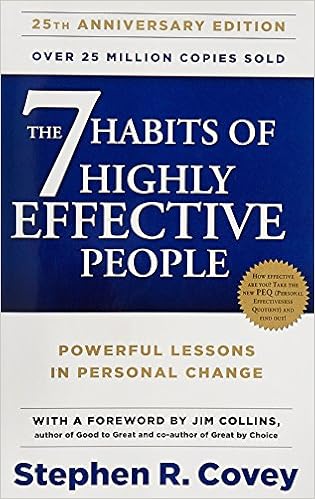
Powerful lessons in Personal Change (Amazon)

Give Yourself a Break

Sometimes pressure and stress come from outside of our being, but sometimes it come from within. We have our own standards and our own expectations to meet. In fact, we may be convinced that no one can do things the right way like we can. So, when and if failure comes, we are devastated. Devastation may lead to depression. Depression may lead to other health issues. We may feel it necessary to double our efforts rather than ask others for help. Sometimes we feel like we just can’t get a break. The question I have is: where should the break come from, within us or outside of ourselves?

Self-reflection has been critical to finding and loving my true self. For years, I spent so much of my time trying to please others – trying to make them proud of me, love me, recognize my skill set, or approve my methodology. This started in my childhood and continued on throughout a portion of my adult life. I actually used to repeat to myself this mantra: “Everyone else can do 100%, but you must do 200%.” I felt the burden of being the first in several areas of my life, as well as being a role model for those who would follow – the unknown others. My standards, my goals, and my drive had an audience mostly created by my imagination. I never would have believed it back then, but now I see it so clearly. I never gave myself a break, therefore I never truly enjoyed or celebrated my own achievements.

I can’t necessarily take all the credit for this type of thinking. The comments or criticisms of those we love and/or respect can be a catalyst. Perhaps a parent, or grandparent, or a coach, or a boss questioned our efforts when we had given our all. Perhaps an authoritative person compared us to other scholars, workers, or volunteers causing us to reevaluate or double our efforts. Competition may also be a source for such obsessions with accomplishment and determination to reach a certain status. When your work is good, but someone else gets the recognition for their work or receives accolades, you may receive this news as a challenge to be the best next time. Self-doubt and low self-esteem can have the same effects as narcissism. All three of these characteristics are self-centered preoccupations on what others think whether perceived or real.

Now you all know I am not a psychologist or psychiatrist, I’m just a writer trying to use my craft to keep positive conversations going through stories and poetry. So today, I’m sharing a wakeup call from my life. One day, I realized I was miserable when I should have been happy. I had accomplished many of my dreams. I had many successes under my belt academically and in my career. My family life was great. Religiously and spiritually, I was growing. I (we) had property and savings. I had traveled all over the U.S. and abroad. So why was I miserable? Who could I point the finger at or blame? Who put the target on my back that would never let me take a break. After some introspection during a personal retreat, the answer was clearly ME. Yes, me.

So many people in my family, even my husband, saw me as driven. They thought I was driven by my own desires and dreams. Each time I reinvented myself, they thought I had a plan and was going for it, but some of those times I was just quitting before potential failure could manifest. Sometimes I was competing with persons younger than myself, but of course they didn’t know that because the competition was in my head. Other times, I was hiding my weirdness, aka giftedness, because I hated when people saw them as an unfair advantage. (This usually had something to do with my ability to write or my discerning interaction with children.) I couldn’t, and I didn’t ever give myself a break or take the time to really celebrate my successes. While it was true that I was the first in many cases, no one was pushing me to be better than good. No one was creating the challenges in my mind but me. I invented my own “rat race.”

Over the years I have developed two favorite retreat locations: Monastery of the Holy Spirit in Conyers, GA. and Hendersonville, TN right outside of Nashville. I try to spend two or three days in these places to reset my spirit and my goals a couple of times each year. (If I only have a day, then any place with water works i.e. the lake at the monastery or Stone Mountain Park, or West Lake in LaGrange. Rivers are great too like the Oconaluftee.) It’s important to take the time to get in touch with yourself. What are you feeling? What is going on with you? What are your short term and long-term goals? What brings you joy? What causes you stress or sadness? How are you balancing your time between work and family? What are your real priorities? What will you do about failures? How will you celebrate victories? Who do you want to share your life with? (By the way, these are journaling events.)

As I was watching Serena Williams on ESPN she said something that triggered this train of thought after winning her match. “For years I had a target on my back . . . but today I don’t have anything to prove, I don’t have anything to win, and I absolutely have nothing to lose. I’m just Serena, you know . . .” I took it to mean she could simply enjoy her last days playing tennis. She could play her game to her standard. Win or lose, she was doing what she set out to do. Needless to say, everybody has an opinion of what she should do, how she should do it, and whether retirement is the right move for her, but what matters most is her own opinion, her own decisions. That’s personal growth. Others may indeed try to place stress on your life, but you can give yourself a break. You can play the game of life your way.

There are many events that may require you to give yourself a break: a newborn baby, being a care provider for an elderly relative, a bad medical diagnosis, changing positions in your place of employment, airline travel canceled by weather or other things out of your control, broken appliances, auto accidents, a national pandemic, social distancing, menopause, arthritis, death of a loved one. I could go on, but you get my point. Any number of things can change or upset your plans, but none of it makes you less than. Give yourself a break. So, what if it takes two more hours, two more days or two more weeks to get a thing done. So, what if it didn’t turn out the way you planned at all. It may be time to reevaluate. It may be time to come up with a new plan. It may be time to say the magic words: “I need help.” It may be time to take a walk or go to the spa, but it’s not time to beat yourself up. You do have a choice. Like Serena, you can raise the bar or lower the bar according to your own standards.

There’s enough going on in our world to keep us on alert and in the battle, but we don’t have to give the outside things permission to take control of what’s inside of us. Rest, relax, enjoy leisure, surround yourself with people who fill your bucket when it’s empty. Take a vacation, or a stay-cation. Read a good book, play a board game with your children, enjoy a romantic evening with your spouse, but don’t miss life’s joys because you won’t give yourself a break. You are your own score keeper. Noone else can determine whether you have given your all. Allow yourself to retreat and reflect and be honest with yourself. (See my blog: Self-Care, a Non-Negotiable.) Are you enjoying your life or are you the one making your life miserable?

I hope this blog entry is relatable. I can tell you now, I am enjoying my life so much more than I use to. I’m smiling more, laughing more. and doing more of the things that bring me peace and joy. How about you? What’s your story? Feel free to share your thoughts with me.

Stay safe, stay free, stay engage in the joys of living!

Giving myself a break.
A beach retreat.