It’s Not Too Late to Give the Gift of Presence

I have spent the better part of my life around my elders – my great grandparents, great aunts and uncles, grandparents, and the elderly members of my church and community. What I know now that I didn’t know then was each one of them gave me an intangible gift of their presence. I was never dismissed or overlooked by them, they made me feel important and interesting. Today, we call that “being seen.” We were not just physically together we were emotionally and spiritually together. They saw me and I learned to see them. They were fully present with me and that is a priceless gift that I still cherish to this day. 

I remember fleeing the city and landing on my great aunt Katie’s porch. It was the one place I could go and feel safe and loved. We had an agreement that she would not tell anyone I was there. She and I would sit on the porch and talk until the lightening bugs came out. Sometimes we just sat and listened to the radio. I wrote lots of letters and sent lots of cards when I couldn’t leave the city. It kept our connection going even across the miles. I had the same kind of relationship with my great uncle Fred. I loved to hear the stories of his travels and his work. He is the only one of my relatives that drove all the way from Tennessee to California to see me. He and I shared a love of gospel music and antique things. I could tell these two people anything in confidence. They listened with their hearts and shared their lives generously. Lord, I miss them, but memories of their presence in my life brings me comfort and peace even now.

These days it seems that we spend far too much time and energy trying to give tangible gifts. We seem to believe material things are the best gifts. Perhaps we have been sucked in by the myriad of commercials that bombard the airways. Or perhaps it’s a matter of convenience, a quick transaction. It takes far less time to purchase a gift card than to sit and commune with someone. At any rate, we tend to use our purchasing power more than our interpersonal interactive power. Things get set aside, regifted, or simply forgotten over time. We tell ourselves it is the sentiment that counts, but is it really? How much more sentiment does the gift of one’s presence give? 

Activities, conversations, and time spent together are invaluable. I love when we sit around the table or in front of the fireplace talking about our experiences and dreams. Conversations that trigger fond and intimate memories is a remarkable treasure. When we spend time laughing or crying with people it creates a special bond. When we share activities together like fishing, or making cookies, or patch working a quilt, or playing a board game, we create memories that can be treasured for years to come. After the gift card is spent, or the gift is exchanged or packed away, the moment fades away and becomes a vague recollection of the season or occasion of the little time spent with the people we associate with. 

The tangible gifts we can recall are the gifts of thoughtfulness. Perhaps you received a handmade gift from your grandchild or a well-thought-out gift from a friend who knows all your favorite things. These kinds of gifts have presence attached to them. The giver knows you, loves you, and carefully chooses what they know you will like and cherish. For example, one of my dear friends and prayer partner gave me a beautiful glass bluebird last year. This year, she gave me an artist drawn calendar of birds for 2024. She knows I love birds and I’m an amateur bird watcher. There was no particular occasion, she saw these things and thought of me. Why? Because we have given each other the gift of presence for a number of years. She knows me. She cares for me. Just thinking of her right now brings a smile to my face. We have taken the time to invest in our friendship – real time and real communion. 

It’s not too late to give the gift of presence to someone in your life. Perhaps there is that friend you have been meaning to call and catch up with. Perhaps there is a relative you saw at the last family funeral, and you said: “Let’s not meet this way again, let’s get together soon.” Perhaps there’s an elderly neighbor who could use a little company every week or so. Or maybe there is someone in your life who has given you the gift or their presence and you’ve not taken the time to tell them what they mean to you. The gift of presence is intangible. The value of presence is an indescribably investment – one that you can carry with you for the rest of your life. 

Someone you know needs the gift of presence not because it’s the season of giving and getting, but because there is nothing like being known and seen, honored and appreciated, received and treasured. When you give the gift of presence you leave an indelible mark of true companionship and comradery that is priceless and continues to give for a lifetime. As long as you have breath, it’s never too late to give the gift of presence. 

May the New Year bring you many gifts of presence and in this case, it really is better to give than just receive. Happy 2024. 

Real Effort

One thing you notice as a teacher is the students who are making a real effort. That doesn’t mean all their answers are perfect or that they are the best students in the room. It means they are doing their best to meet the goal; they are determined to give it their best shot. I am always proud of these students. I also try to encourage them to continue their hard work because it will pay off in the end. There may be delayed gratification, but real effort leads to real achievement.

It takes real effort to improve our status. Unfortunately, too many of us give lip service to real effort while doing as little as possible. Our contribution to the finished product is minuscule. We do just enough work to get by or to keep others from saying we didn’t do anything. We don’t seem to realize we are shortchanging ourselves. Every accomplishment leads to new heights of understanding and confidence. Hard work and success enriches our lives and informs our character.

Collaborative learning came on the scene several years ago in all the high schools and colleges (also used in elementary education today). Courses were designed for students to work in small groups and to finish projects as a team. One student came to me totally frustrated. Her complaint was about the slackers in her group. Apparently, they had had an initial meeting where it was decided what each member of the group was responsible to do. They also scheduled several follow-up meetings to check their progress and prepare responses for the discussion board. At the first scheduled meeting only three of the eight students showed up, one being my student. At the second meeting five people showed up, but only the original three had anything done. The professor was checking the discussion board, but no one from this group had submitted any responses. They received a written reminder and reprimand from the professor. Discussion board participation was part of the overall grade. My student said she and her other two classmates were going to try to do the whole project by themselves in order to get a passing grade. I advised her to take all of their finished work and their assignment lists to the professor rather than three people trying to do the work of eight people. The professor listened to the three students and assigned them to another group where some of the work they had done could be used. The new group of ten people did quite well on their oral presentation and received a “B” on their written presentation. The remaining five students from the first group ended up arguing in front of the whole class during their oral presentation. I don’t know what grades they received but I do know they were called to a meeting with their professor. I do know that all this drama could have been avoided if everyone in the group had put forth some real effort.

We need real effort in our society today. We can’t just give lip service to humanity, equality, and civility. We must put forth some real effort in non-violent communication. We must put real effort into active listening, empathy, and cultural awareness. Harmony and respect take effort. Understanding and advancement requires teamwork where everyone is doing their part. Civic duty, volunteerism, and neighborly conduct is just the beginning.

When I am writing a story or a poem, I am always aware of the universal themes that underlie the specifics of the project. Love, family, community, dreams, hopes, legacy, inheritance, work and struggle are experiences and desires that transcend time and class. We all want our children to thrive. We all want our communities to be safe. We want our families to prosper. We want our leaders to lead with integrity. We want to reap the benefits of our labor. All these things require real community effort. We all have the opportunity to contribute to our societal whole. We have an assignment to fulfill as members of the human team. When I was younger, we called this good citizenship. My school district calls it community shareholders. The consequence of no effort is severe and affects every area of our society.

When I was in junior high (it’s called middle school today), our choir director taught us a beautiful song that I still remember to this day. The first lines of the song say: “Let there be peace on earth and let it begin with me. Let there be peace on earth the peace that was meant to be . . .” (Listen to the whole song here: Let There be Peace on Earth) Real effort begins with me, but it ends with all of us doing our part to bring harmony to our Beloved Community. “It takes a village” can no longer be a slogan, it must be a reality. It needs to be a work in progress each and every day if we are going to create a better society.

Promote kindness. Live peacefully. Cultivate charity. Learn to “love your neighbor as yourself.” Give it some real effort. Peace!

Be a lighthouse. Light the way for the next generation.

Little Things – Huge Meaning

A child gave me two yellow tulips that I watched spread open over several days. (I didn’t know that would happen.) A friend gave me a box of blue earrings that she said made her think of me. (They were my favorite color.) My mom made me fried eggplant, one of my favorites. My husband sent me a text message – love note – for no particular reason. My oldest son sent me a video of African children dancing with great joy and purpose because he thought I would enjoy it. The cook at my job brought me a huge bowl of homemade macaroni and cheese. (She makes the best I’ve every had.) My co-worker called me over to the window to see to two beautiful birds that neither of us could name. What do all these thing have in common? They were small gestures, “little things,” that had huge meaning and value in my life.

Every little act of kindness pays great dividends. You never know what can turn a person’s day around. It may be a little thing that cost you nothing. It may be a small gesture that took more time to think about than it did to perform. Yet, the impact of these small acts may be phenomenal. You may change a person’s outlook or lift a person’s spirits, as well as your own. Depression may be pushed aside, and sadness turned to a lingering smile. In fact, the dividends may continue for several days like my watching the flowers open, or wearing my blue earrings over and over again.

If you asked any of the persons I mentioned above did they do anything special for me, they would probably answer, “When?” It’s funny how people who reach out with kindness rarely see themselves as special or different. They simply follow their thoughts of friendship and love with action. They seen to get joy from helping, serving, and giving to others. They have that uncanny ability to put themselves in the place of others. They think: I would like this, so my friend, child, spouse, neighbor, coworker will probably like this too. It’s great to have these types of people in your life, because they spread a little cheer everywhere they go.

The truth is, we could all be those types of people. One of my dearest friends always says, “Sharing is caring and caring is nice!” The little things I’m talking about are just ways to show how much you care. A phone call, a greeting card, a text message, sharing a moment in nature or prayer, sharing a song or a memory – these things only cost a small amount of time on our part. Yet, the recipients will receive your small act of sharing and caring as a huge investment.

One of my former co-workers loved my white chili, so every time I made it, I’d make her a small batch. She was delighted; she’d start eating it for breakfast. It made me happy to see how glad she was to receive it. It was such a small token of my friendship. Sometimes, I’d surprise her with enough to take home to her family. This act of love cost me practically nothing. Yet, it meant so much to both of us.

What can you do to bring cheer to someone else? Can you give them some grocery store flowers? Can you send them pictures of beautiful nature scenes? Can you ask them to join your Zoom fellowship or take a virtual class with you? Can you buy some yellow golf balls or a favorite drink or beverage? Maybe you could read a passage from your favorite book or share a poem. If you are into to technology, you could send memes or share videos and tweets.

Whatever little thing you do, trust me, the results won’t be little. The results will be huge. My grandmother used to say, “It’s not the gift, but the thought that counts.” It’s taken many, many years to figure out what she meant by that. The thoughts that come from giving and receiving the kindness – little things – can be lasting, because they communicate love and care.

Stay safe and share the little things.

Random Acts of Kindness by [The Editors of the Conari Press, Daphne Rose Kingma, Dawna Markova]
The original collection of inspirational true stories about acts of kindness and generosity of spirit—with suggestions for living more compassionately. Amazon.com

Throw Out the Lifeline

I write many things to inspire and encourage self-care and moving forward with your life in a positive manner. However, it is very important to me that no one reads these things as a motive or reason to criticize persons who haven’t arrived at that point. All of us need encouragement at some time in our lives. All of us need someone to lean on when we are not strong, or when life happens in a way that sets us back. So we shouldn’t dare belittle or shame someone when they are down. We should throw out a lifeline. A good rule to follow is: “If you can’t help, do not hurt!”

There is great anxiety during these times of the Corona-virus. There is great sadness and grief. There is confusion, anger, disappointment, and disparity. We can’t deny these things, even if we happen to be surviving better than others. If we have found our rhythm (or our niche) that keeps us hopeful and positive, that doesn’t mean we should close our hearts and minds to those who haven’t. This position should give us an opportunity to reach out a helping hand, to pull someone up with us.

One of my friends made a homemade pound cake. She called me on the phone, and said look out on your porch. That was an uplifting experience. My co-workers and I (I haven’t seen them for almost eight weeks) had a long chat on Microsoft Teams two weeks ago. This gave us a chance to find out how each one of us was really doing. Now we meet once each week. Those same co-workers sent me a lovely gift via snail mail. It was such a lovely surprise; it put a smile on my face and in my heart. A friend from California called me. We talked for nearly two hours. She did most of the talking, but my listening filled some lonely hours since she is sheltering-in alone. All of these things are small lifelines that made a big difference.

There are so many ways to throw out a lifeline. Remembering birthdays, daily text messages, a quick phone call, a drive-by drop off of flowers or food, pictures or collages by snail mail, or even a virtual cocktail hour or luncheon. (You could even have the special meal delivered to your lunch date.)

Knowing someone’s hobbies can also be an avenue to letting them know they are not alone or forgotten. My granddaughter in California used to love working in the garden with my mom. So I sent her a flower garden kit through Amazon. She called to tell me the flowers are beginning to spout. I’m going to send her some more seeds in a few days just to fill her days of boredom. Perhaps someone you know needs some flower or vegetable seeds, some yarn, or some paint. Getting them to focus on their hobbies can be a lifeline.

If we are honest, there are days that we all feel like we are going a little stir-crazy. Our routines have been upended; nothing seems normal anymore. Even our “new normal” is changing on a regular basis. Now there’s a meat shortage, and some businesses are gone forever. States are opening up while the numbers of people getting the virus is still prevalent. Watching the news is a detriment to your emotional health. (I recommend you don’t have a steady diet of it.) Certainly, no one is experiencing great joy everyday. I attended my second virtual funeral today.

What a difference we can make in someone’s life if we share our time, talents and treasures with them. A kind word, a listening ear, a thoughtful touch (virtual or not), or a referral to your counselor, spiritual leader, or life coach can be just the lifeline that someone needs to make it through another day.

Here’s a dictionary definition for lifeline: “a thing on which someone or something depends or which provides a means of escape from a difficult situation.” Can someone depend on you to be there when they need to escape their difficult situation for just a little while? I want to be that person – a dependable friend, a dependable neighbor, a dependable relative, a dependable contact who is willing to share whatever I can to help us all get through these difficult days.

I hope Bene-Log is a lifeline too. Stay safe, stay healthy, stay connected, and throw out a lifeline to someone you know.

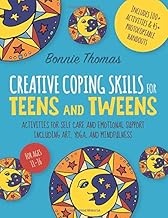
Creative Coping Skills for Teens and Tweens: Activities for Self Care and Emotional Support including Art, Yoga, and Mindfulness
Creative Coping Skills for Children: Emotional Support Through Arts and Crafts Activities
Available at: Amazon.com

Real Neighbors

This is a time when we all need real neighbors. I, for one, had begun to believe that real neighbors didn’t exist. I mean, not like the neighborly neighbors of times gone by. My neighbors and I wave at each other when passing by in our cars, or say the “how you doing?” when we happen to meet at the mailbox at the same time but that’s it. We all work various hours and the rat race sets the pace of our lives for socializing. At least that was true until the recent Corona-virus crisis.

My neighbor diagonal across the street walked over from her driveway to mine. I spoke to her by name and wondered what was up. She told me she was a pediatric nurse by profession, and if I ever needed anything related to my children, day or night, not to hesitate to come and get her. She told me her work hours and our conversation turned to how long she had been living on our street. It turned out that she had been living on the street for many years; she knew all the neighbors from before we moved on the street.

After our conversation at the mailbox, I went inside to share all that I had learned with my mother. Turns out, my mom is a pretty good neighbor herself. She knew many of the people currently on the street by name, as well as their family makeup and health conditions. In fact, she had been a rescuer for our neighbor directly across the street. He had been up on his roof cleaning gutters when his ladder fail leaving him stuck on the roof for hours. Thankfully for him, my mom came home from from errands; he was able to call to her. She went over, put the ladder back in place, and held it until he was able to climb down to the ground. Needless to say, they have been good neighbors ever since.

One of my grandchildren’s other grandma’s lives in our neighborhood. She called me one day completely beside herself; her little dog had disappeared from her yard. She lives alone and her dog is a big company keeper for her. I assured her that Harley would show up. The weather had been so crazy I figured he was chasing a squirrel or rabbit and would show up sooner or later. Harley did not show up that night. Members of her family had searched the neighborhood calling for the dog. Two days later one of her neighbors, that she did not know, brought Harley home. The neighbor had heard about her despair; she too searched for Harley and found him. Needless to say there was much joy as well as a new friendship established.

Why do we need crisis to become good neighbors? (I certainly am convicted.) I mean it’s great that we do it doing these times, but I want to be a good neighbor all the time. If I’m to busy to spend time getting to know people who live right around me, then I’m simply too busy! Nothing (here I mean no things) can be more important than people. My personal investments are off when all my time is spent chasing the rat. It’s time to make a change! To borrow a slogan from an insurance commercial, “Like a good neighbor,” I want to be there! What about you? How’s your neighborly thermometer? Cold or hot?

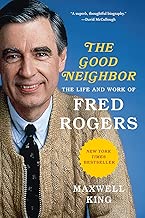
Good Neighbor: The Life and Work of Fred Rogers
The definitive biography of Fred Rogers, children’s television pioneer and American cultural icon, an instant New York Times bestseller  Amazon.com

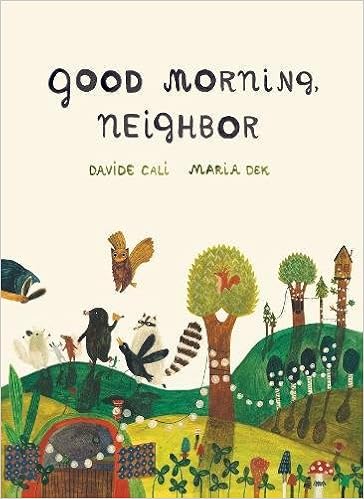
a picture book on sharing, kindness, and working as a team for ages 4-8 available on Amazon.com

Expressing Love

Do we really need one day in the year when we express our love in some extraordinary way? I’m not anti-holiday, but some of them really irk me because they seem to be an excuse for us to perpetrate something that we really don’t believe or feel. (Like Thanksgiving and Mother’s day, and yes, Valentine’s Day). Seriously, do I really want to wait for an annual day to express my love and thankfulness to the people that mean the most to me all year round?

At the beginning of the school year, someone gave me a calendar. This particular calendar has all the special days of every month. Things like National Ice Cream Day and the Big Red Dog’s Birthday (a children’s book character), and I Love Donuts Day. Some of the days are considered national holidays, while other days are historical in nature. I think the calendar is supposed to help you incorporate themes in your lesson plans. Perhaps it’s meant to build in some excitement for learning in the children; I’m not sure! Nevertheless, everyday seems to be a reason to have a party, decorate a room, and buy a Hallmark Card. It’s so artificial! All these special days make no sense to me.

I don’t need a special holiday to enjoy ice cream or my pet. I don’t need a special day to read a good author or to re-watch my favorite movie. I don’t need to be reminded to be thankful for all that I have once per year, since I’ve learned to be thankful everyday. I don’t need a special day to appreciate having my mother in my life when I know so many who wish they had their mom for one more day. And I certainly, don’t need any pressure to love my husband, my children, my family, or my friends one special day of the year.

Expressing love should be an ongoing activity! Love is and action, not just an event! The expression of love is not in the big things once per year, but in all the little things all year long. I love to kiss my husband on top of his bald head everyday. I love to go into my mother’s bedroom to watch and talk about the cooking shows. I love to lock my granddaughter out of the truck every time I pick her up from dance or work just to hear her complain and laugh. I love to send my friends and family text messages that say “Good Morning” or “Good Night!” I love to send my adopted nieces and nephews scripture encouragements. I love to send my sons YouTube songs that may inspire or bring cheer to them. I love to send my grandson books in the mail and I love to throw my dog a treat bone. To put it simply, I love to express my love while I can, because the day may come when I can’t.

I used to ask my grandmother why she went to church so much. She said she wanted to go faithfully while she was able, because the day would come when she wouldn’t be able to go. She said then she wouldn’t feel bad or guilty because she would know she did all she could when she was able. Later, blindness and Alzheimer’s stole her ability to go to the place that she loved, but I felt peace in knowing that she had given it all she had when she was able. This is the way I see our opportunity to express love.

I have no idea where I will be on the next Valentine’s Day, (For that matter, I have no idea where I will be tomorrow, or next week, or next month.) but I do know that I don’t want anyone that I love to wonder whether I truly loved them or not. While I am able I will find ways to express my love as often as I possibly can. If the day should come when I am unable to move, unable to buy a card, or say a word, I will not feel bad or guilty because I will have expressed my love in every possible way I could think of when I was able. There shall be no doubt among those that I love, that I loved them well.

If you must celebrate these national and historic days on the calendar, let it be an add-on to what you’re already doing all the days of the year. If you do this, no one will ever wonder if you were perpetrating; they will know the sincerity of your heart. In fact, why not make up your own calendar of special days to express your love! By the way, I love sharing my blog with you!

2020″A Holiday Every Day” Full-Size Wall Calendar
https://amzn.to/2SRm5SM
{[Gary Chapman]} The 5 Love Languages- The Secret to Love That Lasts
https://amzn.to/38wFEGN