Don’t Just Show – Them Tell Them

All my life I’ve heard the saying, “Actions speak louder than words,” but I beg to differ. Actions only speak louder when I understand the meaning of the action. When I was a child, I thought my mom didn’t love me. I tried everything to make her love me. By the time I was a teen, I gave up on her love and began seeking love from other sources. Unfortunately, I thought love was tied to the words, “I love you.” If the person said the words, I didn’t require them to show me anything. It wasn’t until I was fully grown that I understood all the things my mother did for me was because she loved. She worked hard, often overtime, to make sure I had everything I needed and a few of my wants. She avoided relationships with men that she thought might have been harmful to me. She lived with her parents to make sure I had family support when she was away. She allowed me to participate in dance, gymnastics, basketball, and traveling choirs at an expense to the household budget, not to mention sending me South every year to keep me away from street gangs. She made and remade my clothes so that children couldn’t laugh at me. She took the time to style my hair, so I looked like an African princess. These were all the actions of her love, but I didn’t understand the actions when I needed it the most. How different my life choices would have been if I had only known she loved me. I needed the words to define the actions.

As an educator, I know that children need the words, “I love you,” to go along with the actions. Otherwise, when they hear the words, they may fall into the trap of manipulation and exploitation. Many parents today, like my mom, work hard to make sure their children have cell phones, video games, and the latest fashion. They take their kids to fancy restaurants, to movies, and concerts. Kids have tablets, TVs, and video consoles in their rooms and some of their parents think they are ungrateful. Children aren’t necessarily ungrateful, but they may feel entitled. The more we give, the more they want. All the things aren’t communicating love. It may communicate competition with the neighbors or family friends. It may communicate parents have money and means. It may communicate their rights as a child especially in today’s economy. It may even communicate, “we’re better than everybody else.” If we leave it up to the kids to define our actions, they may not define it correctly. Yet there are children who receive little or no commodities unaware of their true economic status; they seem to thrive on the hugs and expressions of love from their parents’ (and teachers) mouths.

As much as I don’t want anyone I know to call me by the “pet names” of my childhood, those names expressed love. My great grandparents had a different name for me than my grandparents. My aunts and uncles had their own nicknames for me too, but my mother called me by my birth certificate name, Patricia Ann. People always said they could tell when they were in trouble when their parents called them by their entire name. So, I guessed I was always in trouble with my mom. My relatives with the nicknames for me told me all kinds of stories, some made-up and others from their life experiences. We laughed a lot and hugged a lot. My mom read stories from books and insisted that learning to read was key to a good future. So, I learn to read, “See Jane run. Run, run, run Jane,” at the age of three. My great grandma let me sift the flour and stir her cake batter while using encouraging words even when I made a mess. My mom chased me out of the kitchen because I was in her way. I learned to cook from Betty Crocker’s cookbook and long distanced calls to my grandmother. Of course, I know these comparisons are skewed now, but as a child I didn’t know; I couldn’t understand that mom’s actions were expressing the same love as my other relatives only in a different way.

When I was in college my roommates and I would have this play argument. They were Math and Science majors, and I was an English major. The question was, “What came first math, science, or English?” I would always say, “English, because “In the beginning was the Word.” (John 1:1) “God didn’t create anything without speaking and He didn’t mention multiplication until the 3rd chapter.” (Haha!) We would laugh and continue this pretend argument whenever someone was too excited about something they learned in class. When a child is born the words generally come easily. We love every little finger and toe on our newborn. We tell them how much we love them and what dreams we have for them. We coo and we sing to them, but as they get older the words stop. Our actions may multiply; we may even get creative with our time and our money, but the words become assumptions. We assume they know we love them. We assume they know all that we are working for and working with is for them. We assume that everything is fine as long as no one is complaining or asking for anything, but the assumptions are wrong. This applies to spouses, elder members of our families, and especially our children. Love cannot be left to assumptions.

It’s time to play “Show and Tell.” When a child draws a picture for you, they want to tell you about it. When a child gives you a flower (even the top of a dandelion weed) they want you to know they picked it for you. When a child brings their favorite item to school for Show and Tell, the best part of this time together is for them to tell everyone all about what they brought. As a teacher, I can always tell when a parent gave the child something for Show and Tell because the child can show but they can’t tell us anything about the item. It may mean something to the parent, but it doesn’t have the same meaning for the child. So, we can’t just show, we have to tell. Tell your child why you work so much and so hard. Tell them why you bought them that toy or game. Tell them that you love them, but you’re just too tired to play. Offer to hold them or hug them just because you love them. Tell them stories from your childhood so they can identify with you on another level. Tell them the dreams you have for their future. Tell them you love them even when the answer is “No.” Take the time to show them how to do something and don’t forget to use your words. These kinds of Show and Tell events can make a lifetime of difference in their lives, in the choices they make, and in your future relationship with them. Don’t leave any room for misunderstandings. “Show and Tell.”

Photo by Agung Pandit Wiguna on Pexels.com

Don’t Just Show Them, Tell Them. Deepen your relationship with every generation. Peace.
R-E-S-P-E-C-T!

The other day I was listening to an old Aretha Franklin album, and the song “Respect” really stuck in my head for some reason. (There are two versions of the song “Respect,” the original put out by Otis Redding and the revised version by Arthea.) The first thing that came to mind was that ever-popular argument about whether respect is earned or simply given and expected. Yet, I couldn’t help thinking about how much we need a little more respect in our world. Of course, Ms. Franklin was singing about getting a little more respect from her man (by the way he treated her) when he came home, and I guess that where respect should start – at home. Certainly, respect between parents and children, the elders and the young, and yes, husbands and wives are important as it relates to human dignity and regard. That means everyone deserves a little respect.

I wonder do we all agree that using foul language is disrespectful. When adults use curse words when speaking to children, they are destroying any reason for children to show them respect. Actually, they are teaching children how to be disrespectful by example. What happened to the days when adults were careful about what they said in front of children? For that matter, what happened to the days when you couldn’t hear people using foul language on television, radio, or other forms of media? Now, it’s like punctuation at the end of every sentence. Perhaps foul language is so prevalent in our society today that we all think it’s normal and appropriate. (Sad, but probably true.) Unfortunately, foul language isn’t the only problem.

My personal pet peeve is familiarity. My mom is in her nineties, and it bugs me to no end to have some customer service person call her by her first name as if they are friends and contemporaries. Worst yet, they may say “momma” as some form of respecting her apparent age. No “Miss” or “Mrs.” and no request or permission to use her first name. Even white-collar professionals such as doctors and lawyers address their perspective clients by their first names without asking permission. In my world that’s disrespectful. My children (adults now) and my grandchildren have been taught to address people by titles especially if they are older than them. Even familiar family friends are addressed as Mr. or Ms. along with their first names such as Ms. JoAnne or Mr. Robert. This is simply a matter of respect and common courtesy until a person invites you to use their first names. I know, that’s just plain old-fashioned, but how we address one another is important. I never thought I’d live in a world where it’s okay to address someone as the “B” word, or as a whore. This is prevalent with our young people and in today’s music and drama. It’s no longer just familiarity, it’s disrespectful.

Unlike Aretha Franklin’s song, I don’t demand respect from anyone. I simply treat people the way I want to be treated. I use my self-esteem to esteem others. I am mindful of the circumstances and surroundings I find myself in, and considerate of the people sharing that space. As I teach my students, formal situations call for formal language. Casual situations may allow for code switching – informal language – depending on how casual the situation is. (This can be applied to dress as well.) In business situations, I address people by title or last names unless directed by them to do otherwise. I avoid nicknames in public places. I relinquish my seat and my place in line to obvious elders with regard for their age. Even in anger, I try to maintain a level of respect for myself and others. That’s really where it all starts, respect for oneself.

During the spring my middle granddaughter broke off a relationship with a young man. She said the young man called her out of her name and even though he apologized, she was done. When I asked her why. She said I have too much respect for myself to allow someone else to degrade me. Wow! I was so proud of her in that moment. We should be respectful enough that we exude respect both for ourselves and for others. Perhaps this would lead to more respect in our world.

Hears and AI Overview –“Respect, at its core, means treating others with consideration, valuing their opinions and boundaries, and recognizing their intrinsic worth. It’s about acknowledging their individuality and accepting them, even when you disagree with them. Respect also involves showing consideration for their feelings, even when you don’t personally agree with them.”

R-E-S-P-E-C-T” I know what it means to me, but what does it mean to you? Do you think we could use just a little bit more from our governmental and educational leaders? Do you think we could use a little more in our “Beloved Community” and among our young people? What about when you get home? Let me hear from you, I’d love to know what you think.

Be safe, be vital, be at peace, show respect, enjoy the music.

Imagine Your Story

Imagine Your Story is the title of the summer reading program sponsored by the collaborative library system. Its goal is to improve language and reading skills for our children and to immerse teens and adults into reading for enjoyment and information. I registered for the program, but I also wondered about the rational behind the theme. I searched the internet to no avail. Yet, the theme intrigues me.

We all have a story. It has a beginning, a middle, and an end even though we may not know what that end is. I would also venture to say, we have another story as well; the story we wish for, hope for, imagine, the story we planned. By the time I graduated from high school, I had my entire life planned. I was going to live on a farm with horses and large sheep dogs. It was going to be huge and fenced in with a white picket fence. I was going to be a successful author living off the novels I produced, and eventually I would have ten children (six boys and four girls, yes my imagination was that vivid.) Needless to say, that is not my reality. Very little of my imagined story has come to past.

Yet, I have to ask myself, would any part of my future have come true if I had not been able to imagine beyond where I was? Would I have accomplished any of my dreams without being able to imagine something different from what I had or what I had seen? Books played a factor in those dreams. Books opened up worlds to me that reached far beyond the ghettos of Cleveland and the farmlands of Tennessee. Books allowed me to “imagine my story” beyond the boundaries of my existence. Reaching for those dreams moved me from one point of emotional and intellectual geography to another.

Books, and those who were instrumental in my receiving the education from and through books, afforded me the opportunity to pursue a future that no one else in my family had achieved. I became the first woman in my family to attend and graduate from college. I became the first women to attain a Master’s degree. I became the first to have a wedding of huge proportions followed by an actual honeymoon. I moved across the country and actually traveled outside of the country. I learned another language (French) and actual had opportunities to use it. I adopted two children, the sons of my heart, and I actually had some poetry published along the way. These and so much more were things of books that became a part of my actual story as a young woman.

So I ask myself now, am I still imagining my story. Have I stopped dreaming? Are all my accomplishments over, or will I continue to “imagine my story?” What about you? Is there still adventure and mystery in your future?

I am not only imagining my story, but I am imagining the story of my children and grandchildren. I am imagining the story of my mother and my friends. It can’t be helped, because they are all a part of my dreams for the future. We need reform, we need national change in policies concerning law enforcement, we need to find a way to end systemic racism. There is no doubt we must become a more humane society valuing all people and all cultures. I imagine this happening in my lifetime as part of my story.

Perhaps, we have too many people who no longer imagine their stories. Perhaps they can not see the plot developing into something good. Perhaps they can’t see themselves becoming the first to experience or accomplish something in their generation for their children and their families. You see, those things I talked about as my life experiences did not only come out of my imagination and my dreams; it came out of my mother’s and my grandparent’s dreams for me. They imagined my story being better than theirs. They imagined my story making a difference for generations to come. They provided a window through books, through education, through faith, and through their own stories to launch me forward into a new and different life.

When we imagine our stories, we must imagine a bright future for everyone, and contribute to it’s existence by every positive means necessary. We can start by reading multi-cultural books to our children and grandchildren. We can promote reading in our young people from every genre. We can continue to “imagine our story” by writing and sharing our stories in our communities and our schools. Yesterday, I spoke to a friend whose parents are in their 90’s and still self-sufficient. Can you imagine the stories they have to tell!

I leave you with these words from a former teacher: “Wake Up! Its time to Dream!”

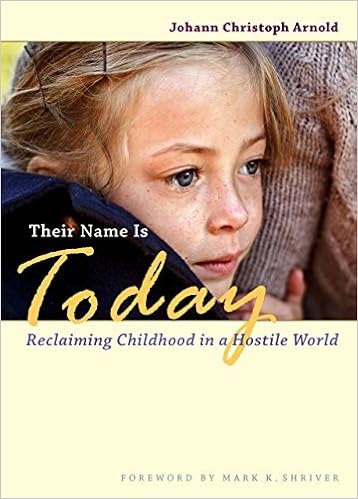
There’s hope for childhood. Despite a perfect storm of hostile forces that are robbing children of a healthy childhood, courageous parents and teachers who know what’s best for children are turning the tide. Amazon.com
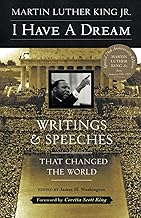
I Have a Dream: Writings and Speeches That Changed the World, Special 75th Anniversary Edition (Martin Luther King, Jr., born January 15, 1929)
“His life informed us. His dream sustained us” -from the Citation of the posthumous award of the Presidential Medal of Freedom Amazon.com