The Gift that Everyone Needs

Photo by Pixabay on Pexels.com

Tis the season for gift giving, whether you celebrate Hannukah, Las Posadas, Christmas, Kwanzaa, or a Hallmark “every day is a holiday” creation. People are buying gift cards, and trinkets to make someone they care about feel the joy of the season. Yet, it is said, “The best things in life are free.” (Interestingly this saying is credited to Coco Chanel who also famously added, “the second-best things are very, very expensive.”) I believe this is true, “the best things in life are free” as it relates to dollars and cents, and one of those best things is the gift of presence.

Presence is showing up, the state of being in place, being in attendance – it is a physical and spiritual thing. (Check out the etymology of the word in a dictionary.) In other words, you are singularly focused on being in a place with another person or people – mind, body, and soul. This is important because too often we consider ourselves present when our minds are elsewhere; like when you see a couple at dinner and they are both on their cell phones. Their bodies are in the right place, but their focus is not. They are really not present with one another. Being present requires us to fully give of ourselves – to be engaged. Our senses, our attention, and our focus is for the person or people we are with. We intentionally show up mentally and emotionally as well as physically. Each of us are seen and heard and appreciated. This is the gift that everyone needs, and I would like to think that everyone wants.

Presence is the gift that keeps on giving. When all the holiday decoration is gone and the parties are over, presence lingers on and creates a chain for future connections. It’s a gift that both the recipient and the giver can enjoy simultaneously, and it’s a gift that can be renewed over and over again. In today’s society, we need to make meaningful connections with the people in our lives and community. We need to know one another more intimately rather than make unwarranted assumptions about one another. We need to identify our commonalities, and form cherish-able memories. We need to let one another know how valuable our relationships are before we have regrets and before it’s too late. Every relationship requires a certain amount of presence to thrive.

If there are special people in your life (children, parents, spouses, siblings, friends, neighbors, co-workers, merchants, mentors, ministers, club members, charitable servants, etc.) it’s not too late to give the gift of presence to someone in your life. Perhaps there is that friend you have been meaning to call and catch up with. Perhaps there is a relative you saw at the last family funeral, and you said: “Let’s not meet this way again, let’s get together soon.” Perhaps there’s an elderly neighbor who could use a little company every now and then. Or maybe there is someone in your life who has given you the gift of their presence and you’ve not taken the time to tell them what they mean to you. The gift of presence is intangible. It doesn’t wear out or go out of style. The value of presence is an indescribably investment – one that you can carry with you and distribute for the rest of your life. 

Someone you know needs the gift of presence not because it’s the season of giving and getting, but because there is nothing like being known and seen, honored and appreciated, received and treasured. When you give the gift of presence you leave an indelible mark of true companionship and comradery that is priceless and continues to give for a lifetime. As long as you have breath, it’s never too late to give the gift that everyone needs. 

May the New Year bring you many gifts of presence and in this case, it really is better to give than to receive. Happy Hanukkah, Feliz Los Posadas, Merry Christmas, Kwanzaa Peace. Blessings in the New Year.

Cherish Your Relationships

Not too long ago I wrote a piece on Fighting Loneliness (click the title if you missed it) . It was about missing the special relationships I had with my grandparents and great grandparents as well as their brothers and sisters. I really miss the times we spent together sharing stories and our hopes and dreams. Each one of those relationships hold a special place in my heart and always will, but that doesn’t mean I don’t treasure the relationships I have today. These relationships are equally as important and tremendously valuable to me. Sometimes we forget how valuable our relationships are. Every encounter and interaction is significant to our sense of belonging and our growth as a person. Relationships on various levels contribute to our self-esteem and our self worth in both positive and negative ways, but for this piece I want to concentrate on the positive ones.

Recently, my oldest granddaughter got married. Her wedding reunited family and friends from all over the country and from various walks of life. It felt like a family or class reunion. It was wonderful to catch up on all the events and achievements of each person. It made me realize how much I missed them. By not staying in contact for such long periods of time, I was totally out of touch. Somehow we had allowed life, work, technology, and general busyness to interfere with our ongoing relationships. Sure we hit each other up on social media from time to time and sent an occasional text message, but that is not the same as actively nurturing and growing a relationship. In the short time of the wedding and reception, we tried to share everything we missed. We laughed, we cried, we hugged, we tried to explain and share every trial and triumph. We could not have done that electronically and it was nearly impossible in the time we had on the day.

We experience words differently in person than we do in text. A person’s words are connected to their body language, inflection, and tone. In person these things add a dynamic to what is being said that we can only imagine in text. Whether it’s a coworker, your best friend, or a family member these interpersonal conversations are shared experiences when done in person. Discussions take on new meaning when you can see the person’s emotions or feel the tension in their body. We react to the total expression rather than trying to interpret meaning on the written page. That’s why actual friends mean more to you than social media friends. After all, you may not be at all aquatinted with the person on the other side of the screen even though you may have some common interest.

At the wedding, we all vowed to stay in contact and connect several times within the next couple of months. We said we would call, do lunch, or catch a movie – promises to cherish and nurture our relationships. I plan to keep those promises. Yet, it can only happen if I keep how much I value these relationships at the forefront of my mind. There are many important as well as trivial things that occupy my time and my thoughts, but I am willing to prioritize the relationships that are important to me starting with my immediate family, extended family and friends. Memories of our connections – how we met, the things we’ve done and said – these are the things I cherish in every relationship that I been blessed to have. I have been molded and shaped by precious connections both past and present so I am intent on cherishes my relationships.

How about you? Do you have relationships that you value? Are they in the past or in the present? How do you nurture the relationships you care about? I would love to hear from you.

Cherish your human connections – your relationships with friends and family.” – Barbara Bush

Grandparents with Bride and Groom

World Building

In an author’s life world building is about the back story, setting, and atmosphere where the characters come to life. We create a world out of pure fantasy or by capturing an actual historical place. World building has its place in every genre. In some cases, the world of a story has a life of its own; this is particularly evident in Sci-fi and Gothic stories. Thinking about world building is something I do all the time, but not just for writing. I believe many of us do think about world building and also dream about it, even if we don’t do anything about it. We all want something out of our world that will bring satisfaction, achievement, and accomplishment. It’s called the “Pursuit of Happiness.”

From my teens through my college years, I dreamed of the world I wanted to live in. It included a small farmhouse, a few horses, a couple of dogs, and about ten children. I remember writing the names of those ten kids in my journal – six girls and four boys. The farm would encompass about three or four acres so I could have orchards and a very large vegetable garden. The whole thing would be fenced in by a white latticed fence and my children and animals could run freely all across the property. The house would sit right in the middle of those acres giving me privacy from my neighbors and road traffic. Of course, I would be a famous author and travel to the big city when needed. I truly believed this dream would come true if I kept the vision in my heart and mind (as well as my journal). I still think about that world today and part of it still appeals to me (minus the ten kids. lol) Needless to say it never happened. Why? Because I never put feet to it. I didn’t pursue any of it; I just dreamed and hoped for it.

Our world is a lot like that today. We dream and hope for a better world, a better environment, and a better life but we really don’t pursue it. We talk about it. We complain about it. We even throw up our hands in defeated doubt about it, but we rarely do anything about it. We seem to have forgotten that our world exists on every level because somebody put action to their hopes and dreams. Every community, every building, every machine, and yes, every riot, war, and charitable organization had a world builder behind it. Often times it starts with something small perhaps staking a claim on a small parcel of land or trying to make a laborious task easier and safer. Or maybe it started with a plan to get from point A to point B just a little faster. Real world builders are motivated by creating change and impacting the lives of others (including their own).

On a small scale, many of us are world builders. We try to make our lives successful according to cultural standards. We buy certain homes, and pursue certain careers or jobs, and join certain organizations all with the hope of a better or good life. We network and participate on social media platforms in order to project our arrival and aspirations for a better existence in our world. We choose our associates and life partners to support the image of this good life. These pursuits require a daily grind to keep up our fabricated world. Unfortunately, there are flaws and cracks in this system of world building with an ever-changing social and political culture. Too often, this world is not truly the world we hoped it would be.

For me, world building starts at home. While it’s not the farmhouse I once dreamed of, it is my sanctuary. I set out to have a peaceful and comfortable home. I wanted everyone who entered our domain to feel that it was a place of welcome and peace. I wanted every room to feel like a place where loving living took place. Of course, it had to start with my family first. I wanted my husband, my children, and later my grandchildren, my mom and mother-in-law to look forward to coming and being at home. There was and is no forbidden furniture. There are no off-limit communal spaces, and everyone was permitted to add to the decor of their personal spaces. Everyone had the ability to seclude themselves from others depending on their personal needs after long days at school or work. This meant my house was not spotless (nor will it ever be) and all the rooms are designated for living and enjoying a tranquil family life. This included the family and friends we invited into our space.

What about the broader scale? Things like being a good neighbor; keeping our properties and communities clean; demonstrating common courtesy to all people; investing in the next generation; utilizing our right to vote; and participating in charity opportunities as well as civic organizations. Things like mentoring children and teens and serving the elderly can be a part of world building. We can attribute to positive change in our world by supporting teachers and first responders. We can write our congress and other governmental officials. Most of all we can take action rather than giving up on the possibility of a better world

Our daily lives are not like the world in a novel where one person makes all the decisions and determines all the conditions. We have some options we can utilize. We can be and should be contributors to the building of our world from the smallest local level to the broader levels of society. “It takes a village” is not just about raising children, it’s also about raising the expectations of our culture and community through collaboration, empathy, values, goal setting, safety regulations, effective communications, and civil laws and responsibility. We can be builders of a better world one day at a time, one action at a time. Let’s all put feet to our hopes and dreams of a better tomorrow for the next generation.

“Do all the good you can, by all the means you can, in all the ways you can, in all the places you can, at all the times you can, to all the people you can, as long as ever you can.” – John Wesley As always, your comments are welcomed.

May you have the tools to build a world where all the characters may exist in love and unity. Peace and Restoration.

Photo by Engin Akyurt on Pexels.com

The Far Away Place

Have you ever found your body present in a location and yet you felt far away? I don’t just mean your thoughts are far away from the position of your body, but all of you feels at a distance from everyone and everything around you. It’s almost like you are watching yourself from another dimension. That’s how I’ve been feeling lately – far, far away. Sometimes I see myself moving from project to project or room to room without making a connection with anything around me. This could be compassion fatigue. It could be a defense mechanism or perhaps it’s depression. Maybe it is simply an emotional disconnect to protect myself from the next harsh thing, but it feels like a distant place.

While I was away, I worked on writing and finishing my latest book of short stories and poetry, Talk from the Family Tree. (It’s in the editing process now.) I also worked in the classroom with my elementary school students, my GED students, and my Life Class participants. I’m not sure how much of this was ritual and habit, and how much was innovative teaching. There were days I tried to zone out at home on video games or TV shows such as holiday cooking contests. I prepared meals for the family, petted and walked my dogs, washed clothes, and read a couple of books. Still, I felt absent and far away from every task. I was moving along the continuum of my life without truly participating in my life. I missed my blog, and I missed my friends. I also missed loving routines and conversations with my family. The only thing I was truly able to focus on was crocheting. I made a lap mat for a friend’s birthday, and a loop scarf for a holiday gift. Now I’m working on a winter scarf and hat.

Crocheting forced me to concentrate on the stitches and the number of rows needed to complete the items. It takes my mind off worrisome issues like critical health issues of family members and the death of a legacy member of our community. Crocheting is a land of double crochet, single crochet, turn begin new row. Yet, I would use up a skein without realizing it and have to pull some of my work out to add a new skein. I was always shocked that the thread ran out without warning. So, I guess I wasn’t fully there either.

Perhaps these feelings of being far away was just wishful thinking on my part. Sometimes I bring up some soothing instrumental jazz on YouTube with a warm cabin scene and a picture window to watch the rain or snow fall. There would a fireplace and a cup of coffee or hot chocolate on the table along with an overstuffed chair or couch. The fireplace and window are my favorite parts. I could easily picture myself sitting there enjoying the solitude, the scenery, and the music. These times are so peaceful I can feel myself relaxing just thinking about them. They remind me that the faraway place does exist and may be only a cabin rental away.

Some people would describe this state of away-ness as melancholy. According to the Oxford Dictionary, melancholy is “a feeling of pensive sadness, typically with no obvious cause.” While the Free Dictionary and the Merriam Webster Dictionary describes melancholy as “a gloomy state of mind, characterized by depression of spirits and dejection.” In ancient times melancholia was treated by bloodletting baths, exercise, and diet. Attempts were made to relieve the body of too much black bile. Some even theorized that melancholy came from the supernatural realm such as ghosts and demons. In that case a hole was drilled in the person’s head to release the evil spirits. Today, melancholy fits into a broad field of mental illnesses and is treated with talk therapy and/or antidepressants. While I am not a doctor, I know that research is ongoing to fine the cure and causes of major depressive disorder. Depression can stem from biological, psychological. and socio-emotional factors. No two cases are necessarily alike. Thank God we live in a time when the stigma is dying out and therapee is more readily available.

Am I depressed, or experiencing melancholy? I don’t think so. At least this does not feel like the bouts I’ve had with depression in the past. Maybe I just need a vacation from the rat race. Or perhaps I need some respite time away from being a caregiver, a teacher, or the “go-to” person. Perhaps I need to reinvent myself again. I do miss having my own business and calling my own shots. For certain, I need my Sabbath rest; being on 24/7 is not good for anyone. We’ve allowed multitasking and being connected to technology to take over our lives eliminating our time to renew, rest, and reflect. We need to give ourselves time to just “be.” I needed time to just “be.”

I am learning to allow myself to just “be.” I don’t need to over analyze my state of being, nor do I need to seek immediate changes in my lifestyle. I can simply trust my circadian rhythm to regulate the function of my mind and body. Intuitively and internally, my body and mind know when I need to rest, when I need nutrition, warmth, and natural light. Through the years I have learned how prayer and nature soothe my soul. I can rely on the Holy Scriptures to center and ground me when tests and trials challenge me. So, it’s okay to allow myself to retreat to the far away place until I’m ready to fully engage and connect to the here and now again. Afterall, I am still functioning in the present while my heart and spirit are shielded by the barrier of tranquility in a distance dimension. This is my coping mechanism nothing more, nothing less.

How do you give yourself a break from harsh realities? Do you meditate, exercise, go to a retreat center, call your parents, read poetry, cry in your bubble bath, or speed down the freeway like a race car driver leaving your troubles behind? How do you cope with unpleasant things and high demand? Do you see your therapist? Do you physically remove yourself or mentally disconnect? I would love to hear from you.

Shalom and Happy Holidays and Holy Days.

PS: Here’s a couple of titles you may enjoy reading:

Story Connections

I was listening to the radio yesterday; this guy was talking about how people relate to stories and anecdotes rather than statistics and algorithms. While it was a very interesting NPR program, it got me to thinking about why I’m so passionate about writing narrative poetry and short stories. Stories connect people. The common human experiences of love, pain, hope, dreams, sorrow, tragedies and victories connect us to one another regardless of the artificial divides we use to separate ourselves. That’s why the best stories are the ones where we can picture ourselves partaking of the events, adventures, or relationships.

I write to connect one generation to another – stories of ancestors, forerunners, and trailblazers. I write to remind the next generation that there is both good and bad in the struggle, and there a legacy of overcomers. I also encourage others to write their stories, if not for publication, for posterity, because people – our children and multiple generations to follow – will relate to your story, your community, your traditions, your struggle, and your survival.

We tell stories to share a part of ourselves. When you tell your story, it can’t be denied. All the listener or reader has to do is receive it. Whether they choose to believe it or not, they have been the recipient of your truth (or your perspective of the truth). Funny thing is, I have a hard time convincing people that all of my works of fiction are not about me. All stories are made to make the hearers/readers feel something. Sensory language appeals to their five senses and their emotions.

Two weeks ago, I had an opportunity to share a story with members of a writers’ group. The story is entitled Compatible Voices. It a story about finally meeting the man, a business associate, I had been talking to over the phone for a number of months. (This was some years ago.) Somewhere along the line, we began flirting during our calls. Over the phone, we seemed very compatible. Finally the day came when we had an opportunity to meet face to face. We were both excited and looking forward to making the connection that might have led to a more formal relationship. Unfortunately, I was a disappointment to him, and he was a disappointment to me. Our disappointments covered a gamut of character flaws and assumptions: fidelity, racism, stereotyping, integrity, and honesty were out of skitter.. The interesting thing in reading this story was the reactions of the group.

Some of the members of the group anticipated the ending and were already shaking their heads. Others were waiting and cried out in disdain at the end. One member expressed her sadness that this happened to me. Still others wanted more details beyond what I had written in the story. The story eventually led to a lively discussion about the intonation of voices and different dialects and colloquialisms. Although it was my story, it connected with everyone present which included multiple ages, races, and genders. The story became a conversation starter as well as a fellowship connection. Not only did we laugh and chat, but others shared stories from their past experiences. We had a great time.

You may have a story inside of you that has the same ability. Perhaps your story can heal some of your family divides. Perhaps your story can solve the mystery of someone’s behavior or attitude. Perhaps your story can bring laughter to a grim situation or bring back a happy memory in the midst of sorrow. Stories and anecdotes (and parables) can help others understand how you feel or where you are coming from in your opinions, traditions, intentions, and actions. Stories can open up worlds to help one generation see another generation’s perspective. Stories can encourage others to share their stories with you. Sharing stories can then become meaningful conversations.

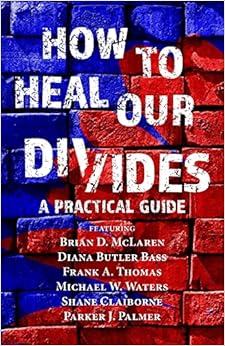
The book I’m going to end this blog with today is entitled How to Heal Our Divides. As a member of the launch team, I had an opportunity to read the pre-published copy. I have to admit, I couldn’t put it down. It was so interesting to read the stories of over thirty contributors, each striving to make a positive difference in the world. While there is some content I found myself questioning and somewhat at odds with, I am excited that here are so many organizations out there working on the front lines to address the huge ills in our society. They are not just telling stories, they are doing the work that makes the stories, and those stories are making wonderful connections.

Take the time to share some of your stories with your family, your friends, your neighbors, and your co-workers. You may be surprised at their reaction. You may find that your lives are more relatable than you once thought. You may find the human connection that makes us all members of the Beloved Community.

Once upon a time . . .

Recent times have put a spotlight on the inequities, systems of oppression, and deep divisions in our society. How to Heal Our Divides highlights organizations that are taking real action to address these issues and heal divides in effective and practical ways. Take a look to see how you can help make the world a better place. Amazon.com

The Face of Favors

Don’t you just hate when certain people say, “Hey, would you do me a favor?” Fight or flight syndrome kicks right in because you know when that person says favor all the give and take is on your end. It’s like when certain people say, “Can you loan me xyz dollars?” Why can’t they just say, “Can you give me xyz dollars?” because they know pay back is not a part of the deal.

I’m of the mindset that our friendship or our family relationship should be close enough for us to be helping each other all the time. For example, if I’m in the market and I see cherries on sell, I buy some for my best friend because I know she loves them as much as I do. If I go to a seminar and get some information that I think may be helpful to someone else I know, I take some screen shots and send that person the info. This is not a one way street. My closest friends and family buy books, fruit, and royal blue things (my favorite color) for me all the time. Why? Because when you have a true relationship with someone their best interest is in your heart. When you care for someone, little things will make you think about them; commonalities make their names pop into your conscious stream of thought from time to time throughout the day/week/month.

So when certain people ask for favors or money, I can’t help but think where are their special relationships? Where are those close family members and friends that they hang with when they need something? How did I get to be their go-to person in their hour of need?

Seriously, I don’t mind doing favors for people or even loaning money when I have it, but it strikes me strange when I only hear from certain people when I’m needed in some kind of way! Is it too much to ask that our relationship should have more depth than that? I guess I’m saying the favors should have the face of real friends and family. Of course, it depends on the need – the favor being asked.

Not very long ago, a friend who lives in Tennessee called me. She said she received a request from me for money via social media. The request said I had been injured while out of town and needed money to get back home. Apparently, the request was for a substantial amount. Being my friend, she wanted to help in any way that she could so she called me immediately. Needless to say, it was a scam! Yet, it must be a scam that works! Someone must be sending money based on this request without checking with the individual making the request. My friend in Tennessee said she couldn’t picture me sending this kind of request via social media. She couldn’t picture my face asking for this kind of favor so impersonally, and I was so glad she didn’t. I was also glad that we had spent enough time getting to know one another that she could not be duped by such a scam.

Perhaps we should all take more time in establishing real relationships. Perhaps social media has interfered with our ability to truly get to know people. I mean, we have a lot of acquaintances and associates, but do we have true friends/true family? Even blood family isn’t as close as they once were! Sometimes it seems like family only gets together for funerals and weddings, and even that depends on which family member it is. Yet, in the time of need, we call on the ones who are most likely to come through despite any real personal connection.

So here it is. Ask me for a favor. and I’ll ask you for time – time to know you better, time to really invest in your life, time for you to invest in mine, time to cultivate a real relationship. Who knows, after we spend some real time together maybe we will meet one another’s needs without ever having to ask for a favor? Perhaps, your face will be present in my heart and pop into my mind on a regular basis. One day, I just may call you up and ask you can I do something for you before you ever get a chance to ask for a favor. The face of that favor will be friendship!

Available on Amazon
Scams: Learn valuable skills to avoid being scammed by frauds. Real experiences of fraud detection, Fraud Examination, phishing emails, scam calls & more.
Available on Amazon in paperback.