Has Common Courtesy Left the Building?

Recently, I went to an active seniors’ interest meeting for people over 55. It wasn’t hard to see that the meeting room was too small for the interested population. People began to line the walls as well as stand in the rear of the room and the hallway. Remember these were people over the age of 55, many in their seventies. Arguments broke out. “Why didn’t the younger people give their seats to the elderly? Why didn’t men give their seats to the women? Why weren’t those with walkers and canes allowed to seat first? Surely, they don’t expect us to stand up for the entire meeting. How are we supposed to hear in the hallway? Why didn’t they get a bigger space? Obviously, they don’t know what they are doing?” For a few minutes I thought I was back in my kindergarten classroom listening to the children bicker over who would be the line leader and who had the toy first. Finally, the moderator gained everyone’s attention. He apologized for the size of the room and moved us to a much larger space across the hall where everyone had a seat with room to spare. Some continued to grumble about how this should have been done in the first place.

I couldn’t help but wonder why people had acted so poorly. It was obvious the planners had not expected such a large turnout. It was also obvious that the building had the ability to accommodate larger groups than ours. Many of us came to the meeting room from the auditorium in the same building. Why couldn’t everyone wait just a few minutes to see how the problem would be addressed? Why didn’t we govern ourselves like the senior adults we were? How could we make assumptions about each other? People sat first come first serve. No one knew ahead of time that they might have been occupying a seat that others needed or deserved. No one intentionally slighted anyone else. It was not possible to look at an individual and determine whether they were 60 or 80, let alone how able-bodied someone who was sitting down could be. Waiting patiently and giving the planners an opportunity to handle the matter was not on the agenda. Common courtesy had no place in this gathering. Common courtesy had left the building.

I pondered that scene for several days. As many of you know I work with children and young adults as an educator. (Elementary grades and adult GED classes) The question I kept pondering was how can we expect polite behavior from the younger generation if we aren’t role models.? Should we expect better of them ourselves? I hear people complaining all the time about how rude young people are and how disrespectful they can be, but what about us? The old saying, “Do as I say, not as I do,” has never worked. Children will do as we do. Where do they learn to be inconsiderate, hostile, mean, self-centered and selfish? Are we going to blame everything on video games, TikTok, and peer pressure? Here’s another old saying, “The apple doesn’t fall far from the tree.”

My grandmother used to say, “Common courtesy doesn’t cost you anything.” Simply words like please, thank you, you welcome, excuse me, may I help you, and I’m sorry can be given freely. Common courtesy can bridge the way to a cordial existence among a variety of individuals. Manners and words of kindness can set the tone for most any encounter. It only requires a little empathy and common courtesy, and we need these more than ever in our society.

Perhaps courtesy has left the building. I mean, I keep using the phrase “common courtesy,” but maybe courtesy isn’t common anymore. Perhaps the art of being neighborly and showing patience and compassion has been lost. Perhaps some people see courtesy as an antiquated word that needs to be removed from the dictionary. Or perhaps it has been replaced by a new word or been given a new meaning. Let’s bring old-fashioned common courtesy back. Let’s re-emphasize the simple definition we’ve always had: “showing politeness in one’s attitude and behavior toward others.” It would change our world in a good way.

Imagine how courtesy could deflate road rage or put a halt to rude gestures. Courtesy could change the trajectory of someone’s day from bad to good especially those who work with the general public. Understanding and compassion can build torn down relationships and bridge the so-called generation gap. A little gratitude and patience can change the words “Have a nice day” into a reality. If we bring courtesy and manners back into every building our environments will be far more peaceful. All we need is someone to set the example, be the role model, give what you want to receive. We can all show good manners and be better citizens by following the golden rule: “Do unto others as you would have them do unto you.” Let’s invite courtesy back into the building of our relationships, our business transactions, our conversation, and our communities.

Thank you for your time. Thank you for comments. Thank you for sharing my blog with others. Peace!

Common Courtesy is Welcome Here!

Holiday Sensitivity

This is the time of year when everyone is bombarded by holiday sales and decorations weeks before the holidays begin. Everywhere you look there is red, green, gold, blue, and silver garland. Toys and small appliances sit on the end caps of every store shelf. Even the piped-in music invades the atmosphere with subliminal messages of whimsical dreams, glee, and laughter. Before we get off to a bad start, I want you to know I am not intrinsically opposed to any of this (well maybe the sales campaigns and ads); I am just calling for some sensitivity during these seasons of holiday cheer. 

During the week of the national Thanksgiving holiday, we lost one of the matriarchs of our family. Her death was very disheartening not only because it was unexpected, but because of what she represented in our family legacy. She was the last of my maternal great grandfather children. As we grieved and prepared for her memorial and the celebration of her life, I was struck by the incongruent sentiments of condolences and “Happy Thanksgiving.” People asked, how was our Thanksgiving, did we cook a lot, eat a lot, or host a large gathering. At times I felt trapped between my own grief and trying not to dampen the spirits of people who were enjoying the holiday season. They meant well and were simply pursuing polite conversation, but I was not in the mood for it. I wondered if they even noticed my countenance or my monosyllabic responses. Few were sensitive to my hesitations; even co-workers didn’t seem to notice the strain. 

There I was trying to be sensitive to the needs of others by keeping my bereavement to myself. There I was trying to make sure I didn’t spoil their holiday cheer. I reasoned with myself; they didn’t know my great aunt. They wouldn’t understand what she meant to our family legacy. They certainly weren’t in the mood for a long explanation concerning the impact of her death. So, the sensitive thing for me to do was grin and bear it. Right? The aftermath of this was a reminder that everyone is not experiencing a season of cheer just because it is listed on the calendar. 

Upon reflection, it occurred to me that sensitivity is needed more than ever. First and foremost, we don’t all celebrate the same holidays. There are at least twenty-nine (29) holidays between November 1st and January 15th for seven major religions. These include national, cultural, local, and international days of celebration. Secondly, many people are limited in how they participate in holiday events. Socio-economic circumstances, health issues, as well as displacement from home and family can affect one’s participation.  When you are struggling to survive financially, holidays are not a top priority. When you are struggling with chronic disease or dis-ease, cheer may evade you. Yet, we often overlook these things when we are focused on ourselves and our own expression of the seasons in our lives. 

Holiday sensitivity doesn’t mean we have to stop celebrating our own special days, weeks, or months, but it does mean we should allow space for those who do not share our enthusiasm. We can pay attention to the needs of others. We can watch how they respond when we greet them. We can ask questions about their lives and their celebrations. We can practice attentiveness. Does the person we are talking to seem sad or confused? Does the person seem preoccupied or different in any way from their “normal” selves? Perhaps they are less talkative. Perhaps they have something to share with you. Perhaps they are trying to be sensitive toward you while you are not being sensitive toward them. 

I was brought up in the generation where we were taught to look a person in the eye when you speak with them or when they speak to you. You can learn a lot by making eye contact with people and observing their body language. (Things you’ll never get from a test message, but that’s a subject for another day.) Holiday sensitivity reminds us to be careful not to offend others and at the same time not to be easily offended. ”Happy Holidays,” are not words of challenge. It simply acknowledges the possibility that we may or may not celebrate the same calendar days. If a person greets you with a specific holiday expression, accept the fact that this is their time of celebration. Their oversight usually isn’t personal. Most of all understand that many people are struggling with day-to-day stresses and pressure. Depression, inflation, grief, heartache, or other issues of anxiety may be a hinderance to their attention to celebratory situations around them. They may require a little empathy on our part. They may require a hand-up or a handout on our part. They may require genuine concern and friendship from us. They may sincerely require and desire to be included in our community and in our celebrations. Let’s be more sensitive to the needs of other whether it’s a regular day, a holy day, or a holiday. It will make for a better community. 

Be kind. Be neighborly. Be sensitive to those around you. Peace and Good Cheer to all. 

Sentimental Tears

I don’t know why, but I find myself crying more frequently and easier than ever before. I’m not talking about the occasional tear that slides down your face during a touching scene in a movie; I’m talking about sentimental tears that seem to flow at the most inopportune times. Tears based on memories. Tears based on hopes. Tears flowing out of love for people, places, and things. Sentimental tears.

Sentiment is defined as the “exaggerated and self-indulgent feelings of tenderness, sadness, or nostalgia” according to the New Oxford Dictionary. Am I being self-indulgent? When the tears well up, it doesn’t feel self-indulgent. It feels like I’m out of control. It feels like being overcome by unexpected emotions whether sorrow or gladness. It feels like a good thing, yet I find it a little embarrassing – a little too revealing.

There doesn’t seem to be just one thing that makes me feel the tenderness of the moment, or the sadness of the situation, or recapture the nostalgic memories of times gone by. I was watching the news the other day and some charitable organization gave a grandmother a check to take care of her ten or twelve grandchildren. (She was their legal guardian.) I cried. I didn’t know that lady or any of her wards, but it moved me to tears to see her helped and happy. I was reading a mystery novel that ended with the mother being reunited with her kidnapped daughter. I cried. I knew it was fiction. I knew that this story probably did not represent what it would be like in real life, yet it moved me because I thought about the amber alert I had received that morning. A cousin posted videos of her family feeding the homeless in Sacramento. As she scanned the area tears ran down my face. There were so many people living outdoors. It made me so proud to see them sharing their blessings with others, and it also made me realize how blessed I am.

All these sentimental tears made me wonder whether this is one of the things missing from our society, since I’m convinced that sentiment and empathy go hand in hand. According to the dictionary empathy is “the ability to understand and share the feelings of another.” Sharing the joy or the sorrow of someone else means you can put yourself in their place/their position. So rather than being self-indulgent, what if we allow ourselves to indulged in the particular feelings, whether situational or emotional, of others. Another definition of sentiment is “a view or an attitude toward a situation or event.” What if our attitude or view was: “Lord, it could have been me.”

On the weekend, my mom and I went to the grocery store and the pet store. As we exited the parking lot, we saw a family holding up a sign. There was a father, a mother, two young children and a baby in a stroller. The sign said: “We need food and diapers. Please help.” My mom said, “Let’s get this family some diapers.” So we headed back to the grocery store. It was then I realized we had no idea what size diapers to buy. We ended up getting a grocery store gift card and a visa gift card. (One from mom and one from me.) When we drove back to the family and gave them the cards, the father and mother cried with gratitude and joy. We cried seeing their joy. We were happy to help because it could have been one of us, or my children, or my neighbors, or anyone from the Beloved Community. COVID-19 has crashed our economy. Any one of us may be one check away from holding a sign in a cold parking lot.

At first, I just wanted to stop being so soft and stop the tears, but now I realize I don’t want to become hardened. I don’t want to hear stories, or see people and feel nothing. I want to hear, see, and feel kin to my fellow citizens and make a difference where I can. How about you? Have you cried for the community lately? Have you rejoiced with happy tears with those who rejoice? Have you cried the tears of sorrow with those who are grieving? Maybe it’s time to shed some sentimental tears. Let empathy show you how.

Be safe. Stay sane. Empathize with others. See yourself as part of the Beloved Community.

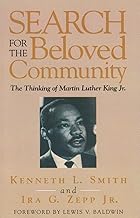
Search for the Beloved Community: The Thinking of Martin Luther King Jr.
Search for the Beloved Community examines the thinking of Martin Luther King Jr. and the influences that shaped it. Amazon.com

Throw Out the Lifeline

I write many things to inspire and encourage self-care and moving forward with your life in a positive manner. However, it is very important to me that no one reads these things as a motive or reason to criticize persons who haven’t arrived at that point. All of us need encouragement at some time in our lives. All of us need someone to lean on when we are not strong, or when life happens in a way that sets us back. So we shouldn’t dare belittle or shame someone when they are down. We should throw out a lifeline. A good rule to follow is: “If you can’t help, do not hurt!”

There is great anxiety during these times of the Corona-virus. There is great sadness and grief. There is confusion, anger, disappointment, and disparity. We can’t deny these things, even if we happen to be surviving better than others. If we have found our rhythm (or our niche) that keeps us hopeful and positive, that doesn’t mean we should close our hearts and minds to those who haven’t. This position should give us an opportunity to reach out a helping hand, to pull someone up with us.

One of my friends made a homemade pound cake. She called me on the phone, and said look out on your porch. That was an uplifting experience. My co-workers and I (I haven’t seen them for almost eight weeks) had a long chat on Microsoft Teams two weeks ago. This gave us a chance to find out how each one of us was really doing. Now we meet once each week. Those same co-workers sent me a lovely gift via snail mail. It was such a lovely surprise; it put a smile on my face and in my heart. A friend from California called me. We talked for nearly two hours. She did most of the talking, but my listening filled some lonely hours since she is sheltering-in alone. All of these things are small lifelines that made a big difference.

There are so many ways to throw out a lifeline. Remembering birthdays, daily text messages, a quick phone call, a drive-by drop off of flowers or food, pictures or collages by snail mail, or even a virtual cocktail hour or luncheon. (You could even have the special meal delivered to your lunch date.)

Knowing someone’s hobbies can also be an avenue to letting them know they are not alone or forgotten. My granddaughter in California used to love working in the garden with my mom. So I sent her a flower garden kit through Amazon. She called to tell me the flowers are beginning to spout. I’m going to send her some more seeds in a few days just to fill her days of boredom. Perhaps someone you know needs some flower or vegetable seeds, some yarn, or some paint. Getting them to focus on their hobbies can be a lifeline.

If we are honest, there are days that we all feel like we are going a little stir-crazy. Our routines have been upended; nothing seems normal anymore. Even our “new normal” is changing on a regular basis. Now there’s a meat shortage, and some businesses are gone forever. States are opening up while the numbers of people getting the virus is still prevalent. Watching the news is a detriment to your emotional health. (I recommend you don’t have a steady diet of it.) Certainly, no one is experiencing great joy everyday. I attended my second virtual funeral today.

What a difference we can make in someone’s life if we share our time, talents and treasures with them. A kind word, a listening ear, a thoughtful touch (virtual or not), or a referral to your counselor, spiritual leader, or life coach can be just the lifeline that someone needs to make it through another day.

Here’s a dictionary definition for lifeline: “a thing on which someone or something depends or which provides a means of escape from a difficult situation.” Can someone depend on you to be there when they need to escape their difficult situation for just a little while? I want to be that person – a dependable friend, a dependable neighbor, a dependable relative, a dependable contact who is willing to share whatever I can to help us all get through these difficult days.

I hope Bene-Log is a lifeline too. Stay safe, stay healthy, stay connected, and throw out a lifeline to someone you know.

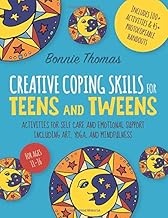
Creative Coping Skills for Teens and Tweens: Activities for Self Care and Emotional Support including Art, Yoga, and Mindfulness
Creative Coping Skills for Children: Emotional Support Through Arts and Crafts Activities
Available at: Amazon.com