Fighting Loneliness

Can you believe I’ve never felt loneliness like this before? I’ve always had a friend or a relative, I could turn to when I needed someone. I guess being an only child helped me to see aloneness as a plus. It’s typically a familiar place of content. I always had my books and my pets to keep me company. Yet, in these beginning days of summer, I find myself experiencing loneliness.

I don’t feel isolated like during the pandemic, and I’m certainly not friendless. My immediate family is very near, and my closest friends are just a phone call away. I also have mobility of body and transportation. Yet, I have a loneliness of soul. It feels like all my confidantes are gone – like all those persons who knew me inside out are deceased. I find myself longing to talk to them, to be with them. I miss the comradery of just sitting in their presence. We didn’t have to speak. We could just be. To be honest, maybe it’s not loneliness, maybe it’s grief. Loneliness and grief seem to go hand in hand if the people you long for are gone from your life.

The other day my grandson stopped by to say goodbye before starting his round-the-world trip to Oregon. We talked about all of the stops he planned to make along the way. When he said, Tennessee, he paused. Then he said he remembered how we went to Memphis every year to see Uncle Fred. He said, “I miss that, I miss him.” Me too. I miss my Uncle Fred so much. He was always glad to see me – all of us – and he never failed to welcome us into his home, into his pride-filled loving deportment. Sometimes we’d sit on the patio and watch his cats chase one another. The sweet smell of bougainvillea clinging to the air and the drone of the TV in the room behind us brought such peace and comfort to me. That kind of quiet and love was found on the porches of so many of my great relatives, I miss that the most.

I wonder if my ninety-three-year-old mom feels this loneliness since the world has changed so much in her lifetime. I wonder if she’s lonely for the friends and family she has outlived. I wonder if she misses the traditions of writing and receiving letters and cards or eating tomato sandwiches while talking about childhood adventures. She talks about people from her past a lot and she loves to explain old pictures of herself and her cousins.

Personally, I miss the smells of great-grandma’s kitchen and the smell of Prince Albert from great-grandpa’s pipe. I miss the humming of my grandmother’s no-name songs and the whine and tang of my grandfather’s voice. I miss the flowers that my cousin used to draw while we sat on my great aunt’s porch fanning flies. I miss writing letters and sharing my dreams with an aunt who called me her Aunt Tricia. I miss seeing my godmother and the quilts that she made with her church friends. All those days are gone and there’s no way to get them back because the people and the places are gone. Memories are nice, but they leave a sense of loneliness that nothing in my life today can fill.

I guess that’s why I write nostalgic fiction and narrative poetry. It helps me recapture the familiar. It helps me fight the loneliness. It brings those memories from yester-year into the present. I’m so thankful for old photos, letters, and cards that make me smile and feel the closeness of those old days. It’s like a hug from the past. That’s why it is so important to me that we (all of us) share our family stories with each generation. We shouldn’t let these memories die. Here’s a quote from Paul Tsongas, I like, “We are a continuum. Just as we reach back to our ancestors for our fundamental values, so we, as guardians of the legacy, must reach ahead to our children. And we do so with a sense of sacredness in that reaching.”

I’ve learned to fight loneliness in my own way. Trust me, these are not recommendations for anyone; it is just what works for me. I read the letters and cards that I’ve saved over the years. I share family pictures with my relatives and ask them to share pictures with me. I talk to elderly people in the community and ask them about their lives and experiences. I take walks in cemeteries. I read the epitaphs and dates on the headstones. I save and re-read obituaries. I read southern gothic literature. I participate in family reunions and call on my living relatives and friends. Lastly, I allow myself to cry when I feel sad and lonely.

I guess we all deal with loneliness from time to time, but we don’t have to deal with it alone. Let someone know how you are feeling. Writing can be cathartic too. There is always help in our Beloved community. If you would like to share how you fight loneliness, I’d love to hear it. Peace and Safety to all.

Holiday Sensitivity

This is the time of year when everyone is bombarded by holiday sales and decorations weeks before the holidays begin. Everywhere you look there is red, green, gold, blue, and silver garland. Toys and small appliances sit on the end caps of every store shelf. Even the piped-in music invades the atmosphere with subliminal messages of whimsical dreams, glee, and laughter. Before we get off to a bad start, I want you to know I am not intrinsically opposed to any of this (well maybe the sales campaigns and ads); I am just calling for some sensitivity during these seasons of holiday cheer. 

During the week of the national Thanksgiving holiday, we lost one of the matriarchs of our family. Her death was very disheartening not only because it was unexpected, but because of what she represented in our family legacy. She was the last of my maternal great grandfather children. As we grieved and prepared for her memorial and the celebration of her life, I was struck by the incongruent sentiments of condolences and “Happy Thanksgiving.” People asked, how was our Thanksgiving, did we cook a lot, eat a lot, or host a large gathering. At times I felt trapped between my own grief and trying not to dampen the spirits of people who were enjoying the holiday season. They meant well and were simply pursuing polite conversation, but I was not in the mood for it. I wondered if they even noticed my countenance or my monosyllabic responses. Few were sensitive to my hesitations; even co-workers didn’t seem to notice the strain. 

There I was trying to be sensitive to the needs of others by keeping my bereavement to myself. There I was trying to make sure I didn’t spoil their holiday cheer. I reasoned with myself; they didn’t know my great aunt. They wouldn’t understand what she meant to our family legacy. They certainly weren’t in the mood for a long explanation concerning the impact of her death. So, the sensitive thing for me to do was grin and bear it. Right? The aftermath of this was a reminder that everyone is not experiencing a season of cheer just because it is listed on the calendar. 

Upon reflection, it occurred to me that sensitivity is needed more than ever. First and foremost, we don’t all celebrate the same holidays. There are at least twenty-nine (29) holidays between November 1st and January 15th for seven major religions. These include national, cultural, local, and international days of celebration. Secondly, many people are limited in how they participate in holiday events. Socio-economic circumstances, health issues, as well as displacement from home and family can affect one’s participation.  When you are struggling to survive financially, holidays are not a top priority. When you are struggling with chronic disease or dis-ease, cheer may evade you. Yet, we often overlook these things when we are focused on ourselves and our own expression of the seasons in our lives. 

Holiday sensitivity doesn’t mean we have to stop celebrating our own special days, weeks, or months, but it does mean we should allow space for those who do not share our enthusiasm. We can pay attention to the needs of others. We can watch how they respond when we greet them. We can ask questions about their lives and their celebrations. We can practice attentiveness. Does the person we are talking to seem sad or confused? Does the person seem preoccupied or different in any way from their “normal” selves? Perhaps they are less talkative. Perhaps they have something to share with you. Perhaps they are trying to be sensitive toward you while you are not being sensitive toward them. 

I was brought up in the generation where we were taught to look a person in the eye when you speak with them or when they speak to you. You can learn a lot by making eye contact with people and observing their body language. (Things you’ll never get from a test message, but that’s a subject for another day.) Holiday sensitivity reminds us to be careful not to offend others and at the same time not to be easily offended. ”Happy Holidays,” are not words of challenge. It simply acknowledges the possibility that we may or may not celebrate the same calendar days. If a person greets you with a specific holiday expression, accept the fact that this is their time of celebration. Their oversight usually isn’t personal. Most of all understand that many people are struggling with day-to-day stresses and pressure. Depression, inflation, grief, heartache, or other issues of anxiety may be a hinderance to their attention to celebratory situations around them. They may require a little empathy on our part. They may require a hand-up or a handout on our part. They may require genuine concern and friendship from us. They may sincerely require and desire to be included in our community and in our celebrations. Let’s be more sensitive to the needs of other whether it’s a regular day, a holy day, or a holiday. It will make for a better community. 

Be kind. Be neighborly. Be sensitive to those around you. Peace and Good Cheer to all. 

The Mysteries of Grief

Grief is a complicated emotion. It is a mixture of sorrow, sadness, misery, pain, and heartache. Yet no two people seem to experience grief in the same way. Some people become angry while others become despondent. Some people isolate themselves while others seek the company of friends and family. Grief seems to affect everyone differently. No matter how we describe grief, loss is its center piece.

Grief is a mystery to me. Even when you have experienced grief in the past, it doesn’t make the next time any easier. No amount of experience prepares you for the next time. Grief’s power does not seem to dwindle. It seems to come in waves. Just when you think you’ve overcome its effects, it washes over you again. Logic does not affect it. No matter how much reason and truth you throw at it, grief tends to linger until it wears itself out. Bits of comfort may have a temporary effect in the face of this strong emotion.

So why am I tackling this subject? Because grief is all around us. It has almost become a national phenomenon with gun violence, natural disasters, the residue of the Pandemic, and societal ills economically and politically. People of all ages are hurting. They are grieving the losses of normalcy, safety, ownership, health, good will, and loved ones. Many are losing hope that things will ever be right again. We’ve lost the “good old days,” and we can’t seem to phantom what the “good new days” will be like. How do you console people who have lost hope, people who have so many losses?

One of my granddaughters turned twenty-one on the 18th of this month. It should have been a happy day of celebration, and to some extent it was. Unfortunately, a dear friend and classmate died on that day. On the last day of his military training, he passed out on the field and died shortly thereafter. His family was looking forward to celebrating his accomplishment in a achieving his dream to be a United States marine. His death doesn’t just affect his immediate family, it affects whole communities: his fellow soldiers on the base, his neighborhood and local community, his high school where he was in the band and played sports, his church family, out of town relatives, and more. If you knew him, then you are experiencing some level of grief because he was generous, loving, dedicated, committed, helpful, kind, and full of life. Noah Evans will be greatly missed.

I have been trying to comfort my granddaughter by telling her the truth. Here is some of the things I toid her. “Waves of grief will come and go. Bouts of crying is normal and helps relieve some of the pressure that builds up. Try to go for a walk or do other exercise, it will help you get to sleep when your body is tired. Communicate with others who share your feelings, those who are also grieving. Cherish the memories. Remember he was right where he wanted to be pursuing his dream. Journal your thoughts and feelings. Pray and immerse yourself in scripture. Speak with a counselor. Do not isolate yourself from the people who love you. Make a memory book. Don’t be embarrassed about how you feel. I can’t change anything, but I can listen, and I can give you a hug any time you need one.” Is this enough? Does it really help? I can only hope. One thing is for certain, this will not be our last experience with grief.

If my premise is true grief is prevalent in our society, so what can we do? We can be more compassionate and realize that many people are quietly hurting. We can show kindness just for the sake of being nice to other human beings. Kindness is a welcoming healing balm in most any situation. We can be patient. Many people are doing the best they can under the circumstances. We can be charitable. It’s not always possible to replace the loss of others, but we can contribute to their recovery. We can be active listeners. We don’t have to have the same experiences to listen to someone’s heart. Sometimes the suffering just wants to be seen and heard. Lastly, we can offer common courtesy to everyone whether an acquaintance or a stranger. The golden rule still applies; treat others the way you want to be treated. Lastly, examine your own heart. Are you grieving the loss of someone or something? Have you been bombarded with losses over the last couple of years? Give yourself permission to grieve and share your grief with someone who loves you.

Although grief is a mysterious emotion it is a definite part of life. It can be brought on by the smallest thing or by a huge disaster. It can be a tangible loss or a perceived loss. It can be all-consuming or only for moment. It can produce a gamut of emotions such as anger, despair, hopelessness, numbness, shock, and confusion. It can also cause multiple physical symptoms such as sleeplessness, loss of appetite, anxiety attacks, and muscle aches and pains. We can do our part to demystify grief when we share the human experience with empathy and compassion. Don’t forget grief will someday come your way if it hasn’t already.

Queen Elizabeth once said, “Grief is the price we pay for love.” Love your family, love your friends, love your neighbors, love yourself. “Better to have loved and lost than never to have loved at all.” – Lord Alfred Tennyson

Divine Encounters by Don Wilson

Confronting Grief

Every day for the last few weeks I’ve been thinking about writing something for the blog, but the only thing that came to mind was the word grief. Well, of course, that’s not what I wanted to write about. Grief is depressing and I want to write something to lift people up, not bring them down. So I wrestled with myself until I gave up. Grief is on my mind, so I might as well share. As I chat with others, I found out that grief is not only on my mind, but it’s also on the mind of many others.

First, a disclaimer. I am not a counselor. I am not a life life coach. I am a writer always trying to capture a thought in print. I write from within my own heart and I write from all of my senses and experiences. So please if you need help with grief, seek a professional counselor (I do), but if you need some help putting words to your thoughts and feelings, then this may help.

My understanding of grief is that it is an emotional and mental reaction to loss, whether that loss is actual or perceived. So right now, we are living in a grieving society. People have lost their loved ones to COVID and other illnesses at a time when hospital visits and stays with family is restricted. People have lost jobs and businesses. People have lost their rituals and routines. Some have even lost their identity as it was tied to their career or their status and position in life. Children are missing their friendships. Graduates feel cheated out of their celebrations. Grief is all around us. We have been blind-sided by multiple losses, and recovery is uncertain in this far-from-normal environment.

So how do we deal with all this grief? First, we must be honest about it. Pretending we are not sadden by the events of our lives since March is only going to make it worst. When we ignore our thoughts and feeling, they have a way of showing up in our sleep patterns, our appetites, and our relationships. My husband’s biggest pet peeve is when he says, “What’s wrong?” and I say, “Nothing!” when there is obviously something wrong. We can lie with our lips, but not with our hearts. Our subconscious brain is working to solve the problem even when we are in conscious denial. Grief is a natural response. We can admit it. We can share it. We can help each other get through it when we expose its existence.

Secondly, we can release our emotions. It’s okay to cry, to pound the desk, to scream, punch a punching bag, and most importantly to discuss your feelings. Sometimes, I say, “I don’t want you to say anything just listen. I need to talk about how I feel.” We all need someone who will actively listen to us, lend us a shoulder, or simply be present with us as we go through life’s journey. When we don’t take the time to purposely express what we are feeling, it will show up at an inopportune time. We end up showing anger to someone who doesn’t deserve it, or crying uncontrollable when the occasion calls for laughter. Find a time and a place to release your emotions; to share your feelings. Others will understand. Mostly likely, they will identify during this time of pandemic and protest.

Lastly, a suggestion that sounds so cliche, I almost don’t want to write it. “Count your blessings.” As I have reflected on grief these last couple of weeks, I found myself going down the complaining-murmuring road. After a while everything was colored with the crayon of doom and gloom. I found myself sitting in front of the TV news much too much. I found myself isolating from the family I live with. I found myself not wanting to get out of bed. Everything was wrong, nothing was right. That’s a very dangerous place to be. That’s a mental health trap. Thank goodness, someone reminded me to count my blessings. Literally, I counted my blessings. (We talked about a thankful journal before. A thankful journal is very therapeutic.)

I wrote down all the things I was thankful for, all the physical, financial, spiritual, emotional, and mental blessings I could think of in that moment. Everything was not going to hell in a hand basket. Everything was not awful. There was lots of good, wholesome, healthy, and joyous stuff – people and things – in my life. In the midst of my losses, there were some great gains. I won’t name them all to you, but suffice it to say, I found a few reasons to smile.

I hope this reflection on grief is helpful to someone. You are not alone. Grief is taking its toll on our world right now. In the midst of it, remember it hasn’t taken everything. If you are reading this, you have the ability to see, to understand, to critique (lol), to feel. If there is anyone you can call, you have a friend or family member available to you. If there is a path or a sidewalk nearby, you can experience nature, you have the ability to move around whether by legs or wheelchair. Share your grief in community. Share your joys in community. Count your blessing in community. It’s in community that we will heal!

Continue to confront life and be safe!

Good Grief: A Companion for Every Loss
For more than fifty years Good Grief has helped millions of readers, including NFL players and a former first lady, find comfort and rediscover hope after loss. Amazon.com
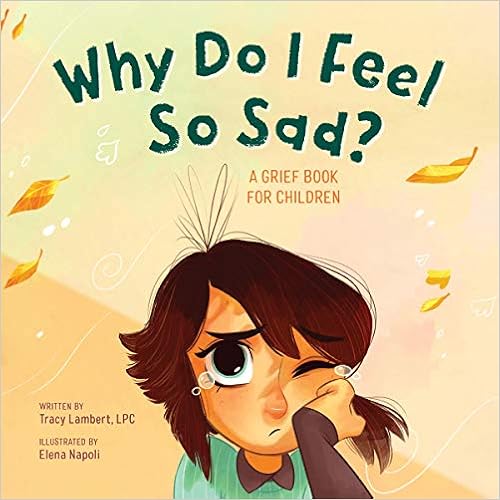
Broad enough to encompass many forms of grief, this book reassures kids that they are not alone in their feelings and even suggests simple things they can do to feel better, like drawing, dancing, and talking to friends and family. Amazon.com