Real Effort

One thing you notice as a teacher is the students who are making a real effort. That doesn’t mean all their answers are perfect or that they are the best students in the room. It means they are doing their best to meet the goal; they are determined to give it their best shot. I am always proud of these students. I also try to encourage them to continue their hard work because it will pay off in the end. There may be delayed gratification, but real effort leads to real achievement.

It takes real effort to improve our status. Unfortunately, too many of us give lip service to real effort while doing as little as possible. Our contribution to the finished product is minuscule. We do just enough work to get by or to keep others from saying we didn’t do anything. We don’t seem to realize we are shortchanging ourselves. Every accomplishment leads to new heights of understanding and confidence. Hard work and success enriches our lives and informs our character.

Collaborative learning came on the scene several years ago in all the high schools and colleges (also used in elementary education today). Courses were designed for students to work in small groups and to finish projects as a team. One student came to me totally frustrated. Her complaint was about the slackers in her group. Apparently, they had had an initial meeting where it was decided what each member of the group was responsible to do. They also scheduled several follow-up meetings to check their progress and prepare responses for the discussion board. At the first scheduled meeting only three of the eight students showed up, one being my student. At the second meeting five people showed up, but only the original three had anything done. The professor was checking the discussion board, but no one from this group had submitted any responses. They received a written reminder and reprimand from the professor. Discussion board participation was part of the overall grade. My student said she and her other two classmates were going to try to do the whole project by themselves in order to get a passing grade. I advised her to take all of their finished work and their assignment lists to the professor rather than three people trying to do the work of eight people. The professor listened to the three students and assigned them to another group where some of the work they had done could be used. The new group of ten people did quite well on their oral presentation and received a “B” on their written presentation. The remaining five students from the first group ended up arguing in front of the whole class during their oral presentation. I don’t know what grades they received but I do know they were called to a meeting with their professor. I do know that all this drama could have been avoided if everyone in the group had put forth some real effort.

We need real effort in our society today. We can’t just give lip service to humanity, equality, and civility. We must put forth some real effort in non-violent communication. We must put real effort into active listening, empathy, and cultural awareness. Harmony and respect take effort. Understanding and advancement requires teamwork where everyone is doing their part. Civic duty, volunteerism, and neighborly conduct is just the beginning.

When I am writing a story or a poem, I am always aware of the universal themes that underlie the specifics of the project. Love, family, community, dreams, hopes, legacy, inheritance, work and struggle are experiences and desires that transcend time and class. We all want our children to thrive. We all want our communities to be safe. We want our families to prosper. We want our leaders to lead with integrity. We want to reap the benefits of our labor. All these things require real community effort. We all have the opportunity to contribute to our societal whole. We have an assignment to fulfill as members of the human team. When I was younger, we called this good citizenship. My school district calls it community shareholders. The consequence of no effort is severe and affects every area of our society.

When I was in junior high (it’s called middle school today), our choir director taught us a beautiful song that I still remember to this day. The first lines of the song say: “Let there be peace on earth and let it begin with me. Let there be peace on earth the peace that was meant to be . . .” (Listen to the whole song here: Let There be Peace on Earth) Real effort begins with me, but it ends with all of us doing our part to bring harmony to our Beloved Community. “It takes a village” can no longer be a slogan, it must be a reality. It needs to be a work in progress each and every day if we are going to create a better society.

Promote kindness. Live peacefully. Cultivate charity. Learn to “love your neighbor as yourself.” Give it some real effort. Peace!


Be a lighthouse. Light the way for the next generation.

Running to Win

The July 4th is the day for the annual AJC Peachtree Road Race in Atlanta. People come from near and far to participate in this event. There are professional (elite) racers as well as amateurs. There’s a wheelchair event and an event for children. There are also walkers. Some people belong to groups while others are totally on their own, but everyone participates with enthusiasm and commitment. The challenge and the goal is to finish your race whether it’s the 50m Dash, the 5K, the 8K, Half Marathon, Marathon, or 1 mile. It’s a race where everyone wins because everyone has a different reason for participating.

The Peachtree Road Race is known as one of the largest 10K events. Over 50,000 people registered and participated in this edition (the 54th) of the race, but the racers aren’t the only people out there. Family and friends stand on the side lines and at the finish line. There are volunteers who pass out water and offer first aid. Others are simply cheering the runners on, encouraging the runners to accomplish their goals. There is also a police presence offering safety and protection to all the participants, vendors, and audience. News teams are there from every network to report the significance of the event and to record the historical moments. They interview and report individual and group stories of runners and walkers who have never missed a race, or who may be running for the first time; these are human interest stories.

The elite runners are running to win a monetary reward as well as to break records of speed and endurance. Others are competing with themselves for better time or just the ability to make it to the finish line. Some are running in memory of a dearly departed loved one. Some are continuing a tradition as their way to celebrate Independence Day every year. Others are celebrating the significant milestone of surviving cancer, a heart attack, or some form of trauma. Many are simply enjoying the comradery of being among diverse people from ages 10 to 92. Everyone is racing to achieve their personal goals and accomplish their personal dreams.

Wouldn’t it be marvelous if each of us could enter our everyday responsibilities and routines with this same attitude? What if there was comradery alongside competition in the workplace? What if there was celebration over everyone’s accomplishments in school and at work, even if they are different from the elite standard? How wonderful would it be to have cheerleaders, and helpers on the sideline cheering us on to accomplish our personal goals? Is it possible to make room for multigenerational persons with diverse abilities in the marketplace and domestic life? Could we adopt the ethic, mood, and spirit of this one-day celebration as the norm in society or am I hoping for too much?

We all have a race to run. The timing of our race and the distance of our race may be different, but the finish line is the same. We want to accomplish our goal of a good and peaceful life. We want to provide safety and opportunity for our children. We want to make it to a healthy ripe old age and leave an inheritance for our loved ones. We want to enjoy our relationships and celebrate every milestone of accomplishment with them. We want to be free to run our race, and we want to win by doing our personal best. The commitment is personal, yet it requires comradery and community – everyone doing their part. This is not just idealism; this is a prayer for change.

Keep moving forward. Understand you are not alone. Cheer for someone along the way. Celebrate the effort and the accomplishments of those around you. Offer a helping hand to the young and the old. Congratulate yourself and others. Be willing to try again. That’s running to win.

Confronting Grief

Every day for the last few weeks I’ve been thinking about writing something for the blog, but the only thing that came to mind was the word grief. Well, of course, that’s not what I wanted to write about. Grief is depressing and I want to write something to lift people up, not bring them down. So I wrestled with myself until I gave up. Grief is on my mind, so I might as well share. As I chat with others, I found out that grief is not only on my mind, but it’s also on the mind of many others.

First, a disclaimer. I am not a counselor. I am not a life life coach. I am a writer always trying to capture a thought in print. I write from within my own heart and I write from all of my senses and experiences. So please if you need help with grief, seek a professional counselor (I do), but if you need some help putting words to your thoughts and feelings, then this may help.

My understanding of grief is that it is an emotional and mental reaction to loss, whether that loss is actual or perceived. So right now, we are living in a grieving society. People have lost their loved ones to COVID and other illnesses at a time when hospital visits and stays with family is restricted. People have lost jobs and businesses. People have lost their rituals and routines. Some have even lost their identity as it was tied to their career or their status and position in life. Children are missing their friendships. Graduates feel cheated out of their celebrations. Grief is all around us. We have been blind-sided by multiple losses, and recovery is uncertain in this far-from-normal environment.

So how do we deal with all this grief? First, we must be honest about it. Pretending we are not sadden by the events of our lives since March is only going to make it worst. When we ignore our thoughts and feeling, they have a way of showing up in our sleep patterns, our appetites, and our relationships. My husband’s biggest pet peeve is when he says, “What’s wrong?” and I say, “Nothing!” when there is obviously something wrong. We can lie with our lips, but not with our hearts. Our subconscious brain is working to solve the problem even when we are in conscious denial. Grief is a natural response. We can admit it. We can share it. We can help each other get through it when we expose its existence.

Secondly, we can release our emotions. It’s okay to cry, to pound the desk, to scream, punch a punching bag, and most importantly to discuss your feelings. Sometimes, I say, “I don’t want you to say anything just listen. I need to talk about how I feel.” We all need someone who will actively listen to us, lend us a shoulder, or simply be present with us as we go through life’s journey. When we don’t take the time to purposely express what we are feeling, it will show up at an inopportune time. We end up showing anger to someone who doesn’t deserve it, or crying uncontrollable when the occasion calls for laughter. Find a time and a place to release your emotions; to share your feelings. Others will understand. Mostly likely, they will identify during this time of pandemic and protest.

Lastly, a suggestion that sounds so cliche, I almost don’t want to write it. “Count your blessings.” As I have reflected on grief these last couple of weeks, I found myself going down the complaining-murmuring road. After a while everything was colored with the crayon of doom and gloom. I found myself sitting in front of the TV news much too much. I found myself isolating from the family I live with. I found myself not wanting to get out of bed. Everything was wrong, nothing was right. That’s a very dangerous place to be. That’s a mental health trap. Thank goodness, someone reminded me to count my blessings. Literally, I counted my blessings. (We talked about a thankful journal before. A thankful journal is very therapeutic.)

I wrote down all the things I was thankful for, all the physical, financial, spiritual, emotional, and mental blessings I could think of in that moment. Everything was not going to hell in a hand basket. Everything was not awful. There was lots of good, wholesome, healthy, and joyous stuff – people and things – in my life. In the midst of my losses, there were some great gains. I won’t name them all to you, but suffice it to say, I found a few reasons to smile.

I hope this reflection on grief is helpful to someone. You are not alone. Grief is taking its toll on our world right now. In the midst of it, remember it hasn’t taken everything. If you are reading this, you have the ability to see, to understand, to critique (lol), to feel. If there is anyone you can call, you have a friend or family member available to you. If there is a path or a sidewalk nearby, you can experience nature, you have the ability to move around whether by legs or wheelchair. Share your grief in community. Share your joys in community. Count your blessing in community. It’s in community that we will heal!

Continue to confront life and be safe!

Good Grief: A Companion for Every Loss
For more than fifty years Good Grief has helped millions of readers, including NFL players and a former first lady, find comfort and rediscover hope after loss. Amazon.com
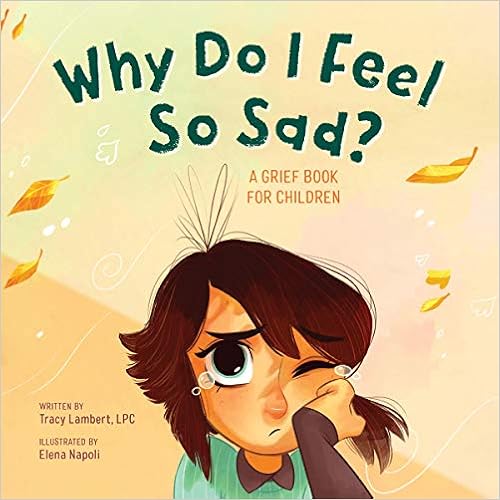
Broad enough to encompass many forms of grief, this book reassures kids that they are not alone in their feelings and even suggests simple things they can do to feel better, like drawing, dancing, and talking to friends and family. Amazon.com