Miracles in the Mundane *

            I have always had some disdain for pat sayings like, “Don’t forget to smell the roses.”  First of all, there were no roses in the concrete courtyards where I grew up.  There were also no roses in the deep south where my relatives farmed from sunup to sundown.  So even if I didn’t forget to smell the rose, I couldn’t find the roses.  Yet now, so many years later, I have learned to appreciate such sayings.  Using mental exercises and developing defense mechanisms to overcome and defeat depression, I have learned to smell the proverbial roses.  I call these exercises looking for miracles in the mundane.  

            Looking for the miracles in the mundane started with me noticing how well and whole I felt out in nature.  This is also when my amateur hobby as a photographer began.  Little things that often go unnoticed by others gained my attention.  Questions about those things brought them into greater focus.  Why does that tree’s leaves turn golden in the fall while another tree’s leaves turn red?  How long do turtles swim in the lake with only their little heads at the surface?  Why can’t chickens fly, after all they have wings?  I began snapping pictures of everything that intrigued my curiosity. (Visit the gallery on this site to few a view of my pictures.) Thus, came thousands of pictures of roses, not proverbial roses, but real roses. 

            As I traveled the states fulfilling my bucket list to spend time in all fifty states, I made botanical gardens one of my “must-see” destinations.  Through the camera lens I discovered all roses were not the same.  Their shapes were different.  Their colors varied, and their scents were not the same.  There are so many varieties of roses, and each of them have their own unique characteristics and features.  With a little research, I found out that new roses were being introduced all the time.  Botanists crossbreed certain varieties to develop yet another type of rose. 

As if all these roses weren’t enough, I began to find bugs and butterflies in my photographs.  In Chicago, I found birds in my pictures.  In Alabama, I got sidetracked by waterlilies which lead to ducks, geese, and swans.  Since I’m naturally curious (my kids say my best gift is interrogation), I began researching what birds are indigenous to Georgia.  This started a new hobby, amateur bird watching.  I have photographs of cardinals, robins, woodpeckers, peacocks, geese, a variety of ducks, yellow warblers, blue jays, trashers, and hummingbirds.  Of course, I still don’t know why the males are so colorful while the females are brown or gray.  I suppose it’s a way of protecting the mothers from predators, but I like the idea that the males have to sport their wears to attract the females and keep their attention. 

In nature, one thing always leads to another for me like the pattern of river water flowing over boulders; the snow melt flowing down the mountain side; the colorful fall leaves from tree to tree and state to state; the ebb and flow of ocean water, the beauty of a moth or a butterfly; little brown rabbits eating my mom’s garden plants; baby deer frightened by their own shadow; squirrels playing chase in a nearby tree; pigeons having a parking lot scavenger hunt, and my dog snuggling next to me to chase my blues away.  These are all miracles in the mundane. 

Every day we walk right by miracles:  wildflowers growing on the hillside, children laughing and playing, an elderly couple looking passionately into each other’s eyes, a prism of color in a puddle mixed with motor oil, a lizard sunning himself in the driveway, the brightness of a full moon, the pictures in the clouds floating overhead, and our own reflections in the mirror.  The miracles in the mundane help us to remember there really isn’t anything mundane. 

The mundane is in our way of thinking.  If we allow ourselves to lose interest in the world around us, we miss the miracles.  If we allow ourselves to be thrill seekers, we reduce every miracle to something boring and monotonous.  This becomes our loss.  The best things and people around us go unnoticed not because they are not there, but because we have closed our eyes to the mystery and wonder that surrounds us.  So, here’s my suggestion, “Don’t forget to smell the roses.” 

  • Reprint from DeKalb Voices Review, 2023 with revisions.

Reclaiming Our Time

Two days ago I was talking to my grandson and he asked me why I don’t crochet anymore. (I used to make him and his sisters hats and scarves every winter when they were young. He’s sixteen now.) I finally had to answer him with the words, ” I don’t know.” Truly, I can’t remember making a conscious decision to stop crocheting. Over the last several days, I’ve discovered I’ve stopped doing several things that I once enjoyed. As I investigated this idea of giving up things you enjoy without realizing it, I found that many of my friends and loved ones have done likewise. The running theme seemed to be, ” I don’t have time to do it anymore. With the job, the kids, the running around, something had to go.”

Those things that had to go were too often the things that helped us to relax, feel useful, feel a sense of fulfillment, and self-satisfaction. Everything from woodworking, sewing, gardening, arts and crafts, painting, needlepoint, collectibles, cook-outs, bowling, and myriad of leisure activities went away because of our busy schedules. Instead of being well rounded, we’ve suffered from schedule stress. (Love that alliteration.)

Who would have thought stress was related to our loss of leisure time activities. Psychologists tell us that children and adults suffer stress from overloaded schedules. Our to-do list have taken over our lives because we don’t schedule breaks or time-off; we don’t see leisure enjoyment as a critical need. Boy, have I been there! Before the pandemic, my schedule consisted of work and providing transportation for the kids.

Many days I left work on my way to the dance studio to drop off or pick up my granddaughter or to pick up my mom from the house to transport her to the store or church. I practically lived in my car. I ate meals in my car, I wrote poetry in my car, I made return phone calls in my call, I did lesson planning in my car, and I took naps in my car. Needless to say when I got home the only thing I was in for was going to bed. This cycle continued day after day, week after week, month after month. It became the norm.

For many of us the pandemic changed all that, but for some heart attack, stroke, exhaustion, depression, and emotional strain was the change agent. I’ve actually heard some people grateful for the break that the Pandemic gave them from the “rat race.” Now that’s sad, yet it does offer all of us an opportunity to reevaluate our schedules. Our time and our priorities should correlate with our needs and our necessities as social beings. Needs meaning the material and physical requirements for living, and necessities meaning our relationships, spiritual, and personal growth.

Establishing routines and reclaiming our time and talents is possible now. As we head back to work, we can begin setting our schedules to include every part of our being. As I have written in the past, I make an effort to “fill my bucket” with things that bring me joy. I may not crochet in the near future, but it won’t be because I don’t have time for it. It will be because I’m doing something else that relaxes me, fulfills me, or brings me satisfaction. The rat race can not longer be my norm. Life is too short. (Another lesson from the pandemic.) No more living in my car. No more over-scheduling myself and my family members, No more saying “yes” to everyone except myself. No more saying “no” to the things that matter. I won’t miss living a well-rounded life because I’m over worked and over taxed.

Let’s use these days of social distancing and quarantine to reclaim and redefine our time. Let’s begin prioritizing our lives so that we enjoy living rather than dread it. If I’ve learned nothing else during this time of pandemic, I have learned that the things I thought I couldn’t live without didn’t matter as much as I thought they did. Nothing matters as much as my family, and friends, and our well-being, and our being together safe and healthy. (Yes, that’s a run-on sentence 🙂

It’s your choice. What do you want out of the time you have? You can reclaim or redefine it in a way that makes you whole and joyful.

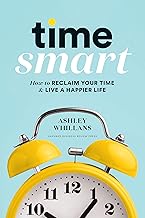
Time Smart: How to Reclaim Your Time and Live a Happier Life
Four out of five adults report feeling they are time-poor: They have too much to do and not enough time to do it. And the consequences are severe. The time-poor experience less joy each day. They laugh less. They are less healthy, less productive, and more likely to divorce. In one study of 2.5 million Americans, time stress produced a stronger negative effect on happiness than unemployment. Amazon.com

How Did I Get So Busy?: The 28-Day Plan to Free Your Time and Reconnect with What Matters Most
There’s no doubt about it: these days we are just too busy. With the conveniences of technology, we’re compelled to get more done in less time and end up constantly striving for the next thing – rarely stopping to consider if it’s something we even want. As a result, we end up missing out on the things that truly matter: our relationships, the activities we love, quiet time to reflect and replenish our energy. Amazon.com