We Need More Storytellers

Isn’t it funny how things from your childhood pop up from time to time. I can remember friends and adults telling me, “You better quit your storytelling.” I grew up in a generation where you didn’t use the word “lie,” you were either fibbing or telling stories. Today, I consider myself a necessary storyteller. My medium is narrative poetry and prose. My stories are mostly fiction with real life as a backdrop (aka: representational literature). I tell my own stories and the stories of my ancestors. I tell stories with morals and stories just for shear entertainment, but mostly I tell stories to connect generations. Trials, triumphs, struggle, hard work, hopes, dreams, love, family – these are just a few timeless themes that can reach out and touch members of every generation. In this case, I’m not just talking about the written word, I’m talking about oral storytelling – stories in the midst of conversation. We need more of these kinds of storytellers in our world today.

You don’t have to be an author of books to be a storyteller. Your life is full of experiences and relationships that create a storytelling opportunity. The time you had your first kiss, when you found out you were going to have a brother or sister, what it was like when you moved from your parents’ home or went off to college – these milestones and more are stories waiting for you to tell them. Things we can identify with and learn from can be found in the lives of other people. That’s why so many people love to read memoirs, biographies, autobiographies, historical fiction and to watch documentaries. We are interested in how people made their dreams come true or how they survived a crisis or how they overcame the obstacles of systematic societal phenomenon. We are fascinated by love stories and the work ethic and processes of a visionary. We even live vicariously through the adventures and travels of others. Whether you think of your life as mundane or extraordinary, you have a story to tell that no one else can tell quite like you.

As I talk to teenagers and young adults it always surprises me that they feel like they have to go life alone. As older adults we tend to blame their feelings of despair and detachment on cell phones and social media, but that’s not really the problem. The problem is all of us. We don’t engage in conversations the way generations did before the technology boon. I remember when there was only two ways to find answers: ask somebody or read a book or both. You couldn’t get an answer without a story. Young people are facing some of the same experiences and fears that we all have had. They could benefit from hearing how we conquered our fears. They could be encouraged by the stories of how we had to start again and again before we got it right or how we had to reinvent ourselves to stay current in the industrial age. They could find hope in the fact that we had so little but still accomplish so much with that little. I’m not talking about preaching or even teaching, I’m taking about sharing, investing, and leaving an indelible mark. Youngsters, teens, and young adults are a ready audience for your stories.

While we have an open audience for our stories, we can also be an audience for the stories of others. I spend a lot of time with people older than me. In fact, that’s part of the story of my life, I have always been around people much older than myself. Years ago, and today I learn so much from the older generation. Innumerable stories about the Great Depression, the First Pandemic, moving from the South to the North, domestic jobs, civil rights activism, faith, answered prayers, living among the famous, surviving wars, and so much more have been shared with me. Fascinating tales of trials and victories, love and family, death and hatred that I have not experienced except for someone being willing to share their story with me. Older adults love to talk about the “good ole or bad ole days.” Many of them are from the generation when conversation was the normal way of life. Conversation was the medium for obtaining news because everyone didn’t have radio or TV. Some of them could catch up on the party line (old fashion telephone network when several people shared the same line), or in the church yard, or the quilting bee, or the fields during harvest, or at the civic meetings held in the schoolhouse. They shared everything from obituaries to new births by talking to each other. Almost everything in the community traveled by word of mouth, and they haven’t forgotten a single word. Trust me, there are stories you need to hear from the senior adults in and around your life. Listening can bring joy to the teller and the listener.

Long ago, I ignored those persons who told me to stop telling stories. I don’t want to stop. I want to continue telling stories and listening stories. Stories make you laugh, cry, reflect, dream, remember and imagine. Stories help you empathize and sympathize with the life journey of others. Stories can bring healing and understanding as well as open up new avenues of knowledge for the listener. Stories form a union between the teller and hearer, an intimate bond over a shared experience. Stories are our legacy – the part of us that will live on after our transition to the world beyond. The world needs more storytellers. Are you willing to share your stories? Do you have an audience just waiting for you to begin the small tales and the large volumes of your life’s journey? Have you been privy to stories you can retell so that the legacy of the original storyteller live on? I’d love to hear from you. Tell me your story.

“Storytelling is important. Part of human continuity.” – Robert Redford

An Indelible Mark

During a recent author talk, I found myself talking about the investment that my ancestors made in my life. Because they allowed me to be curious and took the time to answer my incessant questions, they each contributed to the person I am and am becoming. The husky laugh of my great grandfather, the supernatural patience of my great grandmother, the academic prodding of my grandmother, the fervent prayers of my mother, the proud recitations of my great uncle – all these things and much more have left an indelible mark on my life and my worldview. This seems like the way it should be – each generation leaving their mark on the next. So, I ask myself, what kind of mark am I leaving. Am I truly investing my life wisely, practically, and usefully in the generations around me?

At that same author talk, one of the parents of a student I taught in preschool and prekindergarten many years ago was present. Her daughter is now in college and has become quite the young lady. Her mom thanked me for laying the foundation for her daughter’s academic success. I couldn’t help but wonder if her daughter felt the same. Would she remember me the way I remember her. She was a bright and curious child, eager to please and filled with love and laughter. Beyond the academics, we laughed and danced, sang and read, and used the scientific method to investigate everything. She was one of many groups of children that have crossed my path as an educator and caregiver. I can only hope my methods left a positive impact on their young lives.

Not too long ago, I went into a bank to make a deposit for my mom. She and I stood in the line for several minutes before being called to a window. The young man at the window greeted us both by name before we presented any documentation. He said, “You don’t remember me, do you?” I had to admit I did not, nor did my mom. He introduced himself and told us he remembered us from a summer camp experience when he was in elementary school. He and his sister attended the program two years in a row. I ran the summer camp, and my mother ran the cafeteria program. He said, “Those were the best summers of our lives. I will never forget the field trips, the science experiments, and the kick ball games as long as I live. I wish y’all were still around for my kids.” Wow! I stood there proud and amazed. The summer camp and all its employees had left an indelible mark on this young man’s life.

I had a similar experience at Wal-Mart. This time there were two young men. One was a customer and the other a cashier. The customer said, “Aren’t you Ms. Wilson?” I hesitantly said yes. Then he said to the cashier, I told you so. I said, “You have me at a disadvantage who are you?” The customer started singing, O Holy Night. I laughed. During the years, when I worked for Will-Mariah Christian School he had sang O Holy Night for several of our Christmas programs. He was the older brother of one of our students. The cashier said you probably don’t know me, but you taught my little brother, and he told me his name. Little B (I’m withholding names because I didn’t get permission to use them. B was not his real name.) was hyperactive and very bright. He ran the teachers ragged and was sent to my office on a regular basis, but I never gave up on him. “OMG,” I said, “How is he, how’s your mom?” “He’s doing well, better than me. He joined the military and is stationed in N. Carolina. Mom is good. I can’t wait to tell her I saw you.” I not sure what kind of impact our school and staff had on these two siblings of our students, but apparently something touched them and stuck out in their minds; something that they had not forgotten over the years.

Each of us have an opportunity to leave an indelible mark. It doesn’t have to be academic in nature. It can be an act of kindness or sharing a story, a bit of food, or finances. It can be conversations or visits to a nursing home or children’s ward at a hospital. Encouraging words and expressions of faith in someone’s ability may be just the thing to make a marked and positive impact in someone’s life. Being a source of comfort or inquiry – a safe place for questions to be asked or secrets to be shared can leave an indelible mark which can be passed on to others by your example. It’s all about taking the time to invest your life in the lives of others – your time, talent, and treasure. (https://bene-log.com/2020/01/16/personal-investments/) It’s all about letting people know they are worth it. It’s about giving the gift of presence and wanting the best for others. (https://bene-log.com/2023/12/28/its-not-too-late-to-give-the-gift-of-presence/) Like all good things this can start at home and spread abroad.

What kind of mark are you leaving on your children, your grandchildren, your nieces and nephews? What if the only marks being left are negative and ugly – the marks of the world around them, rather than the marks of those who love them? Do we really want the marks that cannot be removed, erased, or forgotten to be all negative? I certainly don’t. I may not be able to stop those who choose to be the devil’s advocate, but I can certainly do my part to leave a legacy of positive impact. That’s what Bene-Log is all about – leaving a good word wherever I can.

Here’s a quote to live by: “Do all the good you can, by all the means you can, in all the ways you can, in all the places you can, at all the times you can, to all the people you can, as long as ever you can.” – John Wesley

Now that’s a good word! PEACE!

My mom and I

Fighting Loneliness

Can you believe I’ve never felt loneliness like this before? I’ve always had a friend or a relative, I could turn to when I needed someone. I guess being an only child helped me to see aloneness as a plus. It’s typically a familiar place of content. I always had my books and my pets to keep me company. Yet, in these beginning days of summer, I find myself experiencing loneliness.

I don’t feel isolated like during the pandemic, and I’m certainly not friendless. My immediate family is very near, and my closest friends are just a phone call away. I also have mobility of body and transportation. Yet, I have a loneliness of soul. It feels like all my confidantes are gone – like all those persons who knew me inside out are deceased. I find myself longing to talk to them, to be with them. I miss the comradery of just sitting in their presence. We didn’t have to speak. We could just be. To be honest, maybe it’s not loneliness, maybe it’s grief. Loneliness and grief seem to go hand in hand if the people you long for are gone from your life.

The other day my grandson stopped by to say goodbye before starting his round-the-world trip to Oregon. We talked about all of the stops he planned to make along the way. When he said, Tennessee, he paused. Then he said he remembered how we went to Memphis every year to see Uncle Fred. He said, “I miss that, I miss him.” Me too. I miss my Uncle Fred so much. He was always glad to see me – all of us – and he never failed to welcome us into his home, into his pride-filled loving deportment. Sometimes we’d sit on the patio and watch his cats chase one another. The sweet smell of bougainvillea clinging to the air and the drone of the TV in the room behind us brought such peace and comfort to me. That kind of quiet and love was found on the porches of so many of my great relatives, I miss that the most.

I wonder if my ninety-three-year-old mom feels this loneliness since the world has changed so much in her lifetime. I wonder if she’s lonely for the friends and family she has outlived. I wonder if she misses the traditions of writing and receiving letters and cards or eating tomato sandwiches while talking about childhood adventures. She talks about people from her past a lot and she loves to explain old pictures of herself and her cousins.

Personally, I miss the smells of great-grandma’s kitchen and the smell of Prince Albert from great-grandpa’s pipe. I miss the humming of my grandmother’s no-name songs and the whine and tang of my grandfather’s voice. I miss the flowers that my cousin used to draw while we sat on my great aunt’s porch fanning flies. I miss writing letters and sharing my dreams with an aunt who called me her Aunt Tricia. I miss seeing my godmother and the quilts that she made with her church friends. All those days are gone and there’s no way to get them back because the people and the places are gone. Memories are nice, but they leave a sense of loneliness that nothing in my life today can fill.

I guess that’s why I write nostalgic fiction and narrative poetry. It helps me recapture the familiar. It helps me fight the loneliness. It brings those memories from yester-year into the present. I’m so thankful for old photos, letters, and cards that make me smile and feel the closeness of those old days. It’s like a hug from the past. That’s why it is so important to me that we (all of us) share our family stories with each generation. We shouldn’t let these memories die. Here’s a quote from Paul Tsongas, I like, “We are a continuum. Just as we reach back to our ancestors for our fundamental values, so we, as guardians of the legacy, must reach ahead to our children. And we do so with a sense of sacredness in that reaching.”

I’ve learned to fight loneliness in my own way. Trust me, these are not recommendations for anyone; it is just what works for me. I read the letters and cards that I’ve saved over the years. I share family pictures with my relatives and ask them to share pictures with me. I talk to elderly people in the community and ask them about their lives and experiences. I take walks in cemeteries. I read the epitaphs and dates on the headstones. I save and re-read obituaries. I read southern gothic literature. I participate in family reunions and call on my living relatives and friends. Lastly, I allow myself to cry when I feel sad and lonely.

I guess we all deal with loneliness from time to time, but we don’t have to deal with it alone. Let someone know how you are feeling. Writing can be cathartic too. There is always help in our Beloved community. If you would like to share how you fight loneliness, I’d love to hear it. Peace and Safety to all.

Holiday Sensitivity

This is the time of year when everyone is bombarded by holiday sales and decorations weeks before the holidays begin. Everywhere you look there is red, green, gold, blue, and silver garland. Toys and small appliances sit on the end caps of every store shelf. Even the piped-in music invades the atmosphere with subliminal messages of whimsical dreams, glee, and laughter. Before we get off to a bad start, I want you to know I am not intrinsically opposed to any of this (well maybe the sales campaigns and ads); I am just calling for some sensitivity during these seasons of holiday cheer. 

During the week of the national Thanksgiving holiday, we lost one of the matriarchs of our family. Her death was very disheartening not only because it was unexpected, but because of what she represented in our family legacy. She was the last of my maternal great grandfather children. As we grieved and prepared for her memorial and the celebration of her life, I was struck by the incongruent sentiments of condolences and “Happy Thanksgiving.” People asked, how was our Thanksgiving, did we cook a lot, eat a lot, or host a large gathering. At times I felt trapped between my own grief and trying not to dampen the spirits of people who were enjoying the holiday season. They meant well and were simply pursuing polite conversation, but I was not in the mood for it. I wondered if they even noticed my countenance or my monosyllabic responses. Few were sensitive to my hesitations; even co-workers didn’t seem to notice the strain. 

There I was trying to be sensitive to the needs of others by keeping my bereavement to myself. There I was trying to make sure I didn’t spoil their holiday cheer. I reasoned with myself; they didn’t know my great aunt. They wouldn’t understand what she meant to our family legacy. They certainly weren’t in the mood for a long explanation concerning the impact of her death. So, the sensitive thing for me to do was grin and bear it. Right? The aftermath of this was a reminder that everyone is not experiencing a season of cheer just because it is listed on the calendar. 

Upon reflection, it occurred to me that sensitivity is needed more than ever. First and foremost, we don’t all celebrate the same holidays. There are at least twenty-nine (29) holidays between November 1st and January 15th for seven major religions. These include national, cultural, local, and international days of celebration. Secondly, many people are limited in how they participate in holiday events. Socio-economic circumstances, health issues, as well as displacement from home and family can affect one’s participation.  When you are struggling to survive financially, holidays are not a top priority. When you are struggling with chronic disease or dis-ease, cheer may evade you. Yet, we often overlook these things when we are focused on ourselves and our own expression of the seasons in our lives. 

Holiday sensitivity doesn’t mean we have to stop celebrating our own special days, weeks, or months, but it does mean we should allow space for those who do not share our enthusiasm. We can pay attention to the needs of others. We can watch how they respond when we greet them. We can ask questions about their lives and their celebrations. We can practice attentiveness. Does the person we are talking to seem sad or confused? Does the person seem preoccupied or different in any way from their “normal” selves? Perhaps they are less talkative. Perhaps they have something to share with you. Perhaps they are trying to be sensitive toward you while you are not being sensitive toward them. 

I was brought up in the generation where we were taught to look a person in the eye when you speak with them or when they speak to you. You can learn a lot by making eye contact with people and observing their body language. (Things you’ll never get from a test message, but that’s a subject for another day.) Holiday sensitivity reminds us to be careful not to offend others and at the same time not to be easily offended. ”Happy Holidays,” are not words of challenge. It simply acknowledges the possibility that we may or may not celebrate the same calendar days. If a person greets you with a specific holiday expression, accept the fact that this is their time of celebration. Their oversight usually isn’t personal. Most of all understand that many people are struggling with day-to-day stresses and pressure. Depression, inflation, grief, heartache, or other issues of anxiety may be a hinderance to their attention to celebratory situations around them. They may require a little empathy on our part. They may require a hand-up or a handout on our part. They may require genuine concern and friendship from us. They may sincerely require and desire to be included in our community and in our celebrations. Let’s be more sensitive to the needs of other whether it’s a regular day, a holy day, or a holiday. It will make for a better community. 

Be kind. Be neighborly. Be sensitive to those around you. Peace and Good Cheer to all. 

Who Is Writing Your Story

As a writer I spend a lot of time writing and revising stories. Many of my stories are fictional, but some of the stories are not. My first published book was a memoir of my time in ministry (Musing of a Pastor’s Heart). The root of almost everything I write, including poetry, begins with an oral or written narrative. I am convinced everyone regardless of their station in life has a deeper broader history. Beyond the easily seen surface knowledge is a story. Their lineage, their career choices, their relationships, and their personal worldview are just chapters to their life story. The question is will we ever know those stories, and if so, who will tell them or write them? Yet, no story ever goes completely untold because we leave parts of our story with everyone we love and invest our time in.

I have a relative on my husband’s side of the family that I have known since my childhood. We grew up together. We went to the same elementary school, and we had the same babysitter. He and I were talking about those days when he mentioned how mean he thought his father was when he was a child, but now he realizes his dad was only trying to teach him how to be a man. The story the son tells is much different from the story I would tell. His father was retired military and a disabled veteran when I first met him. He seemed very family oriented. He was kind and jolly around me and my family. His wife and my mom were good friends. I always thought he was in pain. He walked with a steady limp. Of course, I never asked him about the braces on his legs because it wasn’t my place. I admired how he worked every day and always had time to cook for family gatherings. Looking back, I realize I really don’t know much about him as a person at all; his impact on my life was small but kind. He organized and catered my engagement party after my husband, his nephew, proposed. It also strikes me that his son may not know much about his dad either. He said his dad never talked about his time in the service, and he really didn’t ask him questions about it. Now the father is gone along with his wife, siblings and peers. There is no one left to tell his story.

Why did he join the army at a young age? How did he feel about missing the first five years of his son’s life and leaving his wife to handle life her own? What happened to his legs? Why did he continue to work? How did he end up working at the VA after his 20 plus years of service? Where did he learn to cook? Why was he strict with his son? Did he have hobbies? Did he see the world? Was he treated fairly in his family, in the military, or on his job? There is no place to go for these answers. We can only look at the picture albums and make assumptions. His valuable life story remains incomplete for his son, his grandchildren, and his family friends.

The ancestry search engines are all the rage today, but wouldn’t it be great to have detailed stories to go with documents and pictures? First and secondhand accounts of events would make your ancestors stories completer and more interesting. The same can be said for your story.

I have cousins on my paternal grandfather’s side of the family who have worked diligently to verify our family history. We have birth certificates, death certificates, census reports, photographs, and obituaries. They wanted to verify the history that had been written and passed down through the oral tradition. It was a lot of work and research. I appreciate all of their efforts. It has truly enriched my life. Yet, I must say I am also grateful for the firsthand stories I heard from my great grandparents, my great aunts and uncles, my grandparents and my 90-year-old mother – stories I have shared with my children and grandchildren along with pictures and documents. I also have information written by my maternal grandmother about her parents and grandparents. She recorded the names, dates of birth and death, and the occupations of her parents, grandparents, and their siblings. Next to each name she wrote a verse of scripture. How I wish I knew why she added these verses. I believe there is some significance and insight there, but I can only guess. At any rate, I laminated the pages and included them in my cherished family history box. For me it is a blessing to have items written in the handwriting of my ancestors.

I’d like to think that parts of our stories are written on the hearts of our children and others who shared the path of our lives – each person carrying a chapter or two. More often than not, we get to hear part of these chapters in the eulogy or remarks from family and friends at the funeral. Perhaps a retirement party, awards’ ceremony, or a family reunion will bring out a few paragraphs. But what if we were more intentional about writing these stories; how would that affect the next generation?

Last year, my godson’s girlfriend (now wife) created a wealth book for him for his birthday. She contacted his family and friends asking each to give her a memory or a comment about him along with pictures. The book also included his own words about his wealth. It’s a beautiful cross section of his life and his influence. (To understand how wealth is defined in this case click this blog link: What is Your Net Worth?) I can imagine this book becoming a family treasure and being passed down to his children. They will be afforded a part of their dad’s story that they were not alive to witness. I am so thankful that I have a copy to cherish and share.

My children and grandchildren (and perhaps someday, great grandchildren) as well as extended family and friends will have several sources of my story. They will have the books I’ve written, my personal journals, my photo albums, my family history box and a mountain of notebooks. They will have my collection of teacher and preacher ceramic figurines. They will have my cherished library as well as all the cards and letters I have saved through the years. Hopefully, they will have the testimonials of friends and colleagues with their funny, adventurous, and embarrassing chapters of the life we shared. Perhaps some of my students will share a paragraph or two, but I hope they all will have a portion of my story written their hearts as I have the stories of my ancestors written in my heart.

The fact is we don’t know who will write our stories or who will share our legacy, but we can be sure someone will tell our story if we live a life worth remembering. I love this quote from Billy Graham, “The greatest legacy one can pass on to one’s children and grandchildren is not money or other material things accumulated in one’s life, but rather a legacy of character and faith.” (There’s that wealth again.)

May your life and mine be worthy of an oral or written story sharing from one generation to the next. Be Safe. Be Intentional. You are a recipient of a legacy, pass it on!

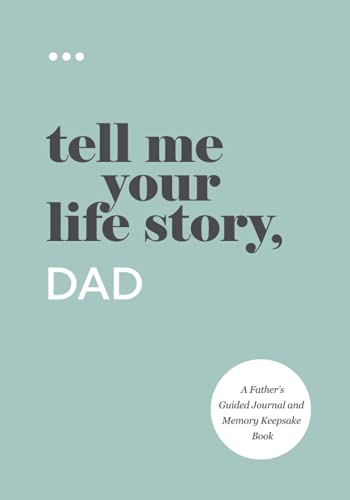
These books also have a grandparent version. Click the book to be directed to Amazon.

Impactful Relationships

Sometimes we need to take the time to access our relationships. As time goes by we may find that we have substituted new relationships and foregone old relationships. We may also find that the value of those foregone relationships were worth more to us than we realized. While all relationships may be impactful, some negative, I choose to focus on the positive for this blog entry.

What does it mean to be impactful? I’m referring to the actions or words that have had a major effect on our lives, our character, and perhaps even our worldview. Does that bring a list of people to mind? I am so grateful for those people who have had a positive impact in my life. The ones who encouraged me to follow my dreams. The ones who saw something in me that I couldn’t see in myself. The ones who blocked my path to self-destruction. The ones who spoke wisdom, when foolishness was all around me, and especially those who taught me that I could have an impact on the next generation as a vocation.

Recently, I was in contact with a childhood friend. We became friends in Junior High School many years ago. At some point in our lives, we stop being just friends and became family. After our conversation on the phone, I began to reflect on the impact she and her family had on my life. Her brother adopted me as his little sister and watch out for me. Her mother treated me like one of her own daughters. My friend accepted me and the dysfunctional awkwardness of my own family structure. From her family I learned so many things about being a confident young woman. Years later, my friend was the maid of honor in my wedding. Although we live far apart, we continue to stay in touch.

In reality I can trace impactful relationships among teachers, neighbors, roommates, sorority sisters, church members, co-workers, employers, my in-laws, and my relatives. Some people bring goodness to your life just by being there, and being themselves: people who are good listeners; people who empathize; people who extend a helping hand; people who deposit wisdom from their own experiences; people who share their life stories, triumphs and failures. These people help you become the best you can be because they impact how you process the circumstances of your life. They impact your perspective, and your outlook without really meaning to; they are just being who they are. These are the type of people that leave the world better than they found it, because they care about others, and are not afraid to touch their lives.

After talking to my friend the other day, I had to ask myself if I am positively impactful in my relationships. Am I taking the time to be an active listener? Am I truly present with others or am I distracted by my phone, my own thoughts, or other relationships? Do I share my experiences, my abilities, my minor or major expertise (depending on how you look at it)? Do others smile when they think of time spent with me, or do they wish I wouldn’t bother to show up as often as I do? We have an opportunity not only to evaluate our present relationships for their impact in our lives, we can also evaluate our impact on others. It’s tied to legacy. (See A Living Epitaph from 10/21/21.)

Relationships are impactful, and the ones that are positive in their impact are worth keeping for years and years. I am so thankful that my relationship with my friend has stood the test of time. I am also happy for the new relationships that keep me active and relevant. How about you? When you evaluate your relationships do you realize the gems? Truly impactful relationships are a treasure.

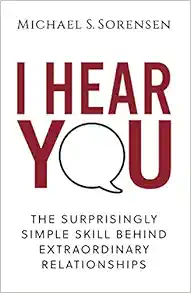
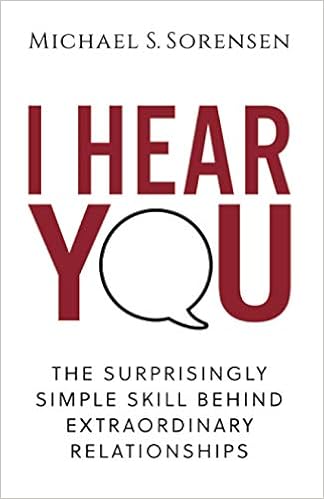
Whether you’re looking to improve your relationship with your spouse, navigate difficult conversations at work, or connect on a deeper level with friends and family, this book delivers simple, practical, proven techniques for improving any relationship in your life. Amazon.com

A Living Epitaph

Several weeks ago I participated in an online writer’s workshop. One of the creative moments required us to focus on what we would like to have written on our tombstone other than our name and dates. We were given five minutes to come up with our final epitaph. I didn’t need the entire five minutes because I try to leave a living legacy everyday.

I wish more people would think about what they will leave behind at the end of their days. We all will leave a message behind whether its intentional or not. When our family, our children, our neighbors, or even our coworkers think of us there will be an impression. When our name comes up in conversation what will be the first thought that goes with our name? For some this may be a morbid concept, especially since no one likes to think about their own death. Yet, in the climate of this pandemic, its become almost impossible to avoid conversations about death.

This past Saturday, my husband and I had to split up to attend two separate funerals. One was for a young father and the other for a seasoned senior grandmother. Neither of them died from COVID. I attended the services for my friend of thirty years. I can remember the first time I met her. She was the type of person that brought love and sunshine to the room. My impressions of her from beginning to end were the same. She loved her family, her work, and her church. She lived the principles of her faith. The funeral services for this phenomenal woman was filled with testimonies to that effect. There was joy in the midst of our sorrow because of the way she lived. The deposits she left in our lives will never be forgotten. The young man also has an awesome epitaph. He was best known for being a loving father. You rarely saw him without seeing his son. It was so obvious that his son was the “apple of his eye” as the expression goes. I can only imagine that his young son will hear of his father’s love for the rest of his life.

If everyone thought about how they want to be remembered on a regular basis perhaps there would be less ugliness in our world. After all, no one really wants to be known as the person who cursed all the time, or the person who bad-mouthed women and children, or the person who was so mean that everyone hated them, or the person who was simply taking up space in the world without contributing anything. I know that sounds tough, but I’m from the generation whose ideal for education was to help everyone become a good citizen – a contributing citizen for the betterment of our society. Those contributions could be made on various levels: family, community, city, state, country, labor, volunteerism, military service, or one’s religious affiliation.

Perhaps thinking about our epitaph could take precedence over our political and social views. Beneath the bureaucracy there are people – people who need friends, people who need solutions, people who need hope, people who need people. I don’t pretend to have all the answers. All I really have is my life, a few meager talents, and daily choices to make.. I choose life. I choose to teach the young and serve the elders. I choose to put my energy into fostering hope and kindness. I choose to use my life as an investment into the lives of others. What are the choices you are making? Will your choices lead to a beautiful epitaph? I love this quote from Billy Sunday: “Live so that when the final summons comes you will leave something more behind you than an epitaph on a tombstone or an obituary in a newspaper.” The thing that’s most important is how you live your life on a day to day basis. We each have an opportunity to create a living epitaph.

At the end of the five minutes in the writer’s workshop, I wrote these words: Her Legacy Lives On!

In loving memory of Mrs. Deborah Ousler Hayes and Mr. Eric Nyantekyi

Purposeful Nostalgia

When I am writing I often use nostalgia as my foundation – using sensory language to recapture an event or an emotion. Its important to me to preserve history while presenting scenarios that are relatable to a younger generation – translating a memory. Little things, like baking cookies or playing in the yard, can come from an ancient story, but at the same time foster or conjure up a moment as reminiscent as yesterday. These desires come out of the oral tradition of my youth. My ancestors were wonderful story tellers.

My great grandparents, great aunts and uncles, and their friends would sit on the porch in the cool of the evening telling stories (memories) of their various life adventures and encounters. I learned early on to keep quiet and take it all in before some grown up noticed there was a child in the midst and stopped the story. Their stories fascinated me. Their stories painted pictures in my mind of places and people I would never see and experiences I would never have. These stories gave me insight about the kind of people I came from – people who endured, resilient people, determined people. I could see them in their youth. I could see them in their travels. I could see their relationships with others, and little by little their stories became my stories.

In my desire to retell their stories, I realized that I had my own stories to tell. So I began adding my stories to their stories; I started creating new stories with a nostalgic feel even in fiction. In a sense I honed my ability to be purposefully nostalgic. I would like to encourage you to be purposeful in conveying your memories and experiences to the next generation. Imagine the stories that will come out of 2020 – both before and after.

You have had many experiences that your children and grandchildren can not imagine. (Nieces, nephews, and other relatives too.) You have seen and heard things that bear repeating. You, and other members of your family, have encountered opposition and opportunity that could be the basis of a young person’s endurance or hope. Yet, these stories may die – never having been shared. I’m not suggesting that you become a writer, although you could, but I am suggesting that you pass on a legacy. I’m suggesting that you share the valuable lessons and experiences you’ve had or been told with a generation who will have no other way to retrieve them.

These stories can be shared while flipping through old photographs. (It’s a little sad that cell phone pics have replace photographs. Handling old pictures is a story within itself.) You can use these pictures to create a family tree while sharing the history of each member depicted. These stories can also be shared while cleaning out the basement or the attic and finding old relics that the children have never seen before like a rotary telephone or an eight track tape player. These stories can come out of pure reflection or recollection on your favorite childhood song or TV show. (Maybe you have some old dance moves to go with the story.) There are stories about first loves, current loves, pets, favorite clothes, hobbies, dislikes, national experiences, civic involvement; so many things that may now be taken for granted as the normal facts of life. Yet, the next generation is not aware of these facts.

Recently, I was sitting in the room with my mother and my granddaughter when the power went out. I retrieved the kerosene lamps and some candles to light the room and other parts of the house. My mom was in the middle of a story about why so many people are afraid of the dark when I returned to the living room. From what I gathered she was saying how dark it was in the rural parts of Tennessee where our family comes from. That led to a very humorous story about how she used to scare her mother (my grandmother) with ghost stories when she was a child. Apparently, they were walking down the road and my mom said, “Watch out you are about to walk into Mr. Jones!” who was a neighbor who had died a year before. My grandmother jumped from the path and fell into a large puddle. My mom laughed so hard just retelling this story that I could imagine how much she laughed back then. All my life I have heard stories about how my mom could see ghosts. This story shed some light on the subject because my granddaughter asked the question, “Could you really see Mr. Jones grandma?” I don’t know how long the power remained out because we were so caught up in the ghost stories that came out of that one question.

Nostalgic storytelling can be very entertaining. Nostalgic storytelling can be quite educational. Nostalgic storytelling is a valuable way to share the treasures of your life experiences from one generation to another. Just be purposeful with your intention to share and communicate the stories of the past.

Bring a smile to your face and to the face of others by sharing a few of your memories with them. Stay well! Remain healthy in body and mind.

Our Voices: From One Generation to Another
A poetry collection uplifting the voices from childhood to the present.
Amazon.com