Fighting Loneliness

Can you believe I’ve never felt loneliness like this before? I’ve always had a friend or a relative, I could turn to when I needed someone. I guess being an only child helped me to see aloneness as a plus. It’s typically a familiar place of content. I always had my books and my pets to keep me company. Yet, in these beginning days of summer, I find myself experiencing loneliness.

I don’t feel isolated like during the pandemic, and I’m certainly not friendless. My immediate family is very near, and my closest friends are just a phone call away. I also have mobility of body and transportation. Yet, I have a loneliness of soul. It feels like all my confidantes are gone – like all those persons who knew me inside out are deceased. I find myself longing to talk to them, to be with them. I miss the comradery of just sitting in their presence. We didn’t have to speak. We could just be. To be honest, maybe it’s not loneliness, maybe it’s grief. Loneliness and grief seem to go hand in hand if the people you long for are gone from your life.

The other day my grandson stopped by to say goodbye before starting his round-the-world trip to Oregon. We talked about all of the stops he planned to make along the way. When he said, Tennessee, he paused. Then he said he remembered how we went to Memphis every year to see Uncle Fred. He said, “I miss that, I miss him.” Me too. I miss my Uncle Fred so much. He was always glad to see me – all of us – and he never failed to welcome us into his home, into his pride-filled loving deportment. Sometimes we’d sit on the patio and watch his cats chase one another. The sweet smell of bougainvillea clinging to the air and the drone of the TV in the room behind us brought such peace and comfort to me. That kind of quiet and love was found on the porches of so many of my great relatives, I miss that the most.

I wonder if my ninety-three-year-old mom feels this loneliness since the world has changed so much in her lifetime. I wonder if she’s lonely for the friends and family she has outlived. I wonder if she misses the traditions of writing and receiving letters and cards or eating tomato sandwiches while talking about childhood adventures. She talks about people from her past a lot and she loves to explain old pictures of herself and her cousins.

Personally, I miss the smells of great-grandma’s kitchen and the smell of Prince Albert from great-grandpa’s pipe. I miss the humming of my grandmother’s no-name songs and the whine and tang of my grandfather’s voice. I miss the flowers that my cousin used to draw while we sat on my great aunt’s porch fanning flies. I miss writing letters and sharing my dreams with an aunt who called me her Aunt Tricia. I miss seeing my godmother and the quilts that she made with her church friends. All those days are gone and there’s no way to get them back because the people and the places are gone. Memories are nice, but they leave a sense of loneliness that nothing in my life today can fill.

I guess that’s why I write nostalgic fiction and narrative poetry. It helps me recapture the familiar. It helps me fight the loneliness. It brings those memories from yester-year into the present. I’m so thankful for old photos, letters, and cards that make me smile and feel the closeness of those old days. It’s like a hug from the past. That’s why it is so important to me that we (all of us) share our family stories with each generation. We shouldn’t let these memories die. Here’s a quote from Paul Tsongas, I like, “We are a continuum. Just as we reach back to our ancestors for our fundamental values, so we, as guardians of the legacy, must reach ahead to our children. And we do so with a sense of sacredness in that reaching.”

I’ve learned to fight loneliness in my own way. Trust me, these are not recommendations for anyone; it is just what works for me. I read the letters and cards that I’ve saved over the years. I share family pictures with my relatives and ask them to share pictures with me. I talk to elderly people in the community and ask them about their lives and experiences. I take walks in cemeteries. I read the epitaphs and dates on the headstones. I save and re-read obituaries. I read southern gothic literature. I participate in family reunions and call on my living relatives and friends. Lastly, I allow myself to cry when I feel sad and lonely.

I guess we all deal with loneliness from time to time, but we don’t have to deal with it alone. Let someone know how you are feeling. Writing can be cathartic too. There is always help in our Beloved community. If you would like to share how you fight loneliness, I’d love to hear it. Peace and Safety to all.

National Poetry Month

Since April is National Poetry Month, I thought I would share a few original poems with you. I hope you like them. Feel free to comment.

Human Perspective

Juniper trees
Weeping Willows
Pine cone dropping
Hawks soaring
Below floating clouds
A tiny black ant
On a daffodil bud
Reflections of life
Perspectives we see
But still don’t know.

Tribute to Marcus Allen

“Lord, I keep so busy serving my Master,
Keep so busy serving my Master,
Ain’t got time to die!” *

Of course, we ain’t got time to die,
Singing these songs in the junior high chorus 1
Ain’t nobody thinking about dying.
We got too much living to do – graduation,
High school, college, romance, make some money,
New clothes, new shoes, a car – No time to die!
We got to show our parents and our teachers
We got a future that’s better than theirs, so we
Gonna keep so busy working for ourselves
Until Marcus gets killed on his paper route.
Stabbed multiple times for the money he collected.
Never to sing “Sweet Little Jesus Boy” ** again. His
Beautiful soprano subtracted from our harmonies
Now filled with tears and disbelief. The songs
We sing take on new meaning.

“Couldn’t hear nobody pray,
Couldn’t hear nobody pray,
O Way down yonder by myself
And I couldn’t hear nobody pray!” ***


*Negro Spiritual by Francis Hall Johnson
**Christmas Song by Robert MacGimsey, 1934
***Negro Spiritual by J. W. Work, 1940

Adoption Party

He ran right up to me
Bright eyes, crooked little teeth.
Tapped me on the leg and said,
“Come and see!”
Before I could answer,
Off he ran, leaving my heart
To wonder, “Is this my son?”
So many children running all around.
All ages, all sizes, filled with energy.
Yet, I could still hear him
Above every sound.
Balloons popping, children screaming,
Workers trying to get everyone to
Settle down.

“We have to find him!” is all that I said
We wandered in search
Of this four-year-old’s head
He had stolen my heart
To my husband’s surprise
We had found the one child
One face, one smile,
Amid so many, he walked right up to us,
A toy truck in hand, pulling my husband’s pant leg.
“What’s your name?” I managed to say
He simply replied, “Can you please play?”
He sat right down at our feet, spinning the wheels
And we joined him there. This is where a new life
With our son began.

More poems by Patricia Boyd-Wilson

Before Hindsight

In our family someone always says, “Hindsight is 20/20,” meaning you can see things more clearly after the fact. While you are in the middle of certain situations and circumstances you may not be able to analyze the value or the significance of an event. This is especially true when emotions are high. Hindsight can help us to see and potentially understand all components of the event as well as the players and their contributions. Usually, it’s during hindsight when we gain real knowledge and potential explanations that aids our character and earns our acceptance.

Death of a loved one is often one of those hindsight conundrums. My grandfather held my hand and called me by my childhood nickname the last time I saw him at the nursing home. I realized later he was telling me goodbye. At the time I thought it was unusual, and I wondered what made him use that nickname. It had been years since I heard it and never once in my adult life. Also, it was odd for him to reach for and hold my hand. We (my mom and I) attributed to some weird sense of sentimentality, but looking back I’m sure he was expressing his love for me and saying goodbye. How I wished I had comprehended that in the moment. I would have hugged him and told him I loved him too. I had missed an opportunity because he died two days later.

This event and several others got me to wondering if I could prompt hindsight to happen sooner, better yet to have insight to happen so I wouldn’t have to wait for hindsight in any form. Would it be possible to take a step back and understand the significance of an experience within the timing of the event? Can we stop multitasking in our minds long enough to be truly present in every situation?

Our level of being plugged-in all day every day is causing a disconnection in our relationships and experiences. We check our text messages while holding a conversation with a friend or coworker. We listen to a podcast while driving through the school zone. We type emails or watch news reels while sharing lunch with a colleague or a family member. We mentally review our to-do lists while attending a staff meeting or a social event. We are rarely truly present anywhere or during large parts of our day. We aren’t even able to draw insight from hindsight because we can’t fully recollect a single encounter. Everything is muddled and it’s hard to recall the who, what, when, where, and how of a past event. Like that day with my grandfather, there is no telling what I was thinking about at the time. I’m not sure I didn’t have my phone in my other hand. I have no idea what was said just before that moment. I can’t tell you if nurses, orderlies or other patients were present. All I really remember is him eating the coconut cake we brought him and at some point, he took my hand and called me Squeaky. Why wasn’t I fully present? I do not know.

Now I find myself asking what’s going on here; what’s happening here. I try to take the time and the initiative to look people in the eye when they are speaking. I make an effort to put my phone on mute and away during meals and social gatherings. I check my emotions as well. It’s important to know how I’m feeling’ what am I bringing to the situation emotionally. For example, if I’m already angry about something it may not be a good idea to have a serious discussion about my current project. The anger may flow over into a new situation that has nothing to do with the current topic of discussion. Sometimes I have to make a concerted effort to put other matters on the shelf for a later time.

There’s a little praise song we used to teach the children, it says: “I command my hands to praise the Lord, I command my feet, to praise the Lord, I command my mind to praise the Lord . . .” Being present is like that. I have to call myself to be present by commanding my ears to hear and listen, my eyes to notice and observe, my mind to stay focus on the now. Chock this one up to my writer’s weirdness, but I like to call my senses to participate as well. You know how a smell can carry you back to an occasion or a person, our senses come into play when we are fully present. There was a time when these things could be taken for granted, but not today. Today we must be more intentional – more mindful and more attentive.

Hindsight is definitely informative at times, but we cannot discount foresight and insight. Active listening, attentiveness, and elevated senses can increase our ability to see and understand what’s happening in front of us. Our vision will not be dependent our ability to replay an event. Afterall, the nicest and best gift (present) we can give or receive is someone’s presence.

“I Don’t Want to Miss a Thing!” Try commanding yourself to be present. Start with your family and friends, then extend it to your colleagues and community. Peace.

Substitute Dad
He was my mother’s father, but my daddy most of all
Whenever I went to him, he gave me his all.
Tall and strong and funny too,
In my younger years, he replaced you.

In the house, he baby-sat
And sometimes he took me to the track.
I couldn’t have asked for a better dad
Even though I wasn’t the only grandchild he had.

He called me “Squeaky” as his pet-name
And gave me things Mom thought was insane.
He embraced my dreams and gave me his time
When I cried and screamed, he didn’t seem to mind.

Year after year, he was present and available
His love, his strength, his tender loving care was so dependable
I learned from him love unconditional
You see, his love was never provisional.

Yes, it’s true, he spoiled me
By being the best substitute dad, he could be.

In memory of John “Daddy Kirk” Boyd

Mental Images

There are always mental images in my head of people, places, and things. Some of them I conjure up out of nothing which I guess is part of my writing process for short stories and poems. Yet, there are other images that come from real life experiences and environments. Things like conversations, a randevu, photographs, or a memory, can bring an unforgettable image to mind. Seeing these images help me to relive the experience. Certainly, I use this in my writing process as well.

I write from a place of nostalgia. I want to conjure up memories and feeling in the reader. I expect the reader to connect to the piece emotionally; whether a story, blog, or poetry. It’s the sole purpose of symbolic and sensory language. A writer wants the reader to see, to hear, to touch, to smell, and to taste it through how the words are expressed. However, true creatives want their audience to go beyond the five senses; they want the readers to feel something: pain, sorrow, love, desire, anger, jealousy, empathy, etc. These feeling make the story/poem/blog memorable.

You don’t have to be a writer to create these mental images for yourself and others. My husband and I have been working on remodeling the kitchen during our free pandemic- induced time. Part of that change was creating a coffee bar for me. As I placed tea cups and creamers and tea pots into the new cabinets with the glass doors, I had an image of a tea party I attended some years ago with my friends. The mental image brought a smile to my face. I took a couple of photos with my phone and sent them to my friends with the message: “I wish we could have a tea party!” Each of my friends answered with an positive affirmation, but one of them had a mental image of her own. She wrote back a memory from a Valentine’s tea party we had attended. This was a pleasant memory that caused a new picture to form in my mind.

There are times when mental images are the best type of closure. Recently, a dear friend and writing buddy sent me a picture of herself and her new surroundings. She had moved far away to be closer to her family during the pandemic. Her words and the pictures let me know how happy she was in her new environment. She was surrounded by beautiful scenery. Just outside her windows nature looked life a manicured park. She had also cut her hair. Her long dreadlocks were gone, replaced by a short natural cut. It made her look younger and serene. These are the mental images that come into my mind when I think of her.

Unfortunately, my friend died recently. COVID-19 took her away from us. I cried for her loss, for her family whom she loved so dearly, and for the beautiful gift that would be missed in the land of poetry and prose. I was angry. How could this happen to her. She was careful and wise in her safety decisions. She was happy and experiencing peace of mind and heart. It was so unfair. It wasn’t right. I communicated with her family and felt so inadequate in ministering to their grief. Yet, I found comfort in the mental images I had of her from our last conversation. I picture her even now enjoying the garden like setting she was so proud to show me. I imagine the poetic words it would have inspired in her and I smile.

Mental images can be both good and bad, but they can also be a great help in our healing and our acceptance of a new normal. We can change those images by using our own mental faculties to create worlds of joy and peace – different outcomes, continuations, and endings. We can develop the mental images we need to survive the ups and downs of living through a pandemic, politically riveted, socially disrupted environment. Start by reading. Read something inspirational: a letter, a poem, a story, a biography, etc. Share the images of what you’ve read with someone else. Talk about the words that helped you draw the pictures and feel the subject matter. Talk about your feelings. What does it remind you of, how does it relate to your own experiences, what would you like for the other person to experience with you?

It is important that we don’t allow the News, docu-drama, and social media to be the only images in our minds. We must generate our own sense of safety, security, peace, joy, and comfort. Look at some family pictures, take a virtual walk through cities you wish to travel to, remember vacation spots, new born babies, and how you met the love of your live. Create a fictional place in a story for your grandchildren, recreate the family home from fifty years ago. Use mental images to remain healthy and to create your personal sense of normal as you wait to settle into whatever our new normal will be. You can control the images of your mind.

Be safe! Stay sane! Be imaginative and creative! Create a positive mental image of yourself regardless of circumstances.

In loving memory of Michelle Birt. May your creative energy live on in generations to come. Rest in Peace, my dear friend.

Purposeful Nostalgia

When I am writing I often use nostalgia as my foundation – using sensory language to recapture an event or an emotion. Its important to me to preserve history while presenting scenarios that are relatable to a younger generation – translating a memory. Little things, like baking cookies or playing in the yard, can come from an ancient story, but at the same time foster or conjure up a moment as reminiscent as yesterday. These desires come out of the oral tradition of my youth. My ancestors were wonderful story tellers.

My great grandparents, great aunts and uncles, and their friends would sit on the porch in the cool of the evening telling stories (memories) of their various life adventures and encounters. I learned early on to keep quiet and take it all in before some grown up noticed there was a child in the midst and stopped the story. Their stories fascinated me. Their stories painted pictures in my mind of places and people I would never see and experiences I would never have. These stories gave me insight about the kind of people I came from – people who endured, resilient people, determined people. I could see them in their youth. I could see them in their travels. I could see their relationships with others, and little by little their stories became my stories.

In my desire to retell their stories, I realized that I had my own stories to tell. So I began adding my stories to their stories; I started creating new stories with a nostalgic feel even in fiction. In a sense I honed my ability to be purposefully nostalgic. I would like to encourage you to be purposeful in conveying your memories and experiences to the next generation. Imagine the stories that will come out of 2020 – both before and after.

You have had many experiences that your children and grandchildren can not imagine. (Nieces, nephews, and other relatives too.) You have seen and heard things that bear repeating. You, and other members of your family, have encountered opposition and opportunity that could be the basis of a young person’s endurance or hope. Yet, these stories may die – never having been shared. I’m not suggesting that you become a writer, although you could, but I am suggesting that you pass on a legacy. I’m suggesting that you share the valuable lessons and experiences you’ve had or been told with a generation who will have no other way to retrieve them.

These stories can be shared while flipping through old photographs. (It’s a little sad that cell phone pics have replace photographs. Handling old pictures is a story within itself.) You can use these pictures to create a family tree while sharing the history of each member depicted. These stories can also be shared while cleaning out the basement or the attic and finding old relics that the children have never seen before like a rotary telephone or an eight track tape player. These stories can come out of pure reflection or recollection on your favorite childhood song or TV show. (Maybe you have some old dance moves to go with the story.) There are stories about first loves, current loves, pets, favorite clothes, hobbies, dislikes, national experiences, civic involvement; so many things that may now be taken for granted as the normal facts of life. Yet, the next generation is not aware of these facts.

Recently, I was sitting in the room with my mother and my granddaughter when the power went out. I retrieved the kerosene lamps and some candles to light the room and other parts of the house. My mom was in the middle of a story about why so many people are afraid of the dark when I returned to the living room. From what I gathered she was saying how dark it was in the rural parts of Tennessee where our family comes from. That led to a very humorous story about how she used to scare her mother (my grandmother) with ghost stories when she was a child. Apparently, they were walking down the road and my mom said, “Watch out you are about to walk into Mr. Jones!” who was a neighbor who had died a year before. My grandmother jumped from the path and fell into a large puddle. My mom laughed so hard just retelling this story that I could imagine how much she laughed back then. All my life I have heard stories about how my mom could see ghosts. This story shed some light on the subject because my granddaughter asked the question, “Could you really see Mr. Jones grandma?” I don’t know how long the power remained out because we were so caught up in the ghost stories that came out of that one question.

Nostalgic storytelling can be very entertaining. Nostalgic storytelling can be quite educational. Nostalgic storytelling is a valuable way to share the treasures of your life experiences from one generation to another. Just be purposeful with your intention to share and communicate the stories of the past.

Bring a smile to your face and to the face of others by sharing a few of your memories with them. Stay well! Remain healthy in body and mind.

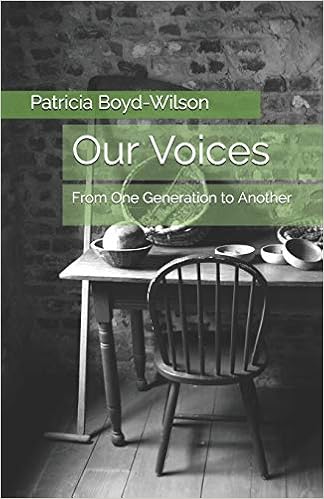
Our Voices: From One Generation to Another
A poetry collection uplifting the voices from childhood to the present.
Amazon.com

Purposeful Remembering

Today I found out that some one I care about has died. I knew they were sick, but I didn’t know how bad it was. It saddens me that I missed his last days thinking that I had more time. Yet, I am content knowing that we had the time to know one another and care for one another – time well spent. That’s where purposeful remembering comes in. Now I am going to take the time over the next few days to remember his investment into my life – how we laughed, how we discussed scripture, how we enjoyed good food, how we walked together, sharing companionship without words. I will remember his fatherhood toward me when I needed it the most.

As I writer, it important to me to capture the precious moments of everyone that touches my life. I especially want to internalize their voices. ( This is one of the reasons behind my book: Our Voices . . .) The words that people leave with us are like little treasures. Their words add richness to our way of life, and our way of thinking, whether it’s wisdom, truth, or disagreement. Even lies have an impact on how we think and feel about a topic. People leave something of themselves with us through the things that they say to us, and those things take root in one way or another – emotionally, spiritually, or intellectually.

Remembering in this way is very purposeful. It makes the people you miss live on in your heart and mind. It’s like walking down the lane with a friend. (Now that’s a country reference for you city kids. The lane is the road that leads to a friend or relative’s house where there are no sidewalks and sometimes no paving.) This memory walk makes you smile, makes you cry, makes you laugh, and makes you enjoy the fellowship all over again. Then if you take the time to write them down (diary, journal, scrap book notes with pictures), they are never lost.

My life has been so enriched by people of so many generations. (I’m not just talking about those who have died. Everyday I enjoy the lives of four and five years-old’s, and it’s true they say “the darn-est things.” I also get to spend time with my elders, persons 20 to 30 years older than me. ) I don’t ever want to loose those encounters. I won’t allow myself to forget the valuable experiences I’ve shared. The impact of true relationships is too important to me. The time invested in real relationships is well worth it during the time spent and afterwards. (See “Personal Investments,” Jan. 16th.)

I will share these times with others along the way. That’s part of the purposeful remembering too. Sharing memories with others allows us to expand our knowledge of an individual, because relationship dynamics vary depending on the people involved. The thing that means the most to me may not be reminiscent with your knowledge of that person at all. Sharing will allow us to enjoy and experience that person anew. Like, “Wow, I never knew that!” I’m already smiling just thinking about that. I know this will happen when I go over to the family home of my friend and we begin sharing our memories.

No one should have to say the words, “Don’t forget me!” because we should be mark an effort to remember those we love by being purposeful in keeping them near and dear to our hearts.

My Pen Remembers

My pen speaks of cool summer
Days, baseball in the rain
And your warm wrinkled face
Those fertile rows of wisdom carved
Over time and tilled by the plows
Of segregation and degradation
Yet you smiled.

My pen speaks of wood burning stoves
Black-eyed kittens and the sweet smell
Of gardens planted by your creased cracked
Fingers; a day of hard labor
At a house not your own nor could you enter
Yet you sang.

My pen speaks of overalls of faded denim
And plaid red flannel shirts soft upon your
Frail frame; still working after seventy years
Of being called boy and never a man
Sowing seeds of hope in several generations
Through the long dark days
Yet you found laughter

My pen is silenced by the sound of your love
That still warms my heart and stirs my memories
And calls me to be better because you endured.
What can’t be captured on paper is captured in my heart
So I smile, I sing, I laugh,
And I lay my pen down.

available Amazon.com