We Need More Storytellers

Isn’t it funny how things from your childhood pop up from time to time. I can remember friends and adults telling me, “You better quit your storytelling.” I grew up in a generation where you didn’t use the word “lie,” you were either fibbing or telling stories. Today, I consider myself a necessary storyteller. My medium is narrative poetry and prose. My stories are mostly fiction with real life as a backdrop (aka: representational literature). I tell my own stories and the stories of my ancestors. I tell stories with morals and stories just for shear entertainment, but mostly I tell stories to connect generations. Trials, triumphs, struggle, hard work, hopes, dreams, love, family – these are just a few timeless themes that can reach out and touch members of every generation. In this case, I’m not just talking about the written word, I’m talking about oral storytelling – stories in the midst of conversation. We need more of these kinds of storytellers in our world today.

You don’t have to be an author of books to be a storyteller. Your life is full of experiences and relationships that create a storytelling opportunity. The time you had your first kiss, when you found out you were going to have a brother or sister, what it was like when you moved from your parents’ home or went off to college – these milestones and more are stories waiting for you to tell them. Things we can identify with and learn from can be found in the lives of other people. That’s why so many people love to read memoirs, biographies, autobiographies, historical fiction and to watch documentaries. We are interested in how people made their dreams come true or how they survived a crisis or how they overcame the obstacles of systematic societal phenomenon. We are fascinated by love stories and the work ethic and processes of a visionary. We even live vicariously through the adventures and travels of others. Whether you think of your life as mundane or extraordinary, you have a story to tell that no one else can tell quite like you.

As I talk to teenagers and young adults it always surprises me that they feel like they have to go life alone. As older adults we tend to blame their feelings of despair and detachment on cell phones and social media, but that’s not really the problem. The problem is all of us. We don’t engage in conversations the way generations did before the technology boon. I remember when there was only two ways to find answers: ask somebody or read a book or both. You couldn’t get an answer without a story. Young people are facing some of the same experiences and fears that we all have had. They could benefit from hearing how we conquered our fears. They could be encouraged by the stories of how we had to start again and again before we got it right or how we had to reinvent ourselves to stay current in the industrial age. They could find hope in the fact that we had so little but still accomplish so much with that little. I’m not talking about preaching or even teaching, I’m taking about sharing, investing, and leaving an indelible mark. Youngsters, teens, and young adults are a ready audience for your stories.

While we have an open audience for our stories, we can also be an audience for the stories of others. I spend a lot of time with people older than me. In fact, that’s part of the story of my life, I have always been around people much older than myself. Years ago, and today I learn so much from the older generation. Innumerable stories about the Great Depression, the First Pandemic, moving from the South to the North, domestic jobs, civil rights activism, faith, answered prayers, living among the famous, surviving wars, and so much more have been shared with me. Fascinating tales of trials and victories, love and family, death and hatred that I have not experienced except for someone being willing to share their story with me. Older adults love to talk about the “good ole or bad ole days.” Many of them are from the generation when conversation was the normal way of life. Conversation was the medium for obtaining news because everyone didn’t have radio or TV. Some of them could catch up on the party line (old fashion telephone network when several people shared the same line), or in the church yard, or the quilting bee, or the fields during harvest, or at the civic meetings held in the schoolhouse. They shared everything from obituaries to new births by talking to each other. Almost everything in the community traveled by word of mouth, and they haven’t forgotten a single word. Trust me, there are stories you need to hear from the senior adults in and around your life. Listening can bring joy to the teller and the listener.

Long ago, I ignored those persons who told me to stop telling stories. I don’t want to stop. I want to continue telling stories and listening stories. Stories make you laugh, cry, reflect, dream, remember and imagine. Stories help you empathize and sympathize with the life journey of others. Stories can bring healing and understanding as well as open up new avenues of knowledge for the listener. Stories form a union between the teller and hearer, an intimate bond over a shared experience. Stories are our legacy – the part of us that will live on after our transition to the world beyond. The world needs more storytellers. Are you willing to share your stories? Do you have an audience just waiting for you to begin the small tales and the large volumes of your life’s journey? Have you been privy to stories you can retell so that the legacy of the original storyteller live on? I’d love to hear from you. Tell me your story.

“Storytelling is important. Part of human continuity.” – Robert Redford

Talk From the Family Tree

Imagine sitting at the feet of your elders and ancestors hearing their stories and conversations and discovering the origin of your life. Visualize seeing the expressions on their faces and hearing each tale firsthand for the very first time. I was a little girl eavesdropping on grownup conversations, trying to understand the connection of the past to the present. This new book, a collection of short stories and poetry, tries to capture the intimate conversations retold year after year for every generation.

It’s my pleasure to share my latest book with you. Your encouragement and support of my writing is priceless. Thank you for following my blog and the books I’ve authored.

Available on Amazon today.

Story Connections

I was listening to the radio yesterday; this guy was talking about how people relate to stories and anecdotes rather than statistics and algorithms. While it was a very interesting NPR program, it got me to thinking about why I’m so passionate about writing narrative poetry and short stories. Stories connect people. The common human experiences of love, pain, hope, dreams, sorrow, tragedies and victories connect us to one another regardless of the artificial divides we use to separate ourselves. That’s why the best stories are the ones where we can picture ourselves partaking of the events, adventures, or relationships.

I write to connect one generation to another – stories of ancestors, forerunners, and trailblazers. I write to remind the next generation that there is both good and bad in the struggle, and there a legacy of overcomers. I also encourage others to write their stories, if not for publication, for posterity, because people – our children and multiple generations to follow – will relate to your story, your community, your traditions, your struggle, and your survival.

We tell stories to share a part of ourselves. When you tell your story, it can’t be denied. All the listener or reader has to do is receive it. Whether they choose to believe it or not, they have been the recipient of your truth (or your perspective of the truth). Funny thing is, I have a hard time convincing people that all of my works of fiction are not about me. All stories are made to make the hearers/readers feel something. Sensory language appeals to their five senses and their emotions.

Two weeks ago, I had an opportunity to share a story with members of a writers’ group. The story is entitled Compatible Voices. It a story about finally meeting the man, a business associate, I had been talking to over the phone for a number of months. (This was some years ago.) Somewhere along the line, we began flirting during our calls. Over the phone, we seemed very compatible. Finally the day came when we had an opportunity to meet face to face. We were both excited and looking forward to making the connection that might have led to a more formal relationship. Unfortunately, I was a disappointment to him, and he was a disappointment to me. Our disappointments covered a gamut of character flaws and assumptions: fidelity, racism, stereotyping, integrity, and honesty were out of skitter.. The interesting thing in reading this story was the reactions of the group.

Some of the members of the group anticipated the ending and were already shaking their heads. Others were waiting and cried out in disdain at the end. One member expressed her sadness that this happened to me. Still others wanted more details beyond what I had written in the story. The story eventually led to a lively discussion about the intonation of voices and different dialects and colloquialisms. Although it was my story, it connected with everyone present which included multiple ages, races, and genders. The story became a conversation starter as well as a fellowship connection. Not only did we laugh and chat, but others shared stories from their past experiences. We had a great time.

You may have a story inside of you that has the same ability. Perhaps your story can heal some of your family divides. Perhaps your story can solve the mystery of someone’s behavior or attitude. Perhaps your story can bring laughter to a grim situation or bring back a happy memory in the midst of sorrow. Stories and anecdotes (and parables) can help others understand how you feel or where you are coming from in your opinions, traditions, intentions, and actions. Stories can open up worlds to help one generation see another generation’s perspective. Stories can encourage others to share their stories with you. Sharing stories can then become meaningful conversations.

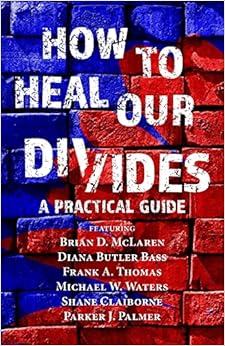
The book I’m going to end this blog with today is entitled How to Heal Our Divides. As a member of the launch team, I had an opportunity to read the pre-published copy. I have to admit, I couldn’t put it down. It was so interesting to read the stories of over thirty contributors, each striving to make a positive difference in the world. While there is some content I found myself questioning and somewhat at odds with, I am excited that here are so many organizations out there working on the front lines to address the huge ills in our society. They are not just telling stories, they are doing the work that makes the stories, and those stories are making wonderful connections.

Take the time to share some of your stories with your family, your friends, your neighbors, and your co-workers. You may be surprised at their reaction. You may find that your lives are more relatable than you once thought. You may find the human connection that makes us all members of the Beloved Community.

Once upon a time . . .

Recent times have put a spotlight on the inequities, systems of oppression, and deep divisions in our society. How to Heal Our Divides highlights organizations that are taking real action to address these issues and heal divides in effective and practical ways. Take a look to see how you can help make the world a better place. Amazon.com