
Being Intentional

This is a lot different from a New Year’s resolution. New Year’s resolutions tend to be optimistic delusions. I know that’s strong, but how many of us have made the same resolutions for the last ten years without achieving any of them? I like to call these the “I wanna’s.” I want to loose weight, I want to make more money, I want to start my own business, I want to go out more, I want to establish new relationships, I want to be a writer, but the reality is we’re not truly motivated to do anything about these things. In other words, we have no real intentions.

Intention implies making a plan. A plan requires decisions, details, and arrangements of time and space. If we want to accomplish something we have to be willing to design our lives. Here’s an example from my life. I wanted to write more with the goal of being published. I talked about doing this for a number of years. Every year was going to be my new beginning. I would start writing and before I knew it I had stopped. Life, work, laziness, pessimism, distractions, procrastination – something always got in the way. (By the way this was true with my diet as well.) So I ended up with folders and journal with half written stories, a few poems, and a lot of idea notes, but no material for publication. About five years ago, I got serious, partly as a result of a Vision Board workshop, and partly because I really wanted this thing.

Here are some pointers I picked up from the Vision Board workshop. Don’t just cut out pictures; actually write down how you plan to make those pictures a reality. What steps will it take to get there? Will you need classes, a partner, some how-to books? Can you find a mentor or interview someone who is successful in the area of your desire? These ideas sparked a fire in me. I grabbed a composition notebook and wrote down all the things I thought I needed to do to accomplish my dream.

So these are the steps I took. I looked for and enrolled in a writing class. (This was a class about writing memoirs and my first published book was a memoir.) I subscribed to two periodicals about writing. I bought a Writer’s Market book along with several other books about honing my skills as a writer. I joined a writer’s group that met at the public library weekly, and I set aside two hours three days per week to go to the library to write. (It didn’t take me long to realize I couldn’t avoid the distractions of my family even though I have a home office.) Lastly, I wrote a list of the things I wanted to accomplish each week. This was a checklist that helped me hold myself accountable for following through with assignments and short and long term goals. It was very intentional.

Think about it! If you are around other people who are doing what you want to do, it makes it real. It tells your brain and your heart, it’s possible. When you design a plan that includes short and long term goals, it helps you to move forward and make progress. It makes your decisions and your effort intentional. Intentionality helps you build the appropriate habits and work ethics to succeed.

I think it’s hard for us to be intentional because so many things are planned for us. We have forgotten how to plan for ourselves. Someone else designed my work schedule at my job. Someone else wrote the job description. Someone else wrote the list of duties, and my evaluation is based on me meeting their goals. What about your personal goals? Whose going to set your schedule? Whose going to write a description of the duties? How will you evaluate your success? BE INTENTIONAL! Being intentional is not a resolution it’s an action plan.

Perhaps you have other ways of being intentional that you would like to share. Share your plan for success with us! Let’s all be more intentional in 2020. DESIGN YOUR LIFE!

https://amzn.to/2QRDR7k
Dream. Imagine. Believe : Vision Board Journal: Journal your way to success by visualizing your dreams, a unique notebook with blank and lined pages to draw, sketch, write or add pictures

Journals or diaries- Is that a question?

Whenever I look at my stacks of journals I always imagine my sons looking at them after I’m dead saying, “What are we supposed to do with these?” The first reason is because there are so many of them. The second reason is because they can’t be sure whether they are my writing journals or personal diaries. Most of us don’t want to know our parents deepest secrets, especially if it will burst our “perfect” bubble of who we think they are. The thing is, I don’t know if I know the difference either. I write what I write. If I’m feeling blue, I write about that. If I’ve got an idea for a poem or story, I write about that. If I’m studying and an interesting fact sticks out in my mind, I jot it down. I carry my journals to classes and write notes in them. I carry my journals to the monastery and write prayers in them. I write my hopes, my dreams, my disappointments, my triumphs – I write! I don’t think about content. I do write dates and sometimes I write context, but mostly I just write. My journals include both private and public information and I really don’t worry about people reading them – which may only happen when I’m dead. I do think whoever reads them will think I’m absolutely as weird as they thought I was. But since we’ve been talking about journaling for personal change and to leave a family legacy, let’s discuss types of journals/diaries.

According to my friend Martin, there are three types of journals: (1) The Project Journal (2) The Life Journal and (3) The Daily Exercise Journal. The Project Journal is for ideas, details, and issues for a specific project like the stories you want to record for your children, or the novel you are working on. The Life Journal (Martin also calls it the Breathe Journal) is used to record personal experiences good or bad, things that bother you, venting , or something that means something to you like sights, sounds, relationships – in other words, personal stuff. I guest this is what most people call a diary. The Daily Exercise Journal is the place where you practice disciplines such as writing prompts, memorizing scripture, positive affirmations, and or honing your writing skills. Needless to say Martin is a very organized individual and I love that about him, but that’s just not me.

I’m one of those people who has more than one journal going at a time, but there are no demarcations in their content or style. I’ve used every thing from bound leather books to composition notebooks from Walmart. I carry something to write in at all times. Whether I’m at work, at the park, at church, or in the library, I record what’s important to me at the time. It simply doesn’t matter to me if it’s a personal thought or a business thought. What matters is what I want, think, or need is recorded, and I know where to find it when I need it. Once I start writing a story or a collection of poems – any writing with a real purpose – then I glean from these journal to form a designated content book. This is when I am building on a theme where continuity is important.

Now I know handwritten journals are becoming a thing of the past. Many people are keeping journals and even composing books electronically. There are journal and diary programs and apps out there to stimulate this kind of activity and that’s great. Just find a way to record your thoughts and experiences for yourself and posterity. Then call it whatever you want – your journal or your diary. The name is not important.

Becoming A guided journal for discovering your voice $9.99 Prime
https://amzn.to/2QjNvRt

Ancestry non-tech.com

The other day my mom, my granddaughter, and I went to the store and the cashier commented on how much we look alike. (Those of you who really know us, will get the laugh about that.) “Undeniably family,” she said, “Mother, daughter, granddaughter.” When my granddaughter explained that we were her grandmother and great grandmother the cashier was surprised. That kind of thing has happened to me all my life. According to most of the people I know, I have been exceptionally blessed to know all of my grandparents and great grandparents. In fact, two of my great grandparents were still alive when I got married.

In addition to that blessing, I also have written information about my ancestry. I’m not sure where this written document started, but I received it from one of my grandfather’s sisters. It tells of the two brothers who were slaves sold away from each other and how one of them moved to freedom and eventually settled in Tennessee. It list all the brothers and sisters for four generations including my grandfathers sisters and brothers. I have this non-tech document to pass down to my children and my grandchildren.

Don’t get me wrong. I love the services that are offered through technology where you can trace your ancestry back to its beginnings, but to have a family handwritten document which includes some personal notes and details beyond names and dates is priceless. I’ve decided to keep this tradition of passing down family information going. I have added pages from my great grandmother’s and grandmother’s bibles along with first hand stories that I heard or was told by them.

Even if you can’t go back that far you can start with what you know. You can start with your own childhood. You can add family photos and interview the oldest members of your family to start a new tradition of documenting your family legacy. There are also some pretty nifty books (see below)out there that you can purchase to help you get started with this kind of activity, but you don’t have to spend a lot of money to make this happen.

Unfortunately, we live in an age where personal contact and family ties are challenged by time and space. Many families are spread all over the U.S. and abroad, so annual get-togethers and holiday gatherings don’t happen as often as they once did. Our generation was close knit. We were held together by the matriarchs and patriarchs of the family, as well as what we used to call the “home” house. Now, there are younger generations who don’t know their relatives beyond their siblings and relatives who live in the same community. Yet, we can still tie all the generations together by providing non-tech ancestry information. I personally believe it fulfills that longing that we all seem to have – where did I come from and who am I really?

I have no doubt that my granddaughter will find a way to turn some of this into a technological wonder in the Cloud, but I also know she will treasure our family documents forever. I hope she will pass them on to her children and grandchildren one day.

Are you capturing your family legacy in some way? Do you have photo or written documentation? Share with our community the ways you are passing down your family history.

https://amzn.to/2ZFwm7v

1085819019

https://amzn.to/2u1ieK5

Are family traditions dying?

Family traditions will soon disappear if we allow the family stories to die with our generation. I was watching a commercial where it shows this woman reminiscing over baking with her mom early one Christmas morning because she wake up so early. Her mother taught her to make a breakfast strudel. While she’s remembering this her own little boy comes toddling into the kitchen, so she takes him into the kitchen to relive her childhood memory. This is how traditions begin.

The problem is we stop sharing how our traditions started. We rarely have times when we sit around the table or in front of the fire and remember when . . .

In my family we have these discussions over ice cream and cake or popcorn and hot chocolate. Everyone has a different version of the time we had barbecue instead of turkey for Thanksgiving, or when my boys (now grown men with children of their own) saw their first snow when we went to Ohio for Christmas. We also have an abundance of family ghost stories that we share with each new generation. This is also a great time to drag out the family picture albums. These times of sharing are multi-generational; including the great grands, grands, parents, children, everyone.

Baking cookies is a great time to share. Cookouts is another great time to share. Why do you make the sauce the way you do? Why is there a children’s table? Why is there an extra plate on the table at Christmas? Why are there rocking chairs under the big tree? Family stories about our traditions paint a picture of who we are as a family. These fond memories allow us to appreciate every generations contribution to our family. These times of sharing will also allow others to add to the traditions, adapting them to modern times. Traditions won’t die; they will grow and be carried into the next generation attached to a new and growing story.

Family traditions are tied to family stories and we shouldn’t let them die. Do you remember a story that has caused you to do a particular thing a particular way in your family? Sit down and share it with your children and their children the next time you are all together. You may be surprised at how much interest and fun it will produce in the life of your family.

Stories for our children

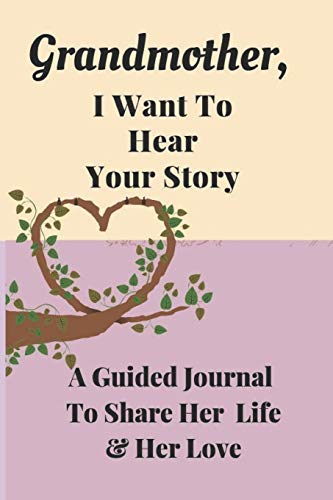
Do you ever think about the things you want to share with you children? Or the things you wish you had shared before they grew up moved away and had children of their own? I’ve been thinking about this for some time now. I have two sets of grandchildren. One group that spent most of their growing up years with me and the other whom I nearly know. I did n’t know what the future holds but for now it seems like I may not get to know the second set as well as I got to know the first, but I want them to know me. I want them to know their heritage. I want them to know the family stories, the times of great laughter and the time of great sorrow. I want them to know about the love that has flowed from one generation to another and flows in them too. So how am I going to accomplish this? Well, certainly the books I’ve written will be available to them, but I am aiming for something more personal. So I’m thinking of writing letters to each of them in the form of a journal. I’ll include stories about their parents, about me, about my parents, and my grandparents. I can tell them about pets and trips and holidays and birthdays. I can tell them about my faith and my hopes. In a perfect world I may get to read it to them or with them, but for now I’m thinking of sending it to them or leaving it for them. When I’m gone or just far away they will have a part of their family history and the our stories available to them. There are so many purposes for journaling and this is one that I can’t pass up. How will you pass on your family stories for the next generation? It’s important that we don’t let our stories die!