Talk From the Family Tree

Imagine sitting at the feet of your elders and ancestors hearing their stories and conversations and discovering the origin of your life. Visualize seeing the expressions on their faces and hearing each tale firsthand for the very first time. I was a little girl eavesdropping on grownup conversations, trying to understand the connection of the past to the present. This new book, a collection of short stories and poetry, tries to capture the intimate conversations retold year after year for every generation.

It’s my pleasure to share my latest book with you. Your encouragement and support of my writing is priceless. Thank you for following my blog and the books I’ve authored.

Available on Amazon today.

Before Hindsight

In our family someone always says, “Hindsight is 20/20,” meaning you can see things more clearly after the fact. While you are in the middle of certain situations and circumstances you may not be able to analyze the value or the significance of an event. This is especially true when emotions are high. Hindsight can help us to see and potentially understand all components of the event as well as the players and their contributions. Usually, it’s during hindsight when we gain real knowledge and potential explanations that aids our character and earns our acceptance.

Death of a loved one is often one of those hindsight conundrums. My grandfather held my hand and called me by my childhood nickname the last time I saw him at the nursing home. I realized later he was telling me goodbye. At the time I thought it was unusual, and I wondered what made him use that nickname. It had been years since I heard it and never once in my adult life. Also, it was odd for him to reach for and hold my hand. We (my mom and I) attributed to some weird sense of sentimentality, but looking back I’m sure he was expressing his love for me and saying goodbye. How I wished I had comprehended that in the moment. I would have hugged him and told him I loved him too. I had missed an opportunity because he died two days later.

This event and several others got me to wondering if I could prompt hindsight to happen sooner, better yet to have insight to happen so I wouldn’t have to wait for hindsight in any form. Would it be possible to take a step back and understand the significance of an experience within the timing of the event? Can we stop multitasking in our minds long enough to be truly present in every situation?

Our level of being plugged-in all day every day is causing a disconnection in our relationships and experiences. We check our text messages while holding a conversation with a friend or coworker. We listen to a podcast while driving through the school zone. We type emails or watch news reels while sharing lunch with a colleague or a family member. We mentally review our to-do lists while attending a staff meeting or a social event. We are rarely truly present anywhere or during large parts of our day. We aren’t even able to draw insight from hindsight because we can’t fully recollect a single encounter. Everything is muddled and it’s hard to recall the who, what, when, where, and how of a past event. Like that day with my grandfather, there is no telling what I was thinking about at the time. I’m not sure I didn’t have my phone in my other hand. I have no idea what was said just before that moment. I can’t tell you if nurses, orderlies or other patients were present. All I really remember is him eating the coconut cake we brought him and at some point, he took my hand and called me Squeaky. Why wasn’t I fully present? I do not know.

Now I find myself asking what’s going on here; what’s happening here. I try to take the time and the initiative to look people in the eye when they are speaking. I make an effort to put my phone on mute and away during meals and social gatherings. I check my emotions as well. It’s important to know how I’m feeling’ what am I bringing to the situation emotionally. For example, if I’m already angry about something it may not be a good idea to have a serious discussion about my current project. The anger may flow over into a new situation that has nothing to do with the current topic of discussion. Sometimes I have to make a concerted effort to put other matters on the shelf for a later time.

There’s a little praise song we used to teach the children, it says: “I command my hands to praise the Lord, I command my feet, to praise the Lord, I command my mind to praise the Lord . . .” Being present is like that. I have to call myself to be present by commanding my ears to hear and listen, my eyes to notice and observe, my mind to stay focus on the now. Chock this one up to my writer’s weirdness, but I like to call my senses to participate as well. You know how a smell can carry you back to an occasion or a person, our senses come into play when we are fully present. There was a time when these things could be taken for granted, but not today. Today we must be more intentional – more mindful and more attentive.

Hindsight is definitely informative at times, but we cannot discount foresight and insight. Active listening, attentiveness, and elevated senses can increase our ability to see and understand what’s happening in front of us. Our vision will not be dependent our ability to replay an event. Afterall, the nicest and best gift (present) we can give or receive is someone’s presence.

“I Don’t Want to Miss a Thing!” Try commanding yourself to be present. Start with your family and friends, then extend it to your colleagues and community. Peace.

Substitute Dad
He was my mother’s father, but my daddy most of all
Whenever I went to him, he gave me his all.
Tall and strong and funny too,
In my younger years, he replaced you.

In the house, he baby-sat
And sometimes he took me to the track.
I couldn’t have asked for a better dad
Even though I wasn’t the only grandchild he had.

He called me “Squeaky” as his pet-name
And gave me things Mom thought was insane.
He embraced my dreams and gave me his time
When I cried and screamed, he didn’t seem to mind.

Year after year, he was present and available
His love, his strength, his tender loving care was so dependable
I learned from him love unconditional
You see, his love was never provisional.

Yes, it’s true, he spoiled me
By being the best substitute dad, he could be.

In memory of John “Daddy Kirk” Boyd

Community = Common Unity

“Community” is on the lips of every local politician and every civic organization. Whether schools, churches, or mosques we all want to see stronger communities; but what do we mean by community. When we say community where are the boundaries and borders? Is it a one block radius around my house, or the whole area of the housing development? Is it the designated name of an area used by voting districts or property taxes, or is it the area used for postal services by zip code? In smaller towns is it the whole town or just the city limits? Perhaps it is time define or redefine community for everyone.

If you study the etymology of the word community you will find its origins in Latin, and Old French. In Latin it is the word “communis” meaning the same and “communitas.” meaning common, public, shared by all or many. Our English word community is an adaptation of these words from the Old French word “communaute” which refers to public spirit or commonality. Outside of the fact that I love studying the historic context of words it always interests me that most words we consider to be “American” are actually borrowed words from other languages. Needless to say, over time words seem to take on new meanings and lose their intended and original definition. So, allow me to simplify the meaning of community for this blog post as derived from this background: Community equals Common Unity,

Several weeks ago, a huge oak tree fell in my front yard. We were lucky that it fell at an angle, so it didn’t hit our home or the homes of our neighbors. It did fall across the street and left limbs and debris in our neighbors’ yards as well as blocked the entire street. A young man came over from the end house and offered to help my husband clean up the debris and cut and remove the tree. It turned out that he owned a tree cutting and removal business. Another neighbor from the cul-de-sac came with power saw in hand to help with the cleanup too. The young business owner finished the job of removing the fallen tree and proceeded to cut bad limbs on other trees in our yard. He also pruned my crepe myrtles and inspected other trees on our property. When my neighbor to my left came home there was no evidence that our tree had left limbs and leaves all over her yard. It turned out that this young businessman who was relatively new to the neighborhood has helped people all over the neighborhood. When asked what was really in it for him, he said, “This is my community it’s our job to help one another.” Imagine that. This young man saw our entire development as his community.

That fact is disaster has a tendency to draw a community together. Floods, hurricanes, fires, all these things bring families and neighbors together because they are experiencing “communitas.” Trauma, grief, upheaval, and lost is the commonality that brings everyone together. Differences are put aside. Unity of purpose is understood in terms of survival and rebuilding. This is commendable, but also temporary. I am always amazed how people come together from all over the country to help individuals in these disastrous situations. Yet, why should it take catastrophe to remind us that we are one community.

Before calamity happens, we have a common unity. Every parent wants a good education and a safe environment for their children. Every bread winner wants to make enough money to take care of their families. Renters want to become owners. Owners want to maintain their property values. Everyone wants to have nourishment and clean water to drink. All people need clothes appropriate for the weather and affordable housing. Healthcare and retirement income are all common needs amidst the aging. Everyone sheds tears at the loss of a loved one. Everyone is pursuing happiness – the so-called American dream. These are not political talking points; these are community needs. These are the things we have in common with our neighbors and others who live in our region. These are reasons for us to relate to one another and to help one another. If you really think about it, we have more in common than we have as differences. Pain, fear, hope, dreams, struggle, thriving are all part of our common experiences.

Rather than allowing politics, racism, sexism, classism, and other social economic circumstances to polarize us why can’t our commonalities unify us? We breathe the same air. We walk or drive the same streets. We have the same desires for our families. This is not rhetoric; look around our world. Here’s the reality and if we are not careful, we will create more disasters to draw us into unnatural communities. Let’s remember our common unity before things around us get worst. We should build our community to make it stronger by stepping in to help in any way that we can. Like the young businessman I mentioned above, we can use our expertise to make our communities better. Like the neighbors that came to help us, we can use our collective efforts to fix and clean up our shared space.

It’s time to unify. It’s time to be a real community. It’s time to capitalize on our common unity. PEACE!

Photo by Kaique Rocha on Pexels.com

Holiday Sensitivity

This is the time of year when everyone is bombarded by holiday sales and decorations weeks before the holidays begin. Everywhere you look there is red, green, gold, blue, and silver garland. Toys and small appliances sit on the end caps of every store shelf. Even the piped-in music invades the atmosphere with subliminal messages of whimsical dreams, glee, and laughter. Before we get off to a bad start, I want you to know I am not intrinsically opposed to any of this (well maybe the sales campaigns and ads); I am just calling for some sensitivity during these seasons of holiday cheer. 

During the week of the national Thanksgiving holiday, we lost one of the matriarchs of our family. Her death was very disheartening not only because it was unexpected, but because of what she represented in our family legacy. She was the last of my maternal great grandfather children. As we grieved and prepared for her memorial and the celebration of her life, I was struck by the incongruent sentiments of condolences and “Happy Thanksgiving.” People asked, how was our Thanksgiving, did we cook a lot, eat a lot, or host a large gathering. At times I felt trapped between my own grief and trying not to dampen the spirits of people who were enjoying the holiday season. They meant well and were simply pursuing polite conversation, but I was not in the mood for it. I wondered if they even noticed my countenance or my monosyllabic responses. Few were sensitive to my hesitations; even co-workers didn’t seem to notice the strain. 

There I was trying to be sensitive to the needs of others by keeping my bereavement to myself. There I was trying to make sure I didn’t spoil their holiday cheer. I reasoned with myself; they didn’t know my great aunt. They wouldn’t understand what she meant to our family legacy. They certainly weren’t in the mood for a long explanation concerning the impact of her death. So, the sensitive thing for me to do was grin and bear it. Right? The aftermath of this was a reminder that everyone is not experiencing a season of cheer just because it is listed on the calendar. 

Upon reflection, it occurred to me that sensitivity is needed more than ever. First and foremost, we don’t all celebrate the same holidays. There are at least twenty-nine (29) holidays between November 1st and January 15th for seven major religions. These include national, cultural, local, and international days of celebration. Secondly, many people are limited in how they participate in holiday events. Socio-economic circumstances, health issues, as well as displacement from home and family can affect one’s participation.  When you are struggling to survive financially, holidays are not a top priority. When you are struggling with chronic disease or dis-ease, cheer may evade you. Yet, we often overlook these things when we are focused on ourselves and our own expression of the seasons in our lives. 

Holiday sensitivity doesn’t mean we have to stop celebrating our own special days, weeks, or months, but it does mean we should allow space for those who do not share our enthusiasm. We can pay attention to the needs of others. We can watch how they respond when we greet them. We can ask questions about their lives and their celebrations. We can practice attentiveness. Does the person we are talking to seem sad or confused? Does the person seem preoccupied or different in any way from their “normal” selves? Perhaps they are less talkative. Perhaps they have something to share with you. Perhaps they are trying to be sensitive toward you while you are not being sensitive toward them. 

I was brought up in the generation where we were taught to look a person in the eye when you speak with them or when they speak to you. You can learn a lot by making eye contact with people and observing their body language. (Things you’ll never get from a test message, but that’s a subject for another day.) Holiday sensitivity reminds us to be careful not to offend others and at the same time not to be easily offended. ”Happy Holidays,” are not words of challenge. It simply acknowledges the possibility that we may or may not celebrate the same calendar days. If a person greets you with a specific holiday expression, accept the fact that this is their time of celebration. Their oversight usually isn’t personal. Most of all understand that many people are struggling with day-to-day stresses and pressure. Depression, inflation, grief, heartache, or other issues of anxiety may be a hinderance to their attention to celebratory situations around them. They may require a little empathy on our part. They may require a hand-up or a handout on our part. They may require genuine concern and friendship from us. They may sincerely require and desire to be included in our community and in our celebrations. Let’s be more sensitive to the needs of other whether it’s a regular day, a holy day, or a holiday. It will make for a better community. 

Be kind. Be neighborly. Be sensitive to those around you. Peace and Good Cheer to all. 

What are you working for?

It seems like we spend most of our adult lives working – eight hours plus per day on the job and another two or three hours in household chores. In times past, we could multiply these hours by thirty or forty years on the same job. Today, those years may be applied to a diverse number of jobs. Nevertheless, work occupies much of our time and energy. Why? What are we working for? Are our standard answers to these questions really true? Are we achieving the goals we want to accomplish?

I can remember my first job at the age of fifteen. All I wanted was to have my own money to spend on whatever I wanted. No longer would my mother be able to dictate my spending. It turns out, she didn’t have to; life took care of that. There was bus fare, uniforms, the cost of lunch, toiletries, and I had to support my own habits. Taxes! No one told me that the government was allowed to take a portion of my money for taxes. My first big purchase was a folk guitar which cost $75. I had to save up for it over several paydays on the layaway plan. It wasn’t long before I realized I had to work for necessities before I could afford pleasures. As I grew older living expenses became larger along with taxes, and I continued to learn I wasn’t in complete control of my money.

My mom’s generation had a better understanding of delayed gratification (of course this is a broad generality assuming that everyone was like my mom). They knew how to save and wait for the ability to finance their dreams. Their goals were to see their children achieve and accomplish more than they had. Many of them left the Deep South and the life of agriculture for better opportunities (least wise they thought it was for better opportunities). Working in factories and on assembly lines replaced the seasonal work of sowing and harvesting crops. However, many of them still worked from sunup to sundown, and the cost of living was harsh as the winter weather. Yet the sacrifice seemed worth it if their children were able to get a quality education that would lead to upward mobility. Some of us became teachers, doctors, lawyers, and preachers as a result of their hard labor. Others simply followed their parents into the workforce of steel mills, factories, and domestic work. My mom and her generation would say they were working for posterity.

I certainly can’t speak for my entire generation, but I venture to say we want similar things for our children. However, we also want upward mobility for ourselves. Delayed gratification is not celebrated. We want it faster. We want more and we are willing to make changes to get it. We are not the generation who will remain in one job for thirty years. We are not the people who will live in the same neighborhood for a lifetime. Our educational choices include both public and private institutions. Our occupations include entrepreneurship and multiple streams of income. There is extended family disconnect because we will move across the country or across the world for perceived opportunities, financial or otherwise. It seems like we are working for a better house, a better car, better benefits, better vacations, more prestige and power. We have more debt than the previous generations, but we know what we’re working for. Do we?

Late in life I had an epiphany that I tried to teach my children and grandchildren. It was a plan to enjoy life more whether in work or in leisure. Here is how the plan works. Choose a career path that you believe you would enjoy doing. In other words, you love it so much you would consider doing it for free. If you are going to spend a great deal of your time and energy working, why not enjoy the work? Pursue the necessary education for it. It may not include a four-year college degree; it may be a trade school or an apprenticeship. Whatever the educational requirements are, pay as you go so that you don’t carry debt into your future. Curtail your spending desires. Determine your real needs. Do you need a new car? Do you need to buy a house now? Do you need to take luxury vacations every year. Whatever you determine your real needs to be map out a budget of time and money to achieve those needs/wants efficiently and frugally. Your dreams/goals don’t have to look like anyone else’s vision. Don’t compete with your peers or your neighbors. Don’t be swayed by media or advertisements. Choose your path, but don’t be afraid to start over or to reinvent yourself. I’m pleased to say one of my sons and one of my grands seem to be pursuing this plan and are happy for it.

I discovered early on that I love being a teacher, so it became easy to implement this gift/talent/calling into multiple areas of my life. Although I’m not a morning person, when I arrive in front of my students, I come alive. If you know anything about teaching, you know this is not the profession for mega-bucks. However, there are major benefits to being a mother like the same off days as your children. Being a teacher has met my goals and dreams in so many ways. I worked to spend time with my family and to travel. My children and grandchildren were afforded summer vacations (and sometimes spring break vacations) since they were very young. My sons and I set out to see every amusement park in America. We didn’t make it to all of them, but we certainly had fun trying. My grandchildren and I made a point of going to museums and beaches, as well as visiting our family members across the states. They got to meet great aunts and uncles, and cousins across the nation. Being a teacher also means life-long learning, so every vacation had an educational component. My goals were simple, but I knew what I was working for, and it hasn’t changed much since I retired.

While I’d love to downsize my home (we are empty nesters now), trading higher cost for a smaller property would interrupt our goals. My husband came out of a three-year retirement to pursue his artistic vocation (www.donwilsonartist900.com) and play golf. I retired but I still find time to be a substitute teacher during the school year. I also volunteer as a GED teacher. The extra money is for traveling and writing conferences. We work to fulfill our personal dreams and goals. We also work to spend more time with the family and our friends; to help others (charities and volunteerism); and to produce our craft (fine art for my husband and books for me). We have reinvented ourselves several times over the years. Teaching and writing are always at the center of my desires. I drive a pretty old car. I’ve held on to clothes until they came back in style. I’ve driven to more vacation spots than I have ever flown to because I’m cost conscious. However, I am not deprived of the things I enjoy the most – the things that I work for – the things that are important to me.

The cost of living and taxes are not going away. We all work to pay these, but what else are we working for? I would love to hear your perspective whether you are very happy or somewhat disillusioned. What can you do to make your labor truly worth it? What are your true priorities? There are no right or wrong answers. This is not a competition. This is about what’s right for you and what brings you the most satisfaction in life.

Focus on your wants and needs. Become proactive in your choices. Forget about competing in the rat race. Help others along the way. Work to live and enjoy life.

Don and I enjoying life with our dog, Lady Love

Who Is Writing Your Story

As a writer I spend a lot of time writing and revising stories. Many of my stories are fictional, but some of the stories are not. My first published book was a memoir of my time in ministry (Musing of a Pastor’s Heart). The root of almost everything I write, including poetry, begins with an oral or written narrative. I am convinced everyone regardless of their station in life has a deeper broader history. Beyond the easily seen surface knowledge is a story. Their lineage, their career choices, their relationships, and their personal worldview are just chapters to their life story. The question is will we ever know those stories, and if so, who will tell them or write them? Yet, no story ever goes completely untold because we leave parts of our story with everyone we love and invest our time in.

I have a relative on my husband’s side of the family that I have known since my childhood. We grew up together. We went to the same elementary school, and we had the same babysitter. He and I were talking about those days when he mentioned how mean he thought his father was when he was a child, but now he realizes his dad was only trying to teach him how to be a man. The story the son tells is much different from the story I would tell. His father was retired military and a disabled veteran when I first met him. He seemed very family oriented. He was kind and jolly around me and my family. His wife and my mom were good friends. I always thought he was in pain. He walked with a steady limp. Of course, I never asked him about the braces on his legs because it wasn’t my place. I admired how he worked every day and always had time to cook for family gatherings. Looking back, I realize I really don’t know much about him as a person at all; his impact on my life was small but kind. He organized and catered my engagement party after my husband, his nephew, proposed. It also strikes me that his son may not know much about his dad either. He said his dad never talked about his time in the service, and he really didn’t ask him questions about it. Now the father is gone along with his wife, siblings and peers. There is no one left to tell his story.

Why did he join the army at a young age? How did he feel about missing the first five years of his son’s life and leaving his wife to handle life her own? What happened to his legs? Why did he continue to work? How did he end up working at the VA after his 20 plus years of service? Where did he learn to cook? Why was he strict with his son? Did he have hobbies? Did he see the world? Was he treated fairly in his family, in the military, or on his job? There is no place to go for these answers. We can only look at the picture albums and make assumptions. His valuable life story remains incomplete for his son, his grandchildren, and his family friends.

The ancestry search engines are all the rage today, but wouldn’t it be great to have detailed stories to go with documents and pictures? First and secondhand accounts of events would make your ancestors stories completer and more interesting. The same can be said for your story.

I have cousins on my paternal grandfather’s side of the family who have worked diligently to verify our family history. We have birth certificates, death certificates, census reports, photographs, and obituaries. They wanted to verify the history that had been written and passed down through the oral tradition. It was a lot of work and research. I appreciate all of their efforts. It has truly enriched my life. Yet, I must say I am also grateful for the firsthand stories I heard from my great grandparents, my great aunts and uncles, my grandparents and my 90-year-old mother – stories I have shared with my children and grandchildren along with pictures and documents. I also have information written by my maternal grandmother about her parents and grandparents. She recorded the names, dates of birth and death, and the occupations of her parents, grandparents, and their siblings. Next to each name she wrote a verse of scripture. How I wish I knew why she added these verses. I believe there is some significance and insight there, but I can only guess. At any rate, I laminated the pages and included them in my cherished family history box. For me it is a blessing to have items written in the handwriting of my ancestors.

I’d like to think that parts of our stories are written on the hearts of our children and others who shared the path of our lives – each person carrying a chapter or two. More often than not, we get to hear part of these chapters in the eulogy or remarks from family and friends at the funeral. Perhaps a retirement party, awards’ ceremony, or a family reunion will bring out a few paragraphs. But what if we were more intentional about writing these stories; how would that affect the next generation?

Last year, my godson’s girlfriend (now wife) created a wealth book for him for his birthday. She contacted his family and friends asking each to give her a memory or a comment about him along with pictures. The book also included his own words about his wealth. It’s a beautiful cross section of his life and his influence. (To understand how wealth is defined in this case click this blog link: What is Your Net Worth?) I can imagine this book becoming a family treasure and being passed down to his children. They will be afforded a part of their dad’s story that they were not alive to witness. I am so thankful that I have a copy to cherish and share.

My children and grandchildren (and perhaps someday, great grandchildren) as well as extended family and friends will have several sources of my story. They will have the books I’ve written, my personal journals, my photo albums, my family history box and a mountain of notebooks. They will have my collection of teacher and preacher ceramic figurines. They will have my cherished library as well as all the cards and letters I have saved through the years. Hopefully, they will have the testimonials of friends and colleagues with their funny, adventurous, and embarrassing chapters of the life we shared. Perhaps some of my students will share a paragraph or two, but I hope they all will have a portion of my story written their hearts as I have the stories of my ancestors written in my heart.

The fact is we don’t know who will write our stories or who will share our legacy, but we can be sure someone will tell our story if we live a life worth remembering. I love this quote from Billy Graham, “The greatest legacy one can pass on to one’s children and grandchildren is not money or other material things accumulated in one’s life, but rather a legacy of character and faith.” (There’s that wealth again.)

May your life and mine be worthy of an oral or written story sharing from one generation to the next. Be Safe. Be Intentional. You are a recipient of a legacy, pass it on!

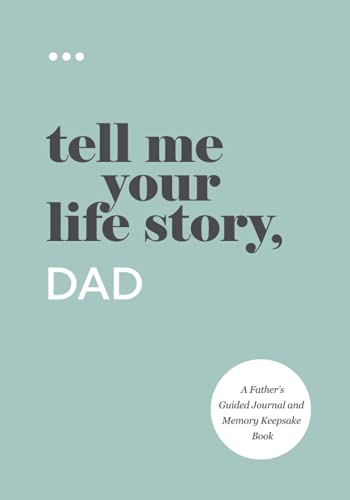
These books also have a grandparent version. Click the book to be directed to Amazon.

Finding Your Roots

First off, let me announce, this blog content is not about finding your roots, as in heritage, which is very popular these days. This blog is about how is your life rooted. I had the experience of feeling like my life had lost its tether, like I was just floating from one experience to another with anything holding me down. These times were very unsettling. I was sure I was going to lose myself, as well as all that was dear to me. The ground of my life seemed to give way to shifting sand. One day I realized, I had to find and return to my roots.

So much has happened in the last couple of years. The things that once gave us stability began to waver. The pandemic, the economy, the political agendas, racial tensions, loss of loved ones, enterprise failing – all these things robbed us of our feelings of security and reliance. In the midst of it all, I asked myself what can I depend on. Clearly the answer wasn’t a job, a title, finances, or possessions. Everything in my life was changing, not only in my life, but in the lives of everyone around me. We were all waiting for “the new normal” to come and stabilize our lives again. Some are still waiting.

Self-evaluation and introspection have become my go-to when I feel out of sorts, or off balance. I start by journaling my feelings. (See blog post 12/7/19 Journaling for Personal Change and 05/29/20 Journals or Diaries – Is That a Question?) How do I really feel? What feelings do I have that I wouldn’t dare share with anyone else? Am I distressed, am I depressed, am I suppressing anger, am I afraid, do I feel hopeless? You can tell your journal anything, good or bad. Am I desiring romance, am I in need of a retreat or a vacation, is someone stepping on my dreams or impending my progress? My journal knows. It may take several days or weeks of writing, but sooner or later the answers become clear.

The next step is to evaluate the sources of input, feedback, and external sources that have an impact on my perspective. This can include people’s opinions or advise, social media, TV news, books, or overheard conversations. Sometimes we are unaware of the effects of outside sources. We subconsciously take a lot in without really realizing it. That’s why introspection is so important, not just when things are going wrong. Periodic examinations and self-reflection helps us to make the necessary adjustments to weed out the negative and hone the positive. Questions like: why have I been feeling so good lately, how did I get through that situation, who was really in my corner, how much rest did I get last night, where did that point of view come from, are these my thoughts and opinions or am I repeating something I heard?

This past week, someone very dear to me walked out of my life. It was abrupt and very disturbing. My husband and I had done everything we knew to do to help this relative. We gave of ourselves physically, financially, and emotionally over a long period of time. Yet, when this person left we were accused of trying to hold them back. My husband was outraged, and I was confused, devastated, and exhausted. For several days, I tried to process everyone’s comments and opinions. I rehashed the words that had been spoken by all parties. I began to feed my despair with carbohydrates (binge eating). My sleep habits changed. I was sad, and somewhat fearful. The “what-ifs” scenarios were taking over my thought life and self-talk. One day, as I was talking to a dear friend, I realized the state I was in. It was time to journal. It was time to return to my life roots.

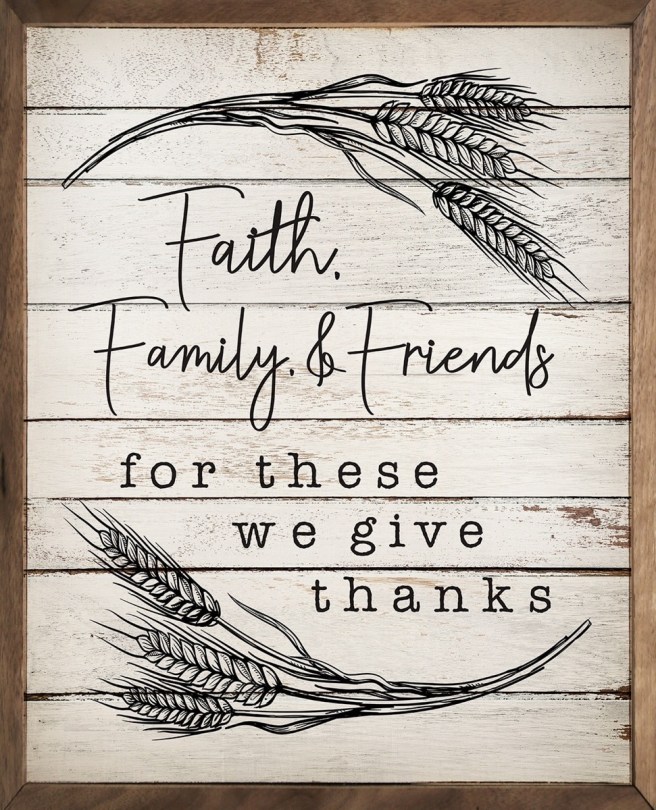
If you have been reading my blogs for awhile, you probably already know this: My life is rooted in faith, family, and friends. There is nothing more important to me than faith, family, and friends, and in that order. So, when I process and evaluate what’s going on in my life, my writing, my relationships, my mind, these are the priorities I consider first. Faith, family, and friends are the source of my life’s nourishment and nurture. My identity and creativity flourish from this foundation. My worldview and community involvement grew from this base. My outlook and citizenship stem from these mainstays of my life. Faith, family, and friends is the soil where I want my legacy to grow.

I came to the conclusion that I had done all I knew how to do to help that relative who walked out of our lives. There is nothing I would change, and I have no regrets for extending our help, our home, or our resources. By faith, I trust that all is as it should be. They cannot forget what we’ve done, and someday it will make a positive difference in their lives. We will always be family, therefore the door is not closed. We will still be available. Lastly, true friends accept and support our decisions and actions whether they agree or not, because they love and respect us.

My life is well grounded. It’s roots are strong and holding. Like a palm tree in a storm, I’m shaken, but still standing. What about you? Have you found your roots? In the midst of instability, what’s holding your life in place? Whatever it is, I hope it always brings you back to a state of hope, peace, joy and love.

Happy Thanksgiving. Be strong, be wise, be well-grounded!

Closing the Distance

We were all hoping the Corona-virus would be conquered by now. We were praying for a large downswing in the curve. Instead it is still running rampant, and we are still called upon to socially distance ourselves. Unfortunately, this is taking its toll on our mental and emotional health. (At least those of us who are obeying the mandates of medical experts and the CDC.)

Social distancing is suppose to mean keeping at least 6 feet between you and another person. Perhaps this was a poor choice of words. Perhaps we should have called it physical distancing. After all, we are social creatures. We need companionship. We need our sense of community and family. This innate need and desire has not gone away in the face of a pandemic, nor should it. What we have to do is modify our social behavior rather than nullify it.

I decided to have a family cookout. Our entire immediate family was present. There were no hugs, no handshakes, and no kisses. Each person arrived wearing a mask. Each person proceeded to the bathroom to wash their hands. We headed to the patio where each person sat or stood with enough distance between them to satisfy the health considerations of the elderly among us. We laughed, we talked, we ate, we drank, and we reminisced days gone by. All of our utensils, cups, and plates were disposable. I’d like to think a good time was had by all. This is just one of the ways we closed the distance in our family. It did my heart good to see with my own eyes that my sons and their families were doing well. (All of them have been working outside their homes throughout the pandemic.)

Yesterday, I talked to a friend in southern California. She told me that she and four of her friends went to the neighborhood park, mask in place, and had a great two hour visit under the trees. She said each of them enjoyed this short visit so much because all of them live alone and longed for human contact. This friend is over seventy years old. She does not have internet access so her interactions have been limited to telephone. (We were on the phone 3 hours. It was easy to ear how much she needs social interaction.) She also shared with me that some places there have made drive-in movies in the parking lots of Walmart stores to provide an outlet for social activity. I was happy to hear that my friend was finding ways to close the social distance between her and her friends.

Staying home, cutting ourselves off from all human contact, especially for those who live alone, can weigh heavily on the soul. Depression and anxiety can grow in a way that destroys the joy of living. I’m writing this short blog to remind us that there are ways to come together safely.

We don’t have to be socially distanced in a way that leaves us in solitude each and every day. We can find ways to close the distance, while keeping some physical distance between us. Here are a few suggestions: Walk around your neighbor, speak to neighbors and others who are outside in their yards; better yet walk with a friend. Drive to the lake or to a community you’ve always wondered about, then call a friend and tell them about everything you saw and felt. Offer to Face-time and elderly person’s children and allow them to have a conversation on your phone by putting it in a plastic food bag. Share conference call numbers for prayer meetings and bible studies with the people you know. Set up a drive-in movie in your church or club parking lot. Invite a friend to the park for a foot race. Set up a conference call to exchange recipes or gardening tips with your friends/family. Go to the golf range with a companion; hit a bucket of balls.

You may still need to wear your mask, use your hand sanitizer, and maintain a proper physical distance from other people, but you can still be a social member of your community. Stay connected while you stay safe and close the distance between your family, friends, and neighbors.

PS: Connect your doctor or a mental health professional if you are feeling depressed and anxious beyond what you can handle. This is a necessary distance to close.

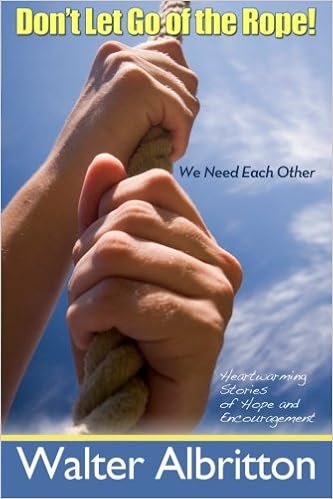
Walter is a good storyteller. His stories will make you laugh and cry — and sometimes pray. He knows the pain of failure and the joy of being rescued by caring friends. In these stories you will find inspiration, laughter, hope and encouragement. Walter hopes that you will find a story that moves you to give thanks for the people who held the rope for you when you were a “basket case,” and inspire you to hold the rope for a hurting friend. Amazon.com

When things get back to “normal” . . .

I have have heard this sentiment expressed so many times in the last couple of days. It always leaves me wondering “whose normal”; “what part of normal,” and “what do you mean by normal?” In my mind “normal” can be relative. After all, very few people have the same lifestyle or the same worldview as others. Right???

I’m not sure returning to “normal” is a great idea. When I ask myself whether I want everything to return to the way it was, my answer is no. There are life lessons I’ve learned during this time of sheltering-in that I don’t want to lose. There are also things I learned about myself that I don’t want to do or be anymore. I see this as a positive not a negative. Here’s some examples:

I want to keep having relationships with the seniors (elderly adults) in my life. I want to listen to their wisdom, their humorous comments, and their recipes for longevity. I want to remind them how important they are and what a blessing it is to be in their company. I want to interview them and record their experiences and their worldview for posterity. When this sheltering time is over, I want to spend time in their presence, not just letters, video chats, and texts or emails. I want to be truly present.

I want to spend quality time with my family. I don’t want it to be so unusual that we are all together in the same place actually communicating and participating in activities together. I don’t want to be so busy that it becomes an excuse for being unavailable. Life is too precious for that kind of regret. There’s a time and place for everything, and my family time is not the time to be preoccupied.

I want to continue journaling, my self care regiment, reaching out to friends and family, and taking the time to appreciate the beauty of every day. There are so many inspiring things in nature, so many uplifting experiences, so many valuable relationships, and so many wonderful words to read and to write; I don’t want to lose any of these things. Living through the pandemic has changed my perspective, I believe for the better.

Certainly, I want to continue working with children as an occupation. I love what I do. I also want to continue to produce poetry and stories and writing my blog; that’s part of who I am. I suppose it can be argued that these things are part of my normal, but I’m not sure I will look at these things in the same way. Working with children is an important investment, not just a job. Writing is a valuable means of expression, I can’t afford to frivolous with it. Bene-log (Good Word) is my intention in everything I write – to encourage, to inspire, to entertain.

When things go back to “normal,” I hope people will remember how to appreciate others. I hope people will continue to help others and consider the less fortunate. I hope we will keep the so-called least (the elderly, the children, the homeless, the impoverished) in our communities lifted. When things go back to normal perhaps we can be more thrifty and conservative in our spending and never be hoarders again. Perhaps we can continue sanitary habits in public and private. Perhaps we will never take our blessings for granted again, especially life and health.

When things go back to normal maybe it could be a “better normal.” What do you think? Is the old normal really what you want, or has your normal been changed forever and for the best? I’d love to hear from you.

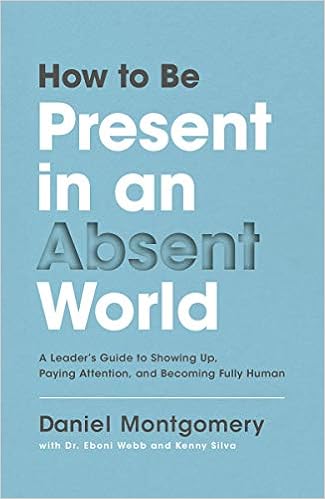
Many people today feel overworked, overbooked, and burned out. They long for purposeful and meaningful lives. The remedy lies in rediscovering what it means to be truly present…
amazon.com